Portuguese
  Spanish


Researchers in China, including a team from City University of Hong Kong, have developed the so-called engineered bamboo: a material made by disassembling and pressing bamboo until it is as strong as steel. Presented in 2024, it is touted as a more sustainable wood substitute and could transform sustainable construction, even though it will not retire wood anytime soon.
After millennia reigning in construction, wood has gained an unexpected rival. The contender comes from China, which has transformed a common plant into a high-strength material dubbed engineered bamboo, as shown in a video by the channel NeoExtremo. The promise is bold: a material so strong that it rivals traditional structures.
The science behind this is real and recent. According to the City University of Hong Kong, researchers have created a version of engineered bamboo called “super bamboo,” capable of being as strong as steel relative to its weight, touted as a wood substitute and an advancement for sustainable construction.
The trick is not in inventing a new plant, but in reconstructing an old one. Engineered bamboo is born from disassembling common bamboo, separating its fibers, and pressing them again, eliminating natural weaknesses and generating a uniform block, as strong as steel, which China sees as a key piece of sustainable construction.
-
Egypt’s “New Nile”: 170 km Artificial River Aims to Turn Desert into Farmland, but Water Supply Concerns Loom

-
Unable to secure a mortgage as a self-employed single mother, she designed her own floating home from a 20-meter boat and now lives “off-grid” with her two children and solar panels on an English canal.
-
Man Transforms Rusty Shipping Container into Luxury Home with Insulated Walls, Large Windows, and Drywall Finish, Surprising Onlookers

-
“Super Grass” Miscanthus Grows Rapidly Without Pesticides, Replacing Heating Oil in Europe and Now Used in Carbon-Capturing Concrete and Walls in World’s First “Bale House”


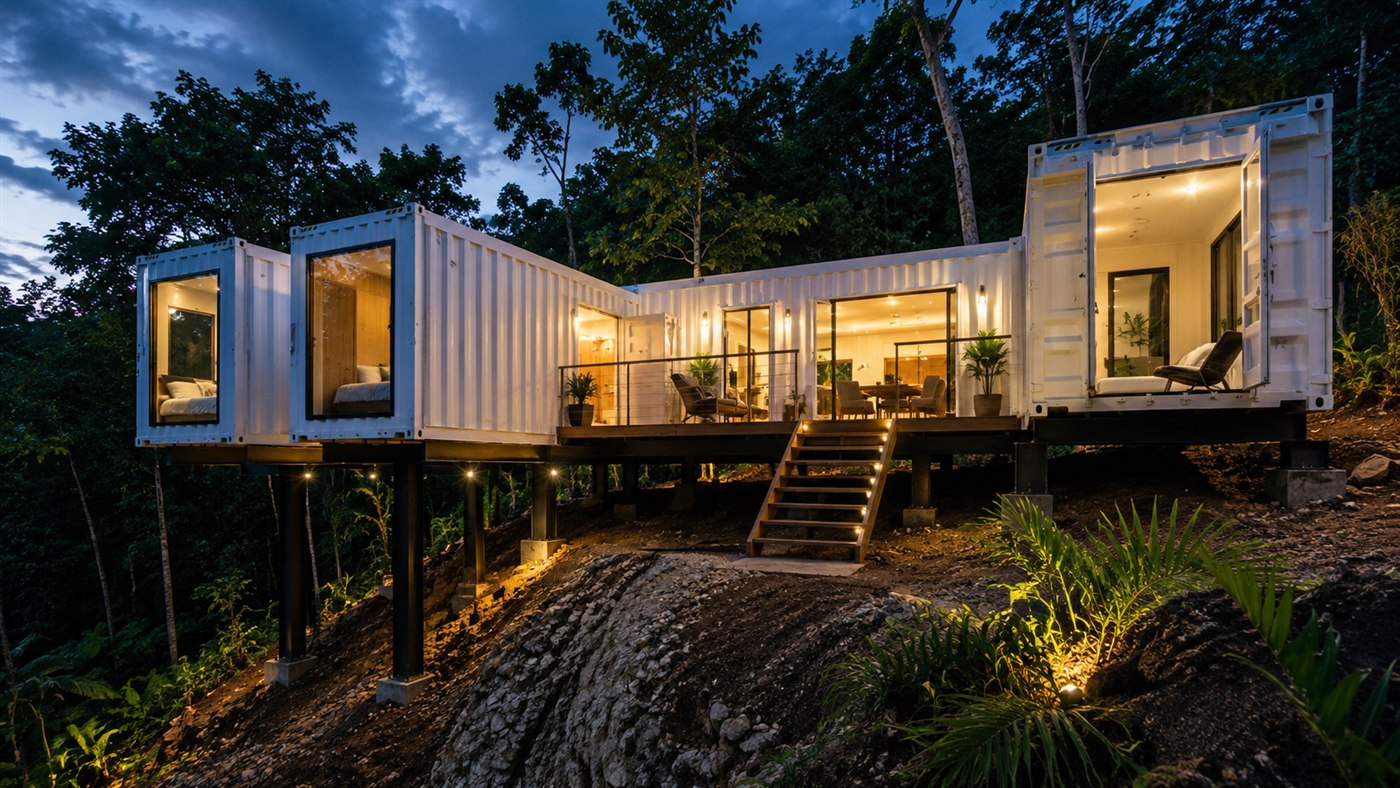

Next, see what engineered bamboo is, what problem with natural bamboo China solved, how the plant becomes a material as strong as steel, why it is an interesting wood substitute for sustainable construction, and what this technology has to do with Brazil.
What is the engineered bamboo that China created
Engineered bamboo is, in a few words, bamboo reinvented by engineering. Instead of using the hollow stalk as it grows, China disassembles the plant, separates its fibers, and presses them again, creating a dense, uniform, and much stronger material, designed for sustainable construction.
The name already gives away the idea. “Engineered” means that the bamboo has undergone an industrial process that corrects its natural defects, transforming it into a standardized material as strong as steel, suitable to serve as a substitute for wood in floors, panels, and structures.
It is not a single product, but a family. Under the label of engineered bamboo are included everything from recomposed bamboo, glued with resin, to advanced versions like “super bamboo”, without glue, all born from China’s effort for a stronger and cheaper sustainable construction.
The logic is reminiscent of other modern materials. Just as engineered wood is made by gluing tree veneers, engineered bamboo utilizes the plant’s fiber to create something more resistant than the original, a substitute for wood that China wants to bring into construction sites.
The problem with natural bamboo that China solved
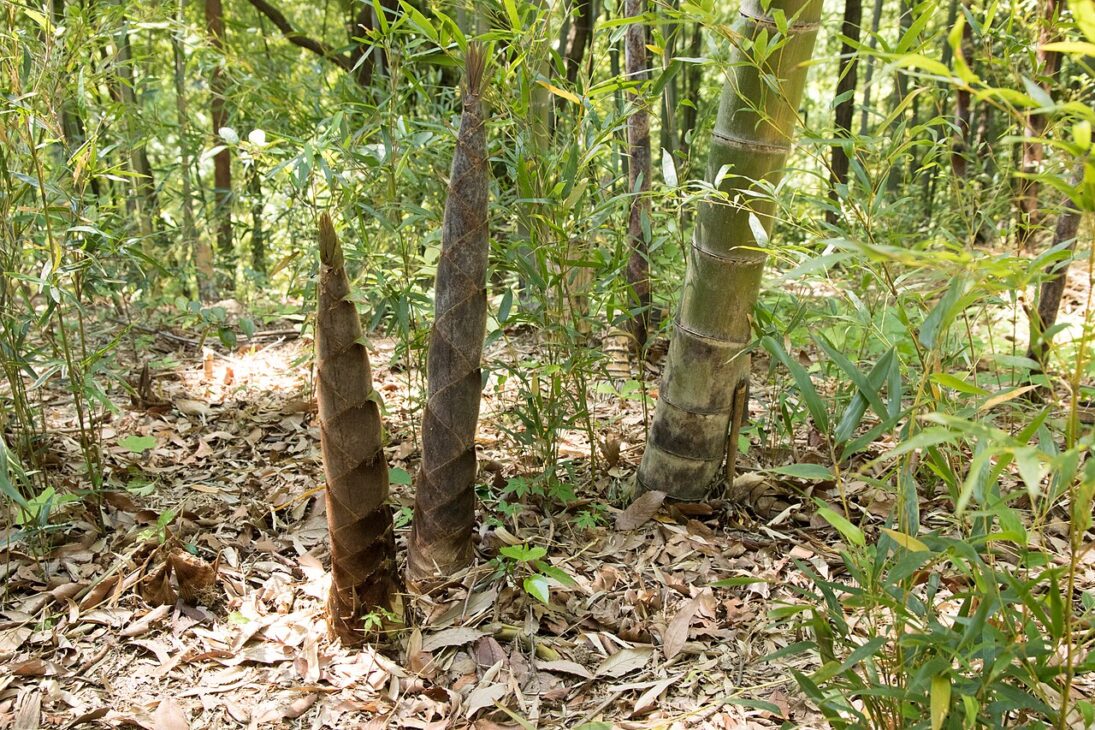
Before becoming a hero, bamboo was viewed with skepticism in engineering. Despite growing quickly and being abundant, natural bamboo had limitations that prevented its large-scale use, and it was precisely this obstacle that China decided to tackle to create engineered bamboo.
The first problem was the shape. Bamboo grows hollow, cylindrical, and irregular, which makes it difficult to transform into standardized beams and boards, something essential for construction; without solving this, it was impossible to consider it as a substitute for wood for sustainable construction.
The strength also varied too much. From one stalk to another, bamboo could be stronger or weaker, and this lack of uniformity frightened engineers, who could not trust such an unpredictable material to be as strong as steel in a real construction.
The turning point was looking at the fiber, not the stalk. Researchers in China realized that the secret lay in the internal fibers of bamboo, extremely strong, and that it was enough to reorganize them to transform the plant into engineered bamboo, uniform and reliable for sustainable construction.
Thus, the central idea of engineered bamboo was born. Instead of using bamboo as it comes from nature, China began to dismantle and reconstruct it, taking advantage of the best of the fiber and discarding the defects of the shape, to create a substitute for wood capable of being as strong as steel.
How Bamboo Becomes a Material as Strong as Steel
The process of engineered bamboo resembles an industrial recipe. First, the bamboo is cut and shredded, separating the long fibers that give strength to the material; it is at this stage that China begins to transform the plant into something as strong as steel.
Then comes the removal of weak parts. In some versions of engineered bamboo, chemical treatments remove part of the lignin and other components, leaving a structure rich in cellulose, the material that ensures strength and makes bamboo a strong wood substitute in sustainable construction.
Then comes the pressing. The fibers are dried and compressed under high pressure, often with heat, which eliminates voids and creates a dense and uniform block; it is this compaction that makes engineered bamboo so as strong as steel relative to its weight.
There are different paths to get there. In some versions, engineered bamboo uses resins to glue the fibers; in others, like China’s “super bamboo,” the material dispenses with glue and relies solely on pressed cellulose, resulting in a clean wood substitute aimed at sustainable construction.
The result is surprising by the numbers. A scientific study published in 2020 showed that bamboo treated in this way can achieve tensile strength comparable to steel, confirming that engineered bamboo has a real basis to be called as strong as steel, and not just marketing from China.
“Super Bamboo”: The Material That Surpassed Steel and Titanium
The most impressive example of engineered bamboo has its own name. Called “super bamboo,” it was developed by researchers at the City University of Hong Kong, in China, and presented in 2024 as a material as strong as steel for sustainable construction.
The tests set records. According to the institution, the strength-to-weight ratio of “super bamboo” surpasses that of aluminum and even titanium alloys, making this engineered bamboo one of the strongest candidates as a wood substitute and for other heavy materials.
The process is ingenious and clean. “Super bamboo” uses strips of fast-growing bamboo, soaked in a solution that dissolves part of the components and leaves the cellulose, followed by hot pressing that significantly reduces thickness, generating a dense and as strong as steel engineered bamboo, without glue.
The environmental appeal is enormous. By not using resins and starting from a renewable plant, “super bamboo” presents itself as a low-emission wood substitute, exactly the type of material that sustainable construction seeks to reduce the impact of buildings.
Even so, caution is needed with superlatives. Saying that engineered bamboo is as strong as steel applies to laboratory samples under controlled conditions, and turning these records into building beams is China’s next challenge to make the wood substitute a reality in sustainable construction.
Grows in 6 years: why it is sustainable construction
The great advantage of engineered bamboo is not just its strength, but its speed. While a tree takes 30 to 50 years to yield structural wood, the bamboo used by China can be harvested in about 6 years, a pace that changes everything in sustainable construction.
Even better, bamboo regrows on its own. After being cut, it grows back from the same root, without needing replanting, which makes engineered bamboo an almost inexhaustible source of raw material and a wood substitute that puts less pressure on forests.
This rapid cycle impacts the climate. As it grows, bamboo absorbs carbon dioxide, and using it as engineered bamboo in sustainable construction can help reduce emissions, unlike materials such as cement and steel, which tend to have a heavy environmental footprint.
There is also a social and economic gain. Since bamboo is cheap and grows in many places, engineered bamboo can lower housing costs and generate income in rural areas, combining the logic of sustainable construction with the goal of making housing more accessible, with a low-cost wood substitute.
For all these reasons, China sees bamboo as strategic. The country leads initiatives to replace polluting materials with bamboo, and engineered bamboo is the most advanced point of this bet, showing how a simple resource can become a protagonist in sustainable construction and a serious wood substitute.
Will engineered bamboo really replace wood?
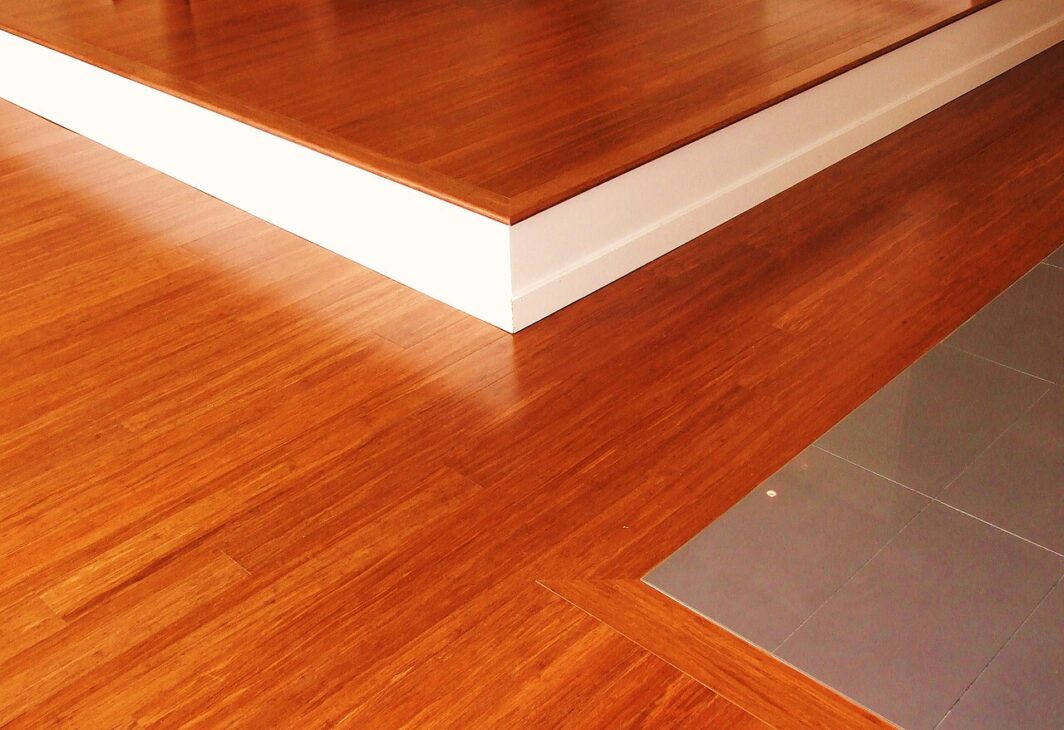
The promise of “retiring wood” needs context. Despite all the enthusiasm, the very discourse around engineered bamboo acknowledges that wood will remain important for a long time, so it is more accurate to speak of complementing rather than total replacement.
The engineered bamboo emerges as another option. It can take the place of wood in certain uses, acting as a wood substitute in floors, panels, and structures, but it is unlikely to completely eliminate such a versatile and traditional material, even being as strong as steel in sustainable construction.
It is worth noting that wood has also evolved. Today, there are engineered woods that challenge steel and concrete, and engineered bamboo is in the same league, the renewable materials that compete for space in sustainable construction, and not on the side where wood would be losing.
Therefore, coexistence is more likely. Instead of a war between bamboo and wood, the future of sustainable construction should bring together various renewable materials, with engineered bamboo playing an important role as a wood substitute in many applications, without erasing wood from the map.
Laboratory and shelf: what is already real and what is still a promise
To avoid exaggeration, it’s good to separate what already exists from what is still research. Part of the engineered bamboo has been sold and used for years, in the form of panels and recomposed bamboo beams, a wood substitute present in the sustainable construction market.
The most spectacular numbers, however, come from the laboratory. The strength that rivals steel and titanium appears in small and controlled samples of engineered bamboo, and it still needs to be proven that this steel-like strength performance holds in large pieces used in real works in China.
There are honest challenges ahead. Factory cost, durability over decades, and behavior in humid climates are points that engineered bamboo still needs to resolve to establish itself as a reliable wood substitute in sustainable construction.
Even so, the direction is promising. The combination of rapid growth, environmental appeal, and strength places engineered bamboo among the most interesting materials of the moment, and China takes the lead in this race for a greener wood substitute.
What engineered bamboo has to do with Brazil


The topic directly interests Brazil, a country with a perfect climate for bamboo. Here, several species grow easily and quickly, which would provide the country with plenty of raw material to produce engineered bamboo and invest in cheaper sustainable construction.
There is also a link with the national industry. Brazil is a world leader in cellulose, precisely the fiber that gives strength to engineered bamboo, which shows that the country has the technical knowledge to explore this wood substitute as strong as steel, if it wants to follow the path of China.
The housing potential is enormous. In a country with a large housing deficit, a cheap, renewable, and as strong as steel material like engineered bamboo could help build more affordable houses, combining sustainable construction with the real needs of the Brazilian population.
Finally, there is the environmental appeal. Using engineered bamboo as a wood substitute can relieve pressure on native forests, something especially relevant in Brazil, where deforestation is a constant concern and sustainable construction is gaining more and more importance.
The case of engineered bamboo shows how a simple plant can become a cutting-edge material. By dismantling the bamboo and reconstructing it as strong as steel, China has created a possible wood substitute that promises to impact the future of sustainable construction.
More than a trend, it is a movement with a real basis. With rapid growth, low environmental impact, and proven laboratory resistance, engineered bamboo points to a path where sustainable construction can go hand in hand with the economy and forest protection.
And you, would you live in a house made of engineered bamboo, knowing that it can be as strong as steel and serve as a wood substitute? Do you think Brazil should invest in this technology like China? Share your opinion in the comments and share with those who like innovation and sustainable construction.