Portuguese
  Spanish


China Has Hydrogen-Powered Train With 1,000 Km Range That Revolutionizes Urban And Regional Transportation With Zero Emissions
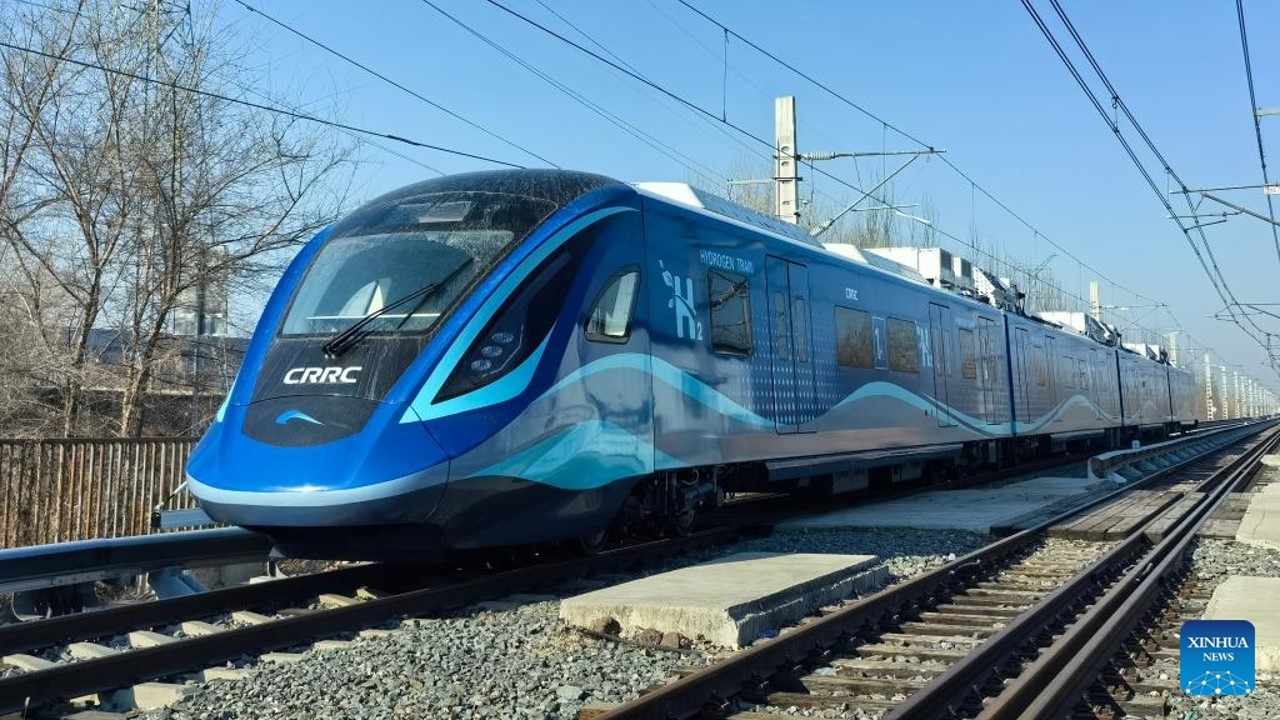
China approves the operation of one of the most innovative trains in the world: a model powered exclusively by hydrogen, capable of achieving 1,000 km range with just one refueling. Developed by the state-owned CRRC Changchun Railway Vehicles, the vehicle symbolizes a major advance in the race for sustainable solutions for large-scale transportation.
This train does not need overhead wires or fossil fuels. Instead, it uses fuel cells that convert hydrogen into electricity, with the only emission being water vapor. It is a clean, silent, and highly efficient system — ideal for replacing diesel trains on sections that are not yet electrified.
How Hydrogen Train Technology Works
The system utilizes a combination of hydrogen cells with supercapacitors, ensuring stable and reliable performance. The model was approved after rigorous tests for endurance, braking, and operation in high and low temperatures.
-
Off-Duty Firefighter Rescues Three Children Trapped Under Overturned Boat in Brazilian Lake

-
Workers near the Vatican uncover lead pipe revealing Emperor Caligula’s name and site of his opulent garden from nearly 2,000 years ago

-
Workers renovating a playground in northern England uncover 176 World War II bombs buried underground; training artifacts still contained explosives.

-
Brazilian Architect Transforms Waste into Sustainable Homes with Solar Power and Rainwater Systems for 40 Years




Key Differentiators:
- Clean Energy: zero carbon emissions, no excessive noise;
- Long-Distance Range: surpasses most current regional trains;
- Operational Versatility: can operate on non-electrified lines;
- Energy Efficiency: averaging 5 kWh per kilometer traveled;
- Speed: reaches up to 160 km/h.
These factors make the model an ideal candidate for suburban and intercity networks in emerging or expanding rail countries.
Comparative Table
| Characteristic | Hydrogen Train (CRRC) | Diesel Train (conventional) |
| Power Source | Hydrogen Cells | Diesel Fuel |
| Pollutant Emissions | Zero | High |
| Range | 1,000 km | ~600 km |
| Maximum Speed | 160 km/h | 120 km/h |
| Necessary Infrastructure | Hydrogen Stations | Diesel Supply Network |
| Environmental Cost | Very Low | High |
Global Impact and Possible Use in Brazil
With the growing pressure for decarbonization of the transportation sector, hydrogen trains present themselves as a viable and scalable solution. Countries with long railway lines and low electrification rates, such as Brazil, could benefit greatly from the adoption of this type of technology — especially on regional or freight lines.
Imagine, for instance, replacing diesel trains in the North or Central-West regions with this model: the environmental savings would be enormous, and operational costs considerably lower in the long run.
Moreover, the CRRC model could set precedents for the export of clean technology and encourage the production of green hydrogen, an area where Brazil has immense potential to develop based on renewable sources such as wind and solar.
And you, do you think this technology would work in Brazil?