Portuguese
  Spanish



The South of Brazil Hides a Brazilian Canyon (and Many Others) of Surprising Depths That Can Rival in Grandiosity with World-Famous Formations. Discover These “Forgotten” Wonders and Their Monumental Geology.
The Espraiado Canyon and other impressive gorges, which remain in the shadow of their more famous “brothers,” reveal the geological history and wild beauty of more than one Brazilian Canyon that deserves to be discovered and preserved.
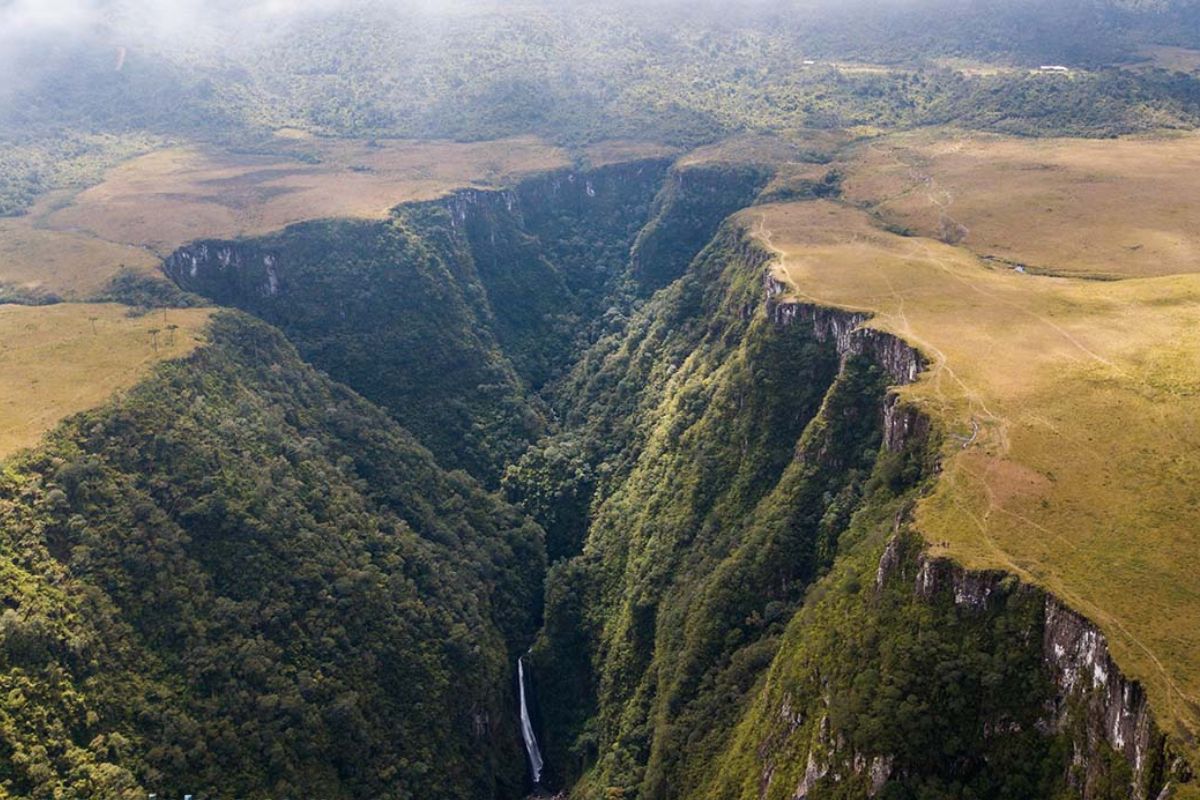
In the South of Brazil, between Santa Catarina and Rio Grande do Sul, a landscape of deep geological art harbors monumental canyons. The region of Serra Geral and the Aparados da Serra is a realm of stone giants, many of which are “forgotten” or little known to the general public. One of these colossi, and the focus of this exploration, is a Brazilian canyon that, according to reports, reaches depths comparable to those of the Grand Canyon.
Espraiado Canyon: The Hidden Gem of Urubici (SC) and Its Impressive Grandiosity
Nestled in Urubici (SC), near the Serra do Corvo Branco, the Espraiado Canyon is an emblematic example of the hidden grandiosity of the region. The journey to reach it, often along dirt roads that require 4×4 vehicles, is already an adventure. Access is through private property, where a visitation fee is charged.
-
China Constructs 5.1 km Undersea Highway in Dalian Bay, Reducing Travel Time from 1 Hour to 5 Minutes

-
Massive Transporters Otto and Lore Move ALMA Radio Telescope in Chile’s Atacama Desert
-
Singapore Turns Incinerated Waste Ash into Construction “Sand” in Ambitious Project to Revolutionize Megacity Waste Management
-
Brazilian Entrepreneur Turns Passion for Amazonian Cocoa into a Million-Real Chocolate Business After Studying in France



The rocky cliffs of the Espraiado reach about 700 meters in height, extending approximately 14 km, with the valley going up to 600 meters in depth. The landscape is a mosaic of mountains, deep valleys, countless waterfalls, and viewpoints like the Pedra da Águia, hosting rich biodiversity with araucarias, xaxins, and animals like toucans and capuchin monkeys.
Beyond the Espraiado
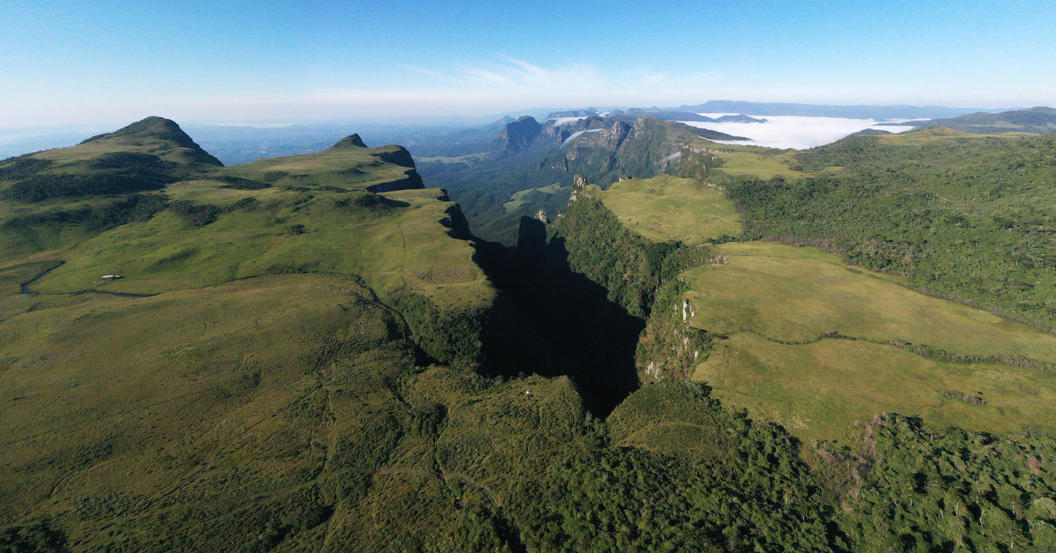
The region of the Aparados da Serra and Serra Geral is a treasure. The Pedra Canyon, in Jacinto Machado (SC), requires a high-difficulty guided trail, revealing formations like “Duas Bonecas” and beautiful waterfalls. Meanwhile, the Laranjeiras Canyon, in Bom Jardim da Serra (SC), is a “hidden paradise” with easier access through private farmland.
The Malacara Canyon, on the border of SC and RS, impresses with its “perfect rock layering” and can be viewed both from the edge (long and paid trail) and from the valley. The Josafaz Canyon (RS/SC) is one of the largest in length (16 km) but is extremely challenging to access, suitable for experienced adventurers. More accessible are the Ronda Canyon, near Serra do Rio do Rastro, and the Funil Canyon in São Joaquim National Park, with its pointed formations, although the latter has access through a private area.
How Each Imposing Brazilian Canyon in the South Was Formed
The magnificence of each Brazilian Canyon in the South is the result of a long geological history. In the Cretaceous period, around 135 million years ago, during the breakup of the supercontinent Gondwana, vast flows of basaltic lava from the Serra Geral Formation covered the region, forming an extensive volcanic plateau.
Subsequently, tectonic stresses uplifted this plateau, and geological faulting created steps and cliffs. Over millions of years, the tireless action of fluvial and wind erosion, mainly following the lines of fracture in the rocks, deeply sculpted the plateau, giving rise to the canyons we see today, with their vertical walls and steep valleys.
Veiled in Grandiosity
Many of these southern Brazilian giants do not have the fame of their more celebrated “brothers,” such as Itaimbezinho and Fortaleza. One of the main reasons is the difficulty of access, with precarious roads and long trails. Limited tourist infrastructure and a lack of widely disseminated information also contribute to their obscurity.
Additionally, many of these canyons are located on private lands, which implies variable access policies and can hinder integration into broader public tourism strategies. Each lesser-known Brazilian Canyon faces a combination of these factors.
Responsible Exploration and the Urgent Conservation of Brazil’s Hidden Canyons

These gorges are geological, aesthetic, and biodiversity treasures. The growing interest in responsible geotourism, as promoted by the Geopark Caminhos dos Cânions do Sul, points to a promising path for their appreciation and conservation. Careful planning, with access control, trail management, and environmental education, is crucial.
Land regulation, investments in sustainable infrastructure and partnerships between public agencies, landowners, and local communities are essential. Bringing each “forgotten” Brazilian Canyon out of the shadows should not mean exposing it to degradation, but awakening a new awareness of its importance and the need to protect these magnificent cathedrals of nature for future generations.