Portuguese
  Spanish


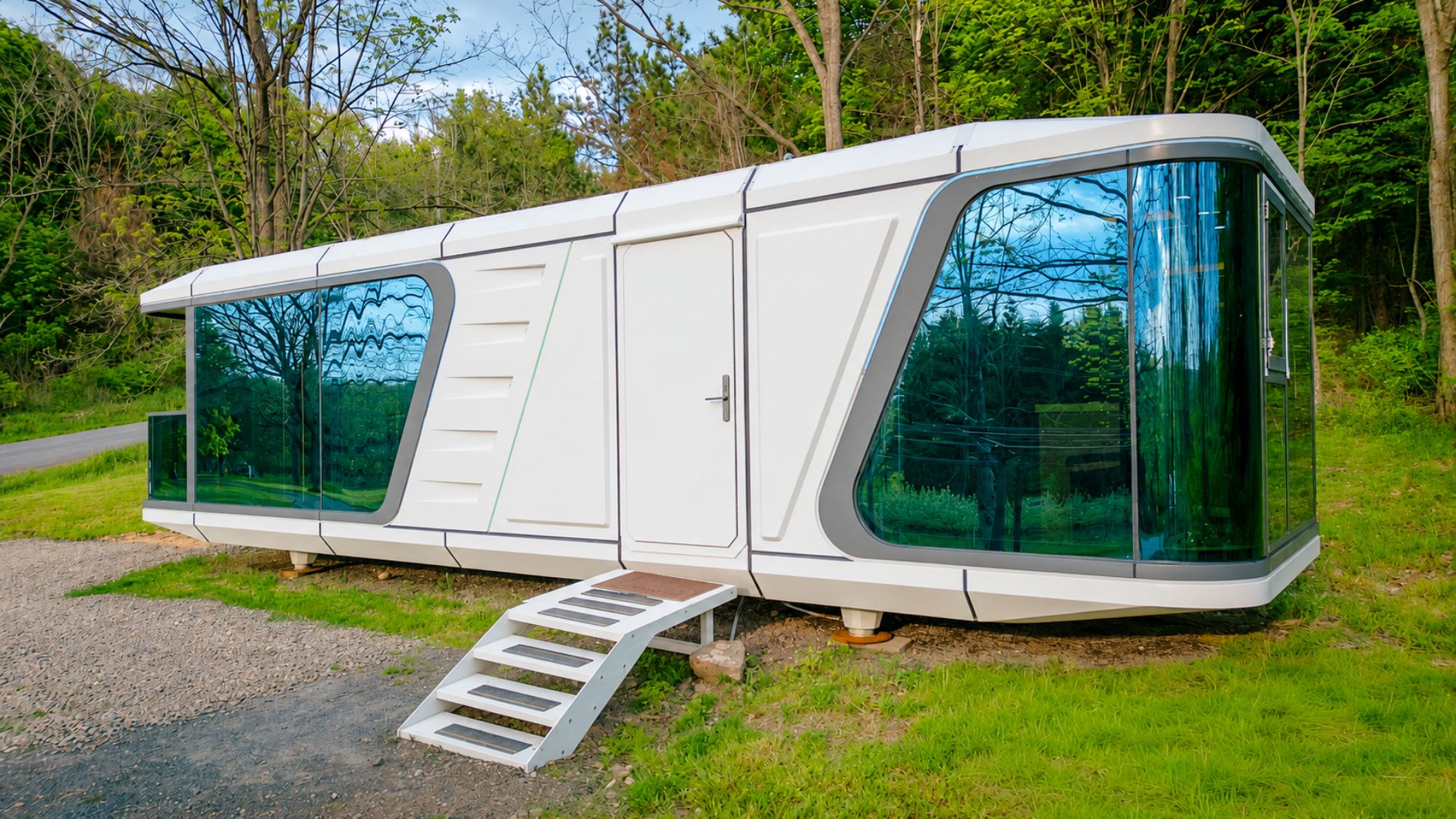


Nicknamed Space Station by the owners, the house is located in Penn Yan, in the rural region of the Finger Lakes, and not in the New York City metropolis. From purchase to installation, with licenses, transoceanic transport, and cranes, the process took about seven months, and the announced price does not include shipping or land preparation.
A futuristic mini house made of steel and glass, imported from China for about $70,000, has become a lodging attraction in upstate New York. With a retractable roof for stargazing, a kitchen with a hybrid stove, and a system that controls lights, curtains, and air conditioning via a tablet, the small residence has been transformed into a seasonal rental property on Airbnb, attracting curious visitors and tourists seeking a different experience.
Contrary to what the name New York State might suggest, the mini house is not located in the bustling metropolis but in Penn Yan, a quiet locality in the Finger Lakes region, known for its lakes and wine routes. Named Space Station by the owners, the unit bets on the contrast between the futuristic technology and the tranquil countryside setting to stand out among the lodging options in the area.
A house that fits in a truck

Instead of being built on-site, brick by brick, the mini house is assembled in a factory in China and sent almost ready, needing only to be installed on the land. The unit measures about 11.6 meters in length by 3.4 meters in width, with a structure of stainless steel and aluminum and large glass facades that provide a modern look.
-
Volcanic Soils from Destructive Eruptions Turn into Million-Dollar Crops: Ashes Nourish Grapes in Lanzarote, Bananas in the Canary Islands, Blood Oranges on Mount Etna, and Cacti in Mexico, Showcasing How Lava-Formed Lands Sustain Rare Harvests in Seemingly Barren Regions

-
In the Caucasus Mountains, a Community Preserves a Language So Rare Few Outsiders Can Understand It

-
Slovakia’s Ice Cave Holds Over 110,000 m³ of Frozen Wonders, Boasts Walls Up to 27 Meters Thick, and Was Among the First Electrified Caves Globally

-
Street Cleaner Accidentally Receives $200,000 Transfer, Returns Unexpected Fortune to Rightful Owner




Despite the compact size, the space was designed to offer comfort. The highlight is the retractable roof, which opens so guests can observe the starry sky from inside the bed, a rare experience in conventional lodgings. The proposal follows the global trend of so-called tiny houses, tiny homes that prioritize intelligent use of space and lower costs than a traditional residence.
Technology controlled by a tablet

The mini house functions as an integrated smart home, where most functions are controlled by a single tablet. With a few taps on the screen, you can adjust the lighting, open and close the automatic curtains, control the air conditioning, and even activate a retractable projection screen, creating a kind of cinema inside the compact environment.
The level of technology extends to other rooms. The kitchen features a hybrid stove, which works both on gas and electricity, while the smart bathroom offers features like a toilet with a heated bidet and built-in dryer. There is also underfloor heating and Bluetooth-connected speakers, details that enhance the futuristic feel and make the stay the main attraction for guests.
How much it costs and how this trend arrives in Brazil


The amount of about $70,000 paid by the owner refers only to the unit itself, not counting important expenses such as international shipping, installation, use of cranes, and land preparation. Buying directly from Chinese manufacturers is usually cheaper, with models starting at around $48,000, while smaller units are sold in major retail chains in the United States for prices close to $30,000.
In the case of this mini house, the purchase was made through a Texas-based company, Athena Space Homes, which advertises smart models starting at around $55,000. Some manufacturers offer warranties of up to 30 years for the structures, although the actual durability depends greatly on maintenance and local weather conditions, as the buyer usually considers in this type of acquisition.
Seven months from order to installation
Anyone who imagines that buying a ready-made house from China is a quick process might be surprised. According to the owner’s account, the entire process, from purchase to the house being ready to accommodate guests, took about seven months. This includes obtaining local licenses and permits, transoceanic transportation of the structure, the use of cranes for positioning, and the final installation on the site.
This timeline shows that, although the tiny house arrives almost fully assembled, there are still a series of bureaucratic and logistical steps to complete. Preparing the land, connecting water, electricity, and sewage, and complying with local building codes are steps that cannot be ignored and help explain why the final cost ends up being higher than the unit’s sticker price.
Hosting Business or Retirement Bet?
The owner uses the tiny house as a source of income, renting it out seasonally on Airbnb, and sees this type of investment as a possible long-term strategy, even as a supplement for future retirement. The idea of buying compact properties and living off seasonal rental income has become a dream popularized in videos and social media, especially in tourist destinations.
It is worth remembering, however, that this is the owner’s expectation, not a guarantee. The success of an Airbnb depends on factors such as occupancy rate, tourism seasonality in the region, maintenance costs, and local competition. Without concrete revenue figures, the financial return remains a gamble, even though the unique property and positive guest reviews help attract bookings.
The futuristic tiny house in Penn Yan is a curious depiction of how global trends in housing, technology, and tourism converge in a single project. Imported from China, filled with automation, and transformed into accommodation, it shows the growing appeal of modular and smart homes, while also serving as a warning about the real costs and timelines behind the dream of having a compact and technological residence. For the Brazilian audience, it’s an interesting example of a market that is starting to gain attention here as well.
And you, would you spend a night in a futuristic tiny house with a retractable roof to see the stars? Do you think modular homes imported from China could be a good housing or investment alternative in Brazil? Leave your comment, tell us if you would live in a tiny house, and share the article with those who love technology, architecture, and real estate news.