






 Portuguese
  Spanish
  5 min of reading
  1 comment


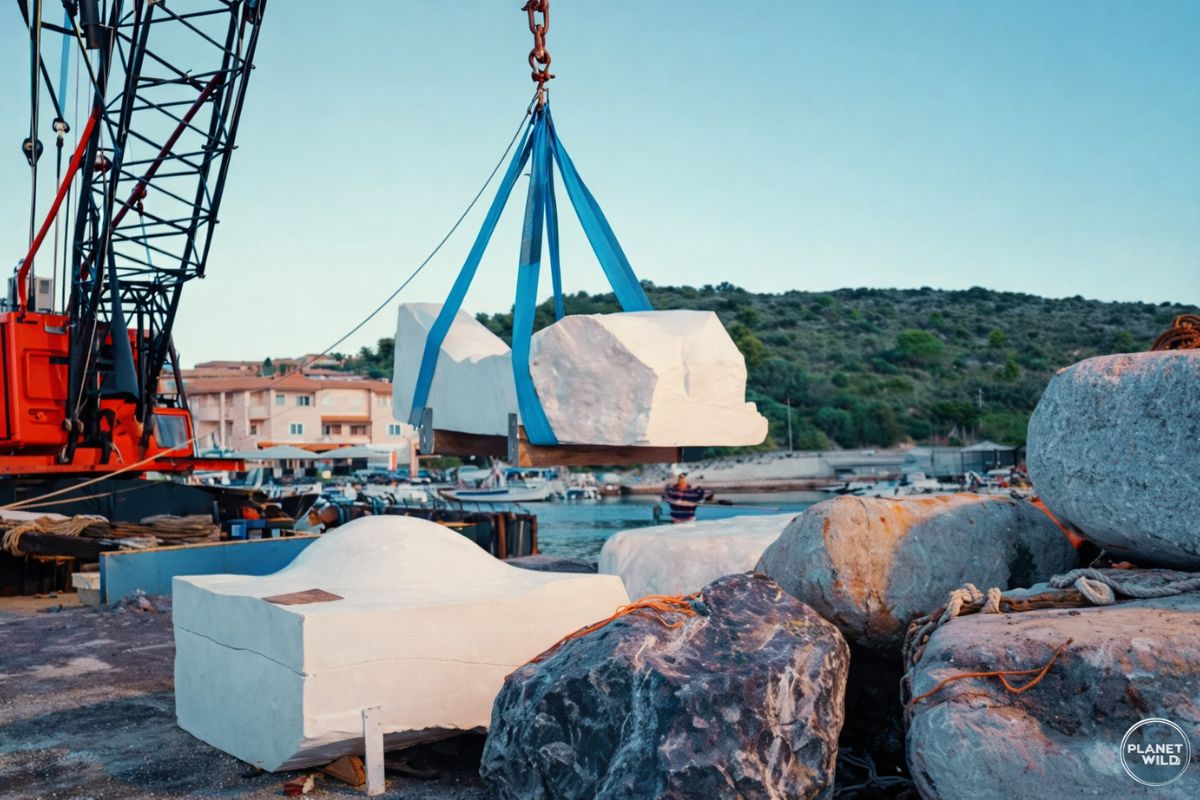


Near Tuscany, Fishermen and Artists Decided to Protect the Sea with Art and Physical Barriers, Creating an Underwater Museum and Blocks that Prevent Bottom Trawling from Destroying the Ecosystem.
To protect the Mediterranean Sea from silent destruction, a fisherman from the Talamone area in Italy bet on an idea that seems unlikely at first glance: sinking marble statues as shields on the ocean floor, capable of preventing illegal fishing boats.
The goal is not just to “raise awareness.” It is to create a heavy underwater barrier that tears through trawl nets, protects seagrass meadows, and gives the sea time to breathe, recover, and once again harbor life.
A “Magical Place” that Is Actually the Frontline
Near the Tuscan coast, there is a spot on the ocean floor that looks like a movie set: marble statues resting on the sand, forming an underwater museum. But the real function is different. They are on the front line of an ecological war.
-
Helicopter Drops 180 Tons of Sand and Gravel on Swedish River to Revive Ecosystem Damaged by Decades of Exploitation

-
Brazilian Company Launches Retro Smartphone with 48 MP Camera, T9 Keyboard, and Privacy Features for Social Media-Free Use

-
Self-Taught Chinese Farmer Builds 5-Ton Submarine from Scrap, Launches It in Anhui River
-
Invisible Induction Technology Enables Wireless Power for Blenders, Coffee Makers, and Air Fryers, Reducing Countertop Cables



On one side, illegal fishing boats. On the other, an unlikely alliance of fishermen, artists, conservationists, and divers who decided to protect the sea with something that bottom trawling cannot ignore: weight, stone, and obstacle.
The Ecosystem that Sustained Everything and Started to Disappear Quickly
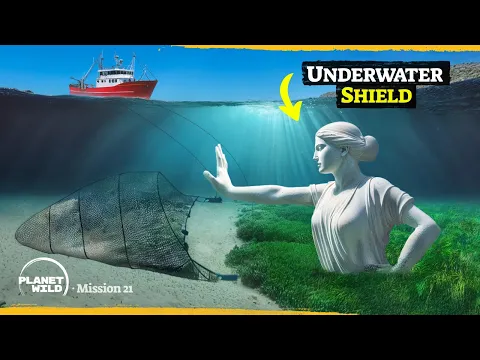

In Talamone, the Mediterranean is not just a landscape. It is at the heart of local life. And, beneath the waves, there existed a thriving ecosystem fed by meadows of Posidonia seagrass.
The basis highlights why this detail matters: Posidonia acts as “the lungs of the Mediterranean”, sucking in large amounts of CO2, 15 times more than the same area of the Amazon rainforest, and returning vital oxygen to the sea. It is also a nursery and food source for hundreds of creatures.
The shock is that, in a short time, much of this underwater world has disappeared. And the reason, according to reports, has a name and a method.
The Villain of the Seabed: Bottom Trawling and Illegal Fishing
Industrial fishing uses a technique described as immensely destructive: bottom trawling. Ships pull heavy nets for miles across the seabed, “sucking up” everything they encounter. What has no commercial value becomes bycatch and is discarded.
The result, on the seabed, is direct: a desolate desert. Posidonia meadows disappear, taking with them habitats, nurseries, and food.
The basis also cites a related climate impact: bottom trawling is estimated to release 370 million tons of CO2 into the atmosphere each year.
And, according to WWF, the Mediterranean is on the brink of collapse, becoming the most overfished sea in the world.
To protect the sea, there is one practical point: bottom trawling is illegal less than five kilometers from the coast there, but enforcement is not strict, and illegal fishermen take advantage of this.
Paolo, the Fisherman Who Decided He Could No Longer Accept It
Paolo is introduced as a fisherman from a local tradition: sustainable fishing, taking only what he can replenish from the ocean. This closeness to the sea made him notice something that many people did not see: something was very wrong.
He became a guardian of the ocean, looking for illegal boats and trying to scare them off with unorthodox methods.
However, this did not resolve the core of the problem. The boats kept returning, and activism became increasingly dangerous.
That’s when the strategy changed to what really could protect the sea when enforcement fails: physically preventing destruction.
The Brilliant Turn: Art as a Physical Barrier to Protect the Sea
Paolo concluded that the only real way to stop bottom trawling needed to be material: a heavy underwater barrier that damages the nets and makes it impossible to operate without harm.
But he also wanted the world to see what was happening. And the most unusual idea emerged: create art to protect the sea, sinking marble sculptures that would form an underwater museum and, at the same time, keep trawl nets away.
This combination does two things at once: it creates an obstacle and draws public attention. And public attention, in this case, becomes pressure and support.
Carrara, Marble, and a Logistical Operation the Size of the Problem
To take the idea off the ground, the initiative sought marble from Carrara, the stone that produced Michelangelo’s David. The material would have been donated by the quarry, showing regional support for the project.
Next came the logistics: transporting five blocks of marble to Talamone, with each block weighing up to 20 tons. The project involves artists from around the world in a four-week workshop to create five giant sculptures.
The basis also brings a funding detail: the Planet Wild community contributed more than 20,000 euros to make the plan viable. The goal was clear: protect the sea with something that is beautiful but also functional.
The Underwater Museum and the Real Effect on the Bottom of the Mediterranean
The sculptures were sunk one by one and positioned on the ocean floor. The report describes the place as “magical,” but highlights the main point: the works protect the timeless beauty of nature.
Over time, the statues begin to integrate with marine life, and marine life begins to mix with the works that protect it.
This is the part that changes perception: it is not “art for art’s sake.” It is art as ecological infrastructure to protect the sea.
Why Art Alone Wasn’t Enough and the Project Went Further with Concrete Blocks
The plan did not stop at the statues. The basis states that, besides protecting Posidonia close to the coast, it was necessary to extend protection with physical barriers further out, for a larger and truly effective protected area.
The initiative then invested an additional 60,000 euros to install 40 concrete blocks up to two kilometers from the coast, expanding the safety zone that Casa dei Pesci has built over the course of 12 years.
The practical point is decisive: where barriers have already been erected, boats have stopped coming. Furthermore, these blocks were designed with holes that become shelters for creatures that lost habitat to bottom trawling.
In other words, in addition to blocking nets, they help rebuild the home of marine life, reinforcing the mission to protect the sea.
The Discomforting and Powerful Lesson: Beauty Can Also Be Defense
The text concludes with the idea that, in Talamone, it is still necessary to rely on physical barriers, but there is a real human effect: the beauty of art can mobilize people beyond their self-interest.
And when mobilization transforms into concrete, marble, logistics, and continuous action, it becomes real protection. In this case, protecting the sea has ceased to be a slogan and has become a structure at the bottom of the Mediterranean.
If you could choose a measure to protect the sea in your area, would you bet more on strict enforcement or on physical barriers like these?




Me encanta la idea de un museo en las profundidadesy me parece genial que se pudo llevar a cabo la movilización y sensibiluzacion que hizo entender que era necesario dar ese paso para proteger el mar.