






 Portuguese
  Spanish


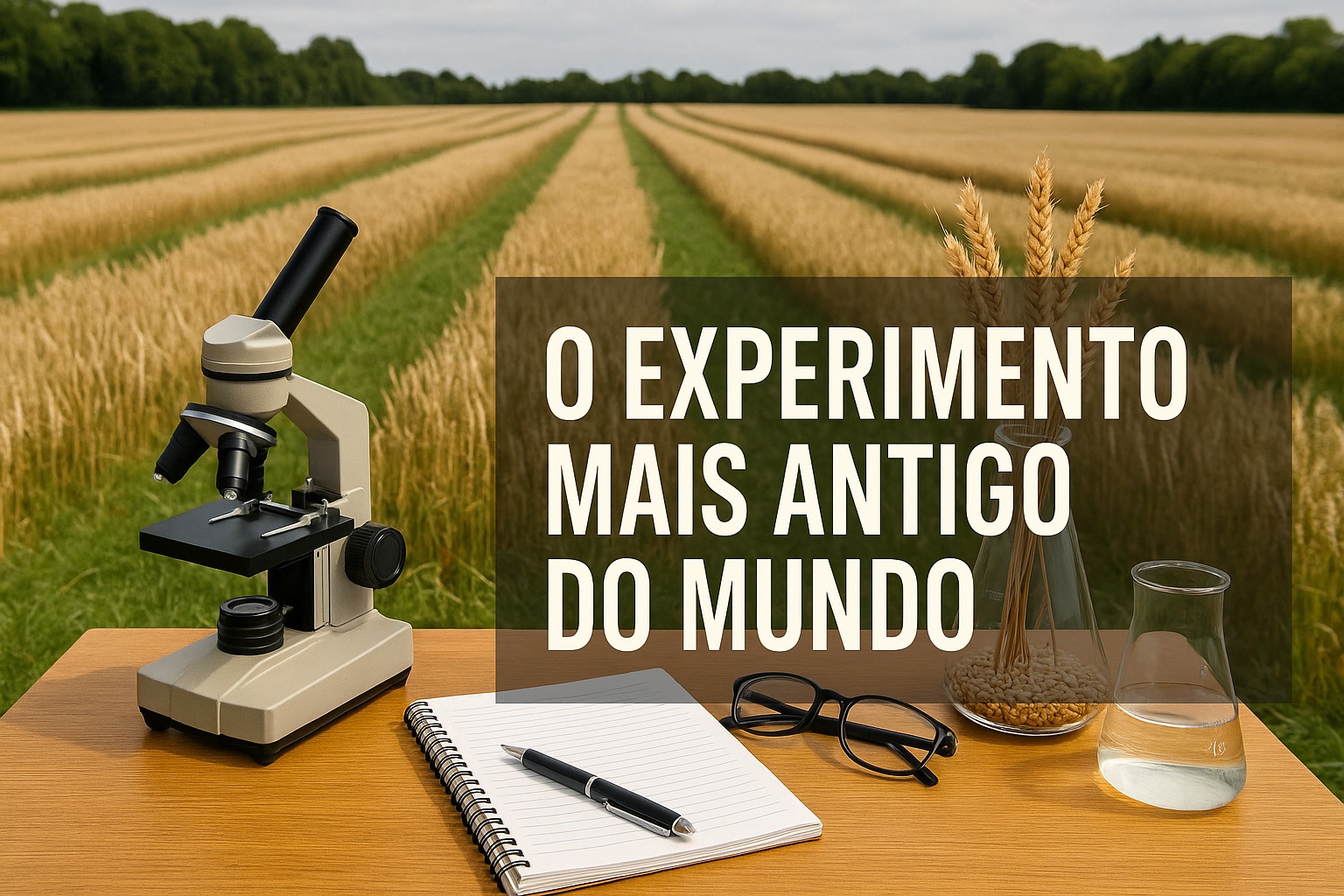

Created in 1843 by John Bennet Lawes, the Broadbalk Experiment, in the United Kingdom, is still active for almost two centuries, being the longest agricultural study in the world and a global reference in productivity and sustainability
It was 1832 when John Bennet Lawes, a young British man of only 17 years, inherited a large estate in Hertfordshire, England. Expelled from Oxford and with plenty of free time, he began testing something simple, but that would change the course of global agriculture.
The Beginning of an Idea That Would Turn Into Revolution
Curious, Lawes decided to plant medicinal herbs and observe the effects of different fertilizers in pots.
The results excited him because they showed that productivity could vary depending on the fertilizer used.
-
Scientists Develop Needle-Free Insulin That Penetrates Skin, Reduces Glucose in Animals Within an Hour, Paving the Way for Diabetes Patches and Creams for Humans

-
After 40 Years of Research, Powdered Coconut Water to Be Produced in Brazilian Biorefinery, Aiming to Revolutionize Health for Children, Elderly, and Hospital Patients
-
Queen Guitarist Brian May Collaborates with ESA Scientists to Study Asteroids Bennu and Ryugu Using 3D Simulations
-
Largest Known Single-Piece Meteorite, Weighing 60 Tons, Puzzles Scientists with Its Intact Fall and Lack of Visible Crater


Thus, he expanded his tests to open field crops, inaugurating a new era of agricultural experimentation.
The intention was clear: to liberate farmers from dependence on organic fertilizers obtained from animals.
In 1842, Lawes achieved what seemed improbable — he patented a phosphate-based fertilizer, the first of its kind industrially. The invention revolutionized the sector, making the process more efficient and accessible.
The Birth of the Longest Experiment in History
The following year, in 1843, the young Briton initiated the Broadbalk Experiment, the oldest continuous agricultural study in the world.
The goal was to understand, over the decades, how different types of fertilizers and cultivation methods affected winter wheat and soil fertility.
The first harvest took place in 1844. Since then, the same field in Rothamsted has been cultivated annually, with strips of wheat subjected to distinct treatments.
Some areas received the same type of fertilizer for more than 160 years, which makes the study a true scientific treasure.
A Field That Continues to Teach the World of Agriculture
Over time, the experiment has been updated. New varieties of wheat have been introduced and modern cultivation techniques have emerged.
Even so, the essence of the study remains the same: to understand in the long term the effects of human actions on the soil and agricultural productivity.
The data accumulated over nearly two centuries continues to guide research on sustainability and environmental impact.
Thanks to Lawes, agricultural science has gained a solid foundation to feed billions of people around the planet.
The Broadbalk Experiment is, to this day, living proof that time can be the best ally of science.
With information from Xataka.





I have been browsing online more than three hours today yet I never found any interesting article like yours It is pretty worth enough for me In my view if all website owners and bloggers made good content as you did the internet will be a lot more useful than ever before