






 Portuguese
  Spanish


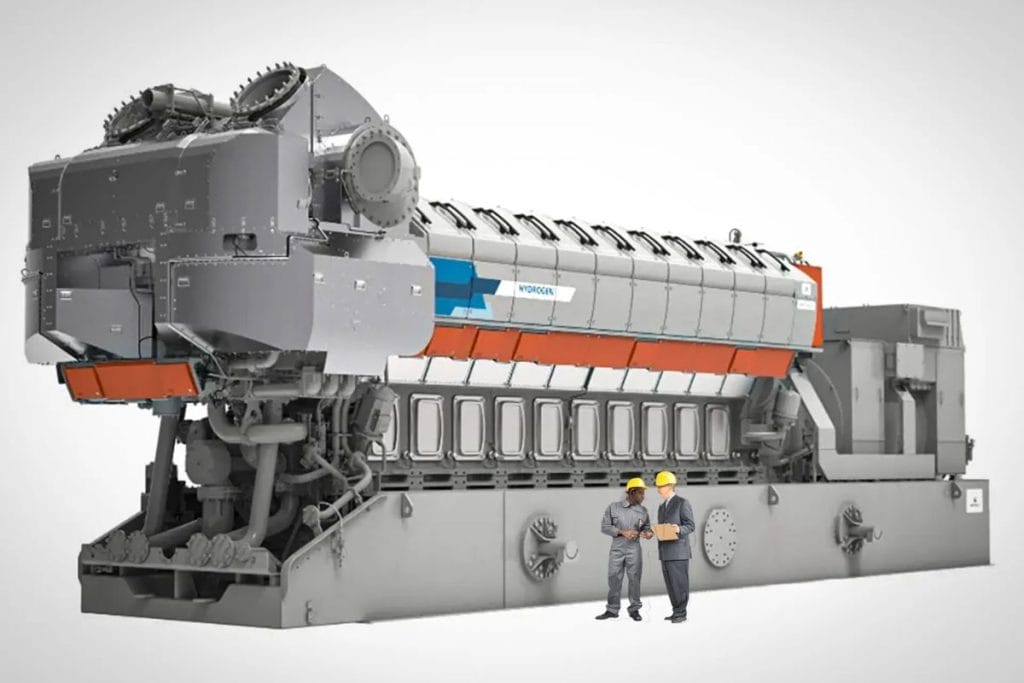

The Revolutionary Wärtsilä 31 Engine Now Generates Clean and Renewable Energy. See How This Technology Can Stabilize Renewable Energy Grids with Hydrogen
One of the largest engines in the world has transformed into a clean energy generator. Originally designed to burn diesel, dual fuel, or gasoline for tankers and container ships, the Wärtsilä 31 marine engine has a new life generating renewable and clean electricity.
Engine Efficiency and Clean Energy Production
The Wärtsilä 31 engine is in the Guinness World Records for being the most efficient four-stroke marine engine ever manufactured in its class. It also holds the highest power per cylinder in engines of equivalent diameter. It can be configured with 8 to 16 cylinders and with an output power ranging from 4.6 MW to 10.4 MW at 720 and 750 rpm, generating a massive amount of energy.
This Finnish company is best known for manufacturing the largest combustion engines in the world, notably the RTA96-C, which stands 27 meters tall, 13 meters long, and has a power output of 82,028 kW. The Wärtsilä 31 engine is considerably smaller, with a maximum height of 4.7 meters and a length of 8.7 meters, and when running on fossil fuel, it can generate up to 9,800 kW of energy.
-
Meta to Launch Arena, a New Prediction App Targeting 3.56 Billion Users, Competing with Polymarket and Kalshi

-
Scientist Challenges Famous Human Evolution Theory, Argues Homo Sapiens Evolved Gradually Over Thousands of Years
-
15-Year-Old American Builds Ocean Generator with PVC Pipe and 3D-Printed Propeller for $12, Wins National Prize, Presents at White House, and Makes Forbes 30 Under 30 List

-
$12 Billion Invested in AI Data Centers in Semi-Desert Mexican State, But 17 of 18 Municipalities Now Face Water Shortages, Residents Receive Water Only 3 Days a Week




The bore and stroke of the cylinder (31 x 43 cm) may seem huge to those from the automotive world, but compared to some of the company’s larger engines, which have cylinders large enough to walk inside, they are relatively compact.
Transition to Clean Energy Generation with Hydrogen
Converted into a generator, the 31SG-H2 version, prepared for hydrogen, can operate on natural gas, or a mixture of natural gas and 25% hydrogen, or it can be upgraded to run on 100% hydrogen, promoting clean energy generation. There is also a fuel-flexible version, the 31H2, designed to operate natively with pure hydrogen but also accepts natural gas or mixed fuels.
Both promise to be the largest hydrogen generators in the world when launched, assuming there is enough hydrogen available to operate them.
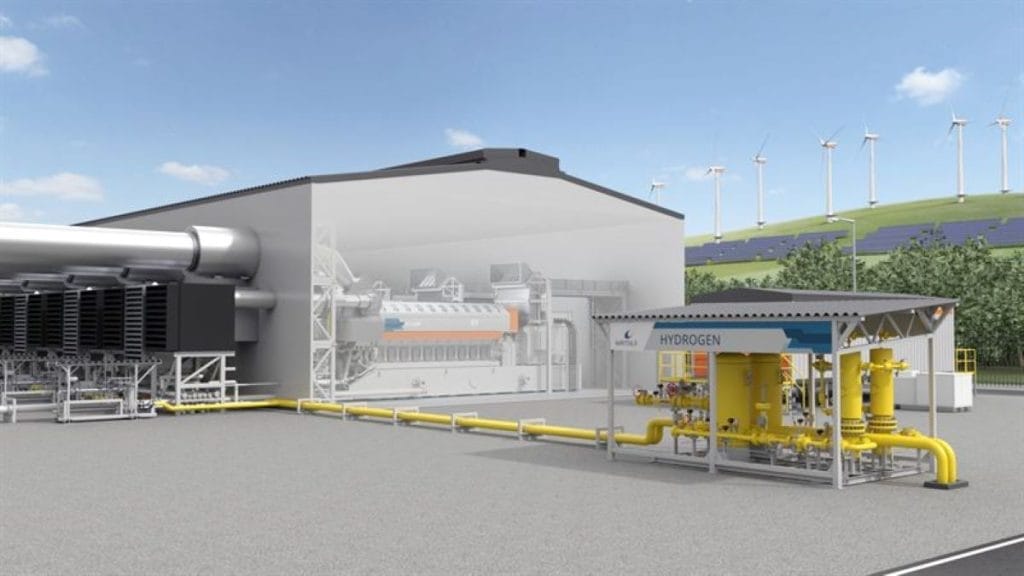
The hydrogen power plant is designed to stabilize a grid based on renewable energies, quickly increasing or decreasing its output to support intermittent clean energy sources such as solar and wind. All this without minimum startup or shutdown time and with the ability to synchronize with the electrical grid in just 30 seconds at the touch of a button. By using hydrogen, Wärtsilä can generate electricity that is 100% carbon-free.
The Role of Natural Gas in the Energy Transition
“We must be realistic that natural gas will play a role in our energy systems for years to come. Our fuel-flexible engines can use natural gas today to provide flexibility and balance, allowing renewable energy to thrive. Then, they can be converted to run on hydrogen when it becomes available, preparing us for the future on the path to carbon neutrality.”
- Anders Lindberg, President of Wärtsilä Energy
Certification and Reliability of the Hydrogen Plant
The Wärtsilä power plant concept has been certified in phase 1 by TÜV SÜD, an organization focused on protecting people and the environment and ensuring regulatory compliance. It must undergo two more certifications before construction can begin. Its hydrogen-ready engines are expected to be available for delivery in 2026.
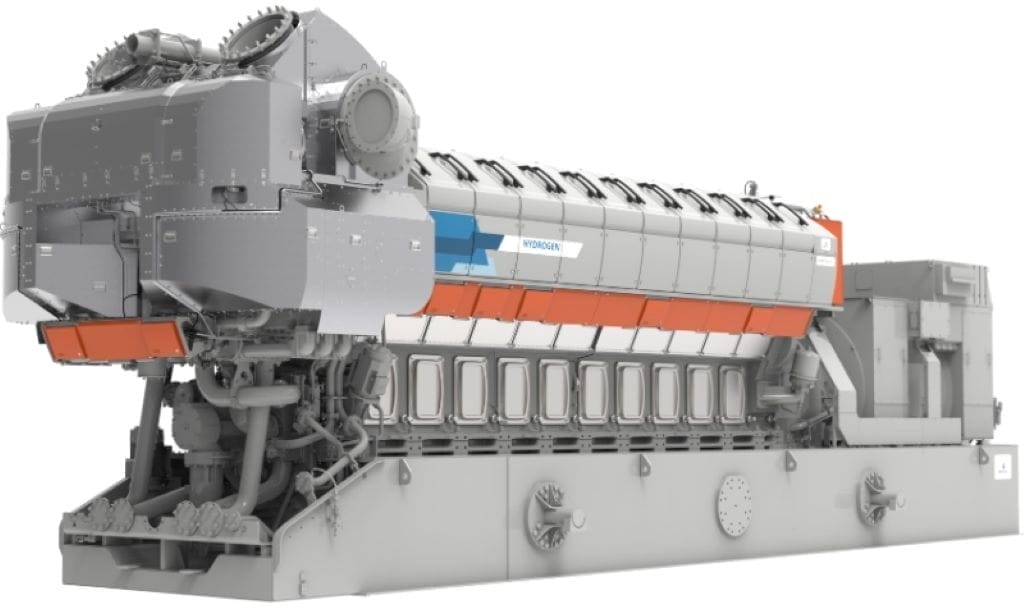
With over a million hours of operation and more than 1,000 MW of installations to date, Wärtsilä has a proven track record of reliability. We are interested to see what kind of efficiency this colossal machine can achieve and how it could compare in terms of long-term savings at an industrial scale against a large fuel cell operation, which could convert hydrogen directly back into electricity and water.
Via www.wartsila.com





