Portuguese
  Spanish


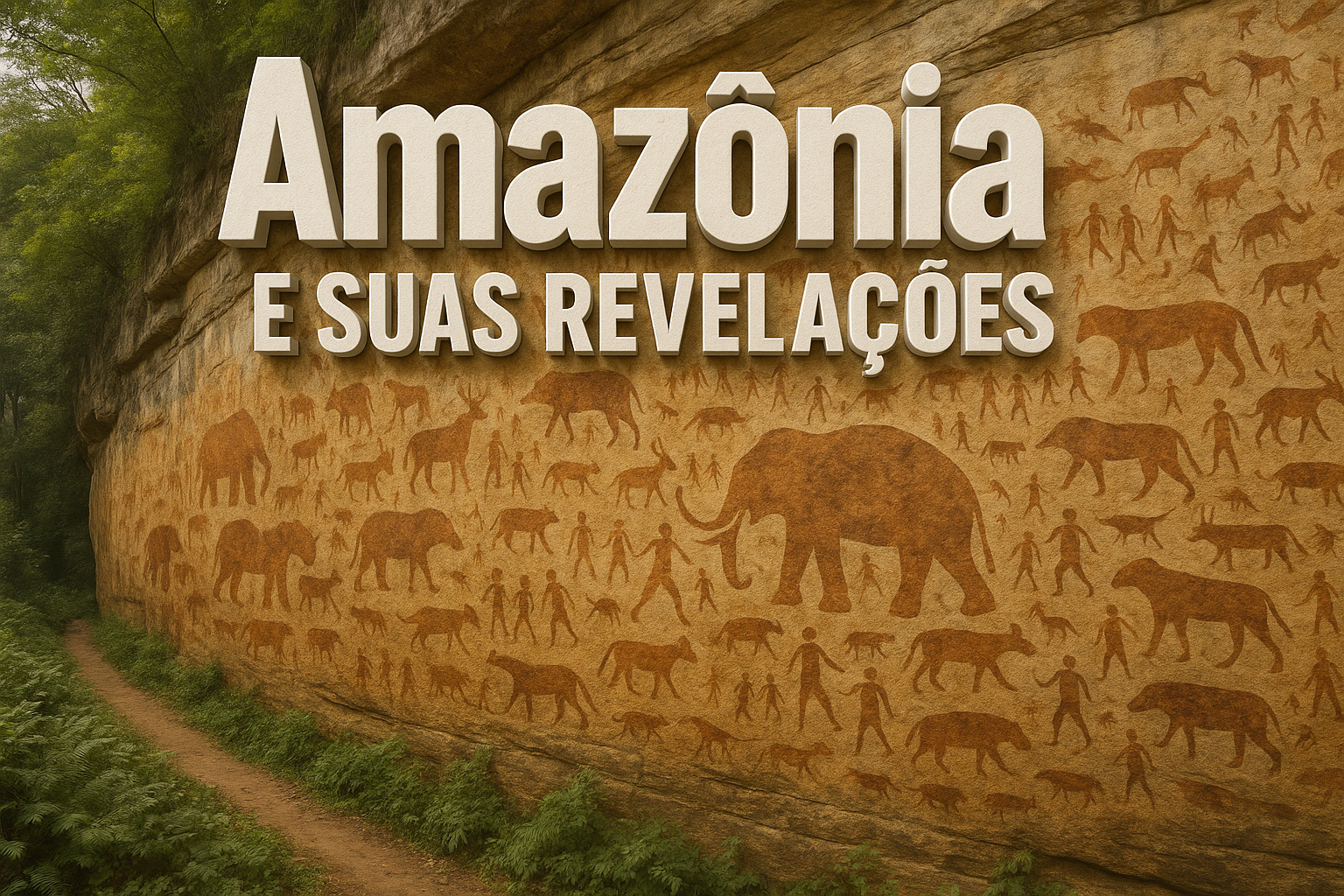


More Than 75 Thousand Rock Paintings Revealed in the Serranía de La Lindosa Show How Amazonian Peoples Lived and Interacted with Extinct Fauna During the Ice Age
An archaeological revelation of great historical impact gained prominence in 2025, attracting international interest. As Colombian researchers have explained since 2002, a wall covered with thousands of prehistoric paintings was identified in the Serranía de La Lindosa, revealing records of approximately 13 thousand years.
The discovery, analyzed by specialists from the Universidad Nacional de Colombia, shows that more than 75 thousand drawings have been preserved along kilometers of rock, despite difficult access, humid climate, and dense vegetation of the Amazon rainforest.
Technical Investigation Reveals Unique Cultural Heritage
According to reports released by teams from the Instituto Colombiano de Antropología e Historia (ICANH) between 2010 and 2020, the mural presents detailed scenes of the everyday life of Amazonian peoples. Furthermore, the paintings depict rituals, hunts, plantings, and social interactions, forming a complex panel.
-
How to Prevent Brown Recluse Spider Bites: Common Hiding Spots and Free Tips to Reduce Risks

-
Natto: The Unusual Japanese Superfood Gaining Popularity on Social Media and Driving Record Exports
-
Brazilian Mayor Goes Undercover as Homeless for 24 Hours to Assess Public Services

-
15-Year-Old Entrepreneur Malu Lira Publishes 20 Children’s Books on Financial Education, Earns $500,000, and Expands Her Project to the Amazon Rainforest





Archaeologists emphasize that giant sloths and mastodons appear in the representations, indicating direct coexistence between humans and megafauna before the extinction of these animals. According to specialists, this collection forms an unprecedented visual archive about the Amazon during the Ice Age, a period that occurred between about 115 thousand and 11 thousand years ago.
Still, part of the everyday preservation depends on the Rojas family, who have controlled access since 2004 and protect the site as community heritage.
Scientific and Social Impacts of the Revelation
The quantity of available records allows for the reconstruction of the lives of Amazonian groups under much colder environmental conditions. Thus, specialists assert that the paintings reinforce hypotheses about human migrations, climate adaptation, and social organization, expanding the understanding of collective behavior in remote periods.
Moreover, the drawings provide hints of community practices, suggestions of social division, and signs of collective rituals, reinforcing the cultural complexity of these groups. Therefore, the mural transforms previous interpretations of Amazonian peoples and becomes an essential reference for contemporary archaeological studies.
The Mural That Rekindles Tensions and Debates in Science
Although there are no social conflicts in the area, as seen in other sensitive discoveries, specialists point out that the revelation generates intense debates. Researchers discuss how to interpret certain symbols, the role of animal representations in rituals, and even the climatic impact on the extinction of the megafauna depicted.
Thus, the rediscovery mobilizes international teams and requires continuous analysis, as the volume of images is so vast that decades of study will be necessary.
Scientific Planning to Preserve and Analyze the Collection
Currently, Colombian institutions are working to organize preservation protocols and expand controlled access. As technicians explain, the goal is to ensure that all future analyses are conducted rigorously, as any improper intervention could compromise the records.
There is still no estimate for the end of the studies, although archaeologists stress that complete documentation will take many years, given the scale of the wall.
The Discovery in a Global Context
The Colombian revelation aligns with other global discoveries that redefine archaeological reading. Although the Amazon is known for housing rock art, no other site contains such a large volume of preserved images.
Thus, the Sistine Chapel of prehistory becomes a scientific landmark, as pointed out by specialists studying rock formations since 1990.
What Does the Future Hold for the Study of Prehistoric Amazonia?
Researchers anticipate that the understanding of human occupation in the Amazon may change significantly after the complete analysis of the mural. However, progress depends on continuous preservation, technical rigor, and international collaboration.
If this wall has kept so many secrets for 13 thousand years, what other answers may still be hidden in the Amazon rainforest?