






 Portuguese
  Spanish


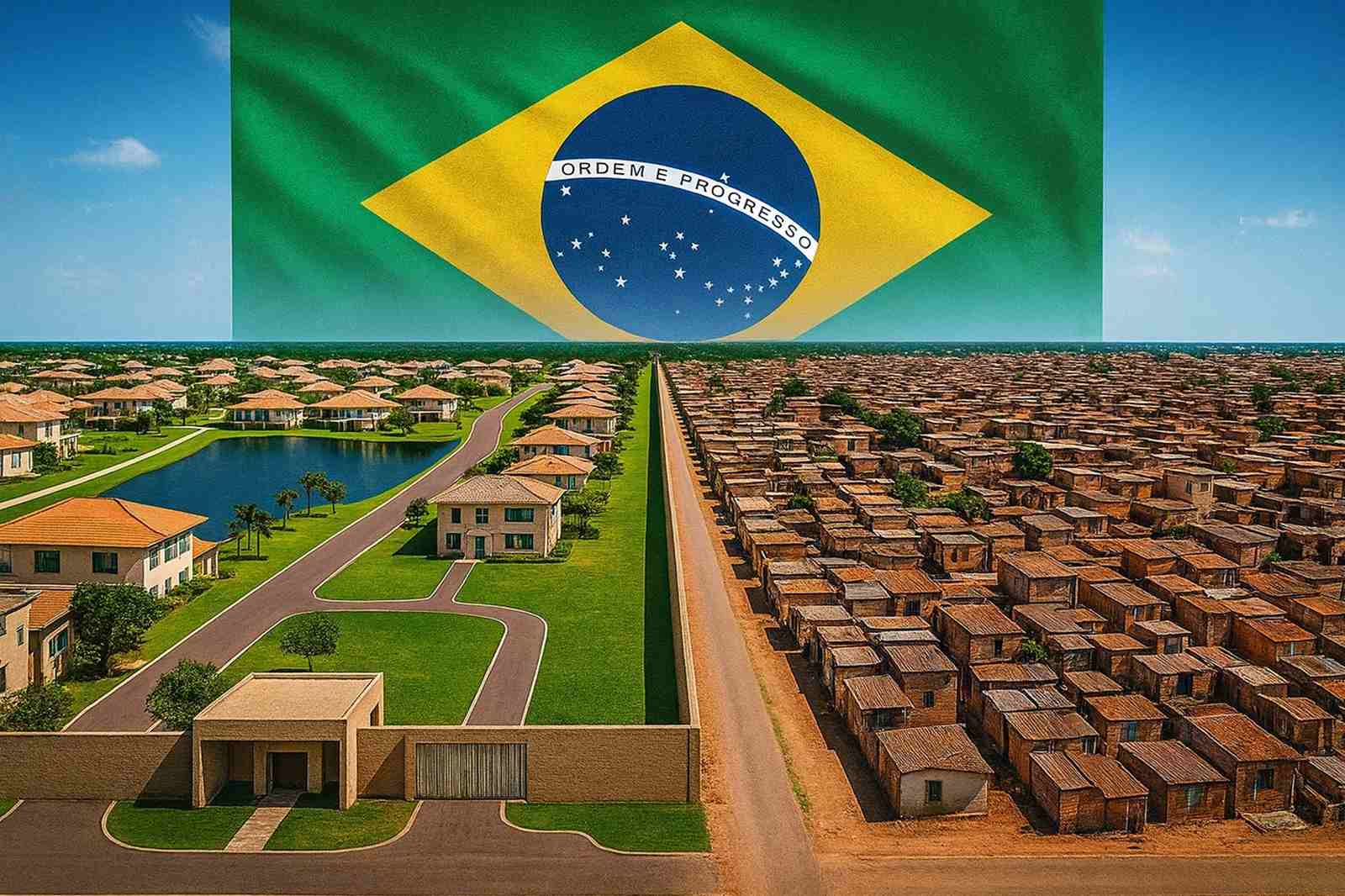


Security, Status, and Segregation: How Horizontal Condominiums Are Multiplying in Brazil and Changing the Way People Live in Cities
Curitiba draws attention for the numerous housing complexes that spread across its neighborhoods. However, this phenomenon is not exclusive to the capital of Paraná.
In São Paulo, areas such as Morumbi, Jardim Guedala, and Alto de Pinheiros have been transformed by the presence of so-called horizontal condominiums.
On the southern coast, a small town has become known as the capital of this housing model, with over 40% of its territory dominated by walled developments.
-
How to Prevent Brown Recluse Spider Bites: Common Hiding Spots and Free Tips to Reduce Risks

-
Natto: The Unusual Japanese Superfood Gaining Popularity on Social Media and Driving Record Exports
-
Brazilian Mayor Goes Undercover as Homeless for 24 Hours to Assess Public Services

-
15-Year-Old Entrepreneur Malu Lira Publishes 20 Children’s Books on Financial Education, Earns $500,000, and Expands Her Project to the Amazon Rainforest




The growth raises questions. Why do so many families choose to live in condominiums? What are the social impacts of this choice?
And how can this trend become a problem for society while representing a solution for municipal budgets?
The Origins: Alphaville and the Imported Model
In the 1970s, Brazil’s urban landscape was dominated by apartments and traditional houses. It was during this period that a new alternative emerged: gated communities. Inspired by American suburbs, Alphaville in São Paulo became a symbol of status. Tree-lined streets, enhanced security, and leisure areas differentiated the project from everything that existed until then.
The central appeal was security. Whether in buildings or horizontal condominiums, the presence of 24-hour porters, surveillance cameras, and electronic gates provided a sense of protection. However, in horizontal developments, the rhetoric went beyond simple protection.
Security, Status, and Real Estate Marketing
In 2003, researcher Denise Mônaco dos Santos analyzed how real estate marketing leveraged the idea of security.
The study concluded that this was not the only attraction. Social changes, economic transformations, and new forms of urban organization also contributed to the expansion of this model.
Advertisements sold a “package” of benefits: exclusivity, contact with nature, and a new lifestyle. Promotional images displayed families biking on tree-lined streets, with slogans like “São Paulo is greener here.” The promise of freedom contrasted with the reality of high walls, electric fences, and constant monitoring.
These campaigns reflected the population’s desires, but also shaped expectations. Throughout the 2000s, condominiums consolidated as the urban standard, marking the fragmentation of cities and associating walls with the idea of prestige.
The Turn of the Century: Violence, Urban Chaos, and Pandemic
With the advancing 2000s, urban violence increased, cities became denser, and buildings multiplied.
In contrast, public infrastructure did not keep pace. Denise’s study, though published in 2003, remained relevant: horizontal condominiums are not only a response to fear but also the result of a status and lifestyle narrative.
New factors reinforced this movement. The popularization of remote work and the impacts of the pandemic propelled the quest for space, leisure, and comfort. In Curitiba, data from 2015 indicated that, within three years, the supply of horizontal condominiums had quadrupled.
In Novo Hamburgo, even distant from major centers, new developments frequently emerge. On the northern coast, Xangri-lá currently has 43 gated communities, with a forecast for another 19 by 2026.
Internal Structure and Attraction for Families
The differentiator of horizontal condominiums lies in the combination of security with leisure infrastructure. Swimming pools, gyms, sports courts, soccer fields, trails, coworking spaces, and green areas are part of the package. The format reinforces the idea of community and attracts families seeking tranquility.
The DataZAP survey revealed that 46% of people consider living in planned neighborhoods. Horizontal condominiums meet this desire by offering a kind of private, controlled, and organized neighborhood.
In addition to quality of life, many see the model as an investment opportunity. In medium-sized cities like Indaiatuba, Uberaba, and Eusébio, real estate appreciation has made these developments even more attractive.
House vs. Apartment: A Dispute of Lifestyles
For many residents, a house in a horizontal condominium represents freedom compared to an apartment. Without neighbors above or below, with their own yard and fewer collective rules, everyday life becomes lighter.
However, this freedom has limits. The walls that protect also isolate. Coexistence within the condominium tends to be restricted to people of similar economic profiles.
Children grow up in homogeneous environments, without contact with the social diversity typical of cities. Thus, urbanization fragments: on one side, safe private spaces; on the other, public areas marked by chaos and insecurity.
Xangri-lá: The Capital of Walls
Xangri-lá, on the southern coast, illustrates this process. Aerial images from 2006 show few developments. By 2025, the landscape is dominated by artificial lakes and walled areas.
The rapid growth has brought consequences. Records of overflow at sewage treatment stations have even led to a suspension of new construction.
Along the Estrada do Mar, the walls form a continuous corridor, altering the landscape and symbolizing socio-spatial segregation.
On the beachfront, the presence of private structures has also sparked controversy. Stalls and umbrellas erected by condominiums blocked common-use spaces. In response, decree 8/2024 limited the installation of unoccupied equipment on the beaches.
The Weight of Revenue for Municipalities
Despite criticism, condominiums are seen as a solution by municipal administrations. The mayor of Xangri-lá sums up the logic: the municipality collects trash at the gate, does not spend on lighting or internal maintenance, but collects property taxes normally.
The numbers confirm this: 46.5% of the municipality’s revenue comes from condominiums, which occupy 41.8% of the territory. For the public sector, this is a favorable equation: high revenue and low maintenance costs.
In traditional vertical buildings, the equation is different. Each apartment pays property taxes, but the city needs to invest in streets, sidewalks, lighting, security, tree pruning, urban cleaning, and emergency services. All this generates ongoing expenses.
In horizontal condominiums, the logic is reversed. Each condominium functions as a mini-city, with security, lighting, green areas, and even sanitation funded by the residents themselves.
The Paradox of Double Charging
In practice, residents pay twice. They bear the internal infrastructure costs, which work well, while continuing to pay for public services they receive in a limited manner. For municipalities, this is the perfect scenario: they collect as if providing all services but spend only up to the gate.
If the expansion trend continues, a large part of municipal revenue will come from privately-owned areas with little public service. The question arises whether this logic will bring benefits to the rest of the population or merely reinforce inequalities.
Between Solution and Problem
Horizontal condominiums have consolidated as a response to the desire for security, leisure, and comfort. But at the same time, they expose urban dilemmas: the fragmentation of cities, socioeconomic segregation, and the reduction of public space as a place for coexistence.
While residents seek quality of life behind the walls, municipalities find a way to collect more while spending less. However, the risk is that cities become dual territories: one private and protected, the other public and precarious.
The future of urban Brazil may depend on how society views this expansion. What seems like an immediate solution for families and governments today may, tomorrow, reveal itself as a collective problem that is difficult to reverse.







A explicação é simples, embora desagradável. Se isolar da pobreza, tentar maior segurança e conviver com um ambiente socialmente mais similar.
Isso causa uma série de problemas urbanísticos e sociais mas francamente quem é que não quer isso para sua família?