






 Portuguese
  Spanish


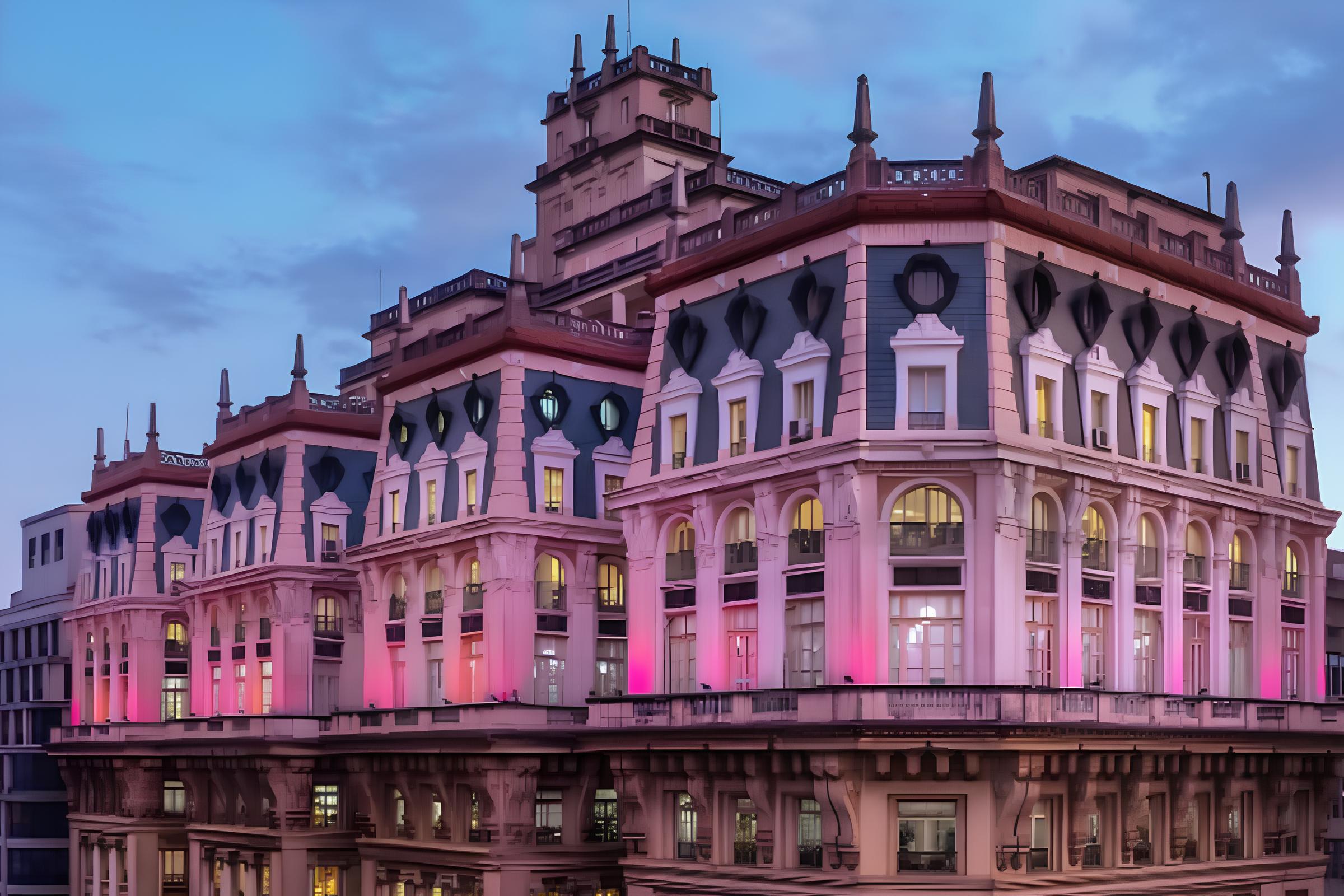

The Martinelli Building, The First Skyscraper in Brazil, Started With 12 Floors and Ended With 30. Dubbed Madness, Its Owner Lived in the Penthouse to Prove Its Safety and Became a Symbol of São Paulo.
In the 1920s, São Paulo was still a city marked by mansions, colonial churches, and low-rise buildings. But amidst the coffee euphoria and economic growth, a project emerged that would forever change the urban landscape: the Martinelli Building. Inaugurated in 1929, it began with a modest plan of 12 floors, but ended up with an impressive 30 stories and 130 meters tall, becoming the first skyscraper in Brazil and Latin America. Its construction was surrounded by controversies, doubts, and criticisms, but also fascination and curiosity.
More than an engineering feat, the Martinelli became a symbol of the audacity of an immigrant who believed so much in his vision that he even lived in the penthouse with his family to prove that the building was safe.
Giuseppe Martinelli: The Immigrant Who Dreamed of the Impossible
The protagonist of this story was Giuseppe Martinelli, an Italian immigrant who arrived in Brazil in 1892. Coming from Tuscany, he landed in Santos at the age of just 13 and began his life as a worker in commerce.
-
Giant 3,600-ton Crane Breaks Two World Records by Installing World’s Largest Single-Piece Forged and Welded Hydrogenation Reactor, Weighing 3,037 Tons, in Chinese Petrochemical Plant in Just Six Days

-
$80 Million Bridge in Brazil Cuts Travel Time from 30 Minutes to 1 Minute, but Audit Reveals Major Flaws
-
Man Builds Stone Bed with Granite Rocks and Hand-Sawn Cedar Beams, Home Extension Garners Over 437,000 Views on Bonus Bolts Channel

-
Brazilian Researcher Develops Color-Changing Roof Tile to Reduce Air Conditioning Use by Up to 15%



With hard work and talent for business, he prospered in the shipping and coffee export sector, amassing a fortune. Over time, he decided to invest in something that would leave his mark on São Paulo: a monumental building, inspired by the skyscrapers already rising in New York and Chicago.
For Martinelli, the project would be more than a real estate investment. It would be a symbol of progress in São Paulo and proof that Brazil could rival the world’s major urban powers.
Twelve Floors? Not Enough for Martinelli
The initial plan called for a building of 12 floors—which would already be bold by the standards of the time. But Martinelli was not satisfied. He ordered the building to be expanded to 20 stories, and then modified again until it reached 30 floors.


This insistence generated controversy. Engineers claimed the construction was dangerous, municipal authorities attempted to halt the work, and newspapers reported that the building could collapse at any moment.
Nevertheless, Martinelli personally financed the expansion, spending millions by the standards of the time. It is estimated that the total cost of the project exceeded the equivalent of US$ 5 million in the 1920s.
The Scandal and the Gesture That Made History
At 130 meters tall, the Martinelli was considered by many to be an “architectural madness.” The distrust was so great that rumors spread that the building already had cracks and could collapse at any moment.
To silence the critics, Giuseppe Martinelli made a radical decision: he moved into the penthouse of the building with his family.
The gesture was a public challenge. If the building fell, he would fall with it. For years, Martinelli lived at the top of the skyscraper, transforming his home into a manifesto of confidence. The penthouse became known as the “suspended palace” of the businessman and a symbol of the boldness behind the construction.
The Martinelli and the Edifício A Noite: Who Was First?

A common point of confusion is the comparison between the Martinelli and the Edifício A Noite in Rio de Janeiro.
- Martinelli Building (São Paulo, 1929): first skyscraper in Brazil and Latin America, with 30 floors and mixed use (hotel, residences, and offices).
- Edifício A Noite (Rio de Janeiro, 1930): first commercial reinforced concrete skyscraper, with 22 floors and 102 meters tall, home to newspapers and the famous Rádio Nacional.
In other words, both were pioneers in different categories: the Martinelli as the first Brazilian skyscraper, and A Noite as the first commercial reinforced concrete skyscraper.
A Vertical City in the Heart of São Paulo
The Martinelli was more than a tall building: it was practically a vertical city.
- Hotel São Bento: luxurious, hosted businessmen, politicians, and artists.
- Residential Apartments: occupied by elite families.
- Internal Businesses: restaurants, barbershops, clinics, law offices.
- Leisure Spaces: casino and cinema, which enhanced the building’s glamour.
In the 1930s, living or working in the Martinelli was a sign of status and modernity.
The Height, the Decline, and the Recovery
For decades, the Martinelli was synonymous with sophistication. However, starting in the 1950s, with the disordered growth of the city and the shift of São Paulo’s economic center, the building fell into decline.
In the 1960s and 1970s, it was even occupied irregularly and suffered from a lack of maintenance. Some claimed that its era had come to an end.
Only from 1975, when the São Paulo City Hall took over the building, did restoration begin. Today, the Martinelli is a historical heritage site, houses public offices, and is open for tourist visits, offering one of the most iconic views of the city.
Architectural Style and Curiosities
The building was designed by architect William Fillinger, with an eclectic style that mixes elements of the Italian Renaissance with modern lines. Some curious details mark its history:
- Martinelli had a luxurious mansion built in the penthouse, with halls, bedrooms, and suspended gardens.
- The building was called a “wedding cake” by some critics due to its ornamentation.
- For decades, it was the first visible point in the city for those arriving by train at the Estação da Luz.
International Comparisons
At the time, the Martinelli rivaled iconic skyscrapers such as the Woolworth Building (New York, 241 meters) and anticipated the era of the Empire State Building (1931, 381 meters).
Although today it is far from giants like the Burj Khalifa (828 meters, Dubai), the Martinelli is still remembered as the foundational landmark of Brazilian verticalization.
More than a building, the Martinelli symbolizes the courage and ambition of an immigrant who believed in Brazil. Its story encapsulates São Paulo’s boldness in becoming a modern metropolis.
The gesture of Martinelli, moving to the penthouse to prove the safety, echoes today as an example of absolute confidence in his vision.
Almost a century later, the building remains standing, defying time, criticism, and the disbelief of those who once called it madness.


