






 Portuguese
  Spanish


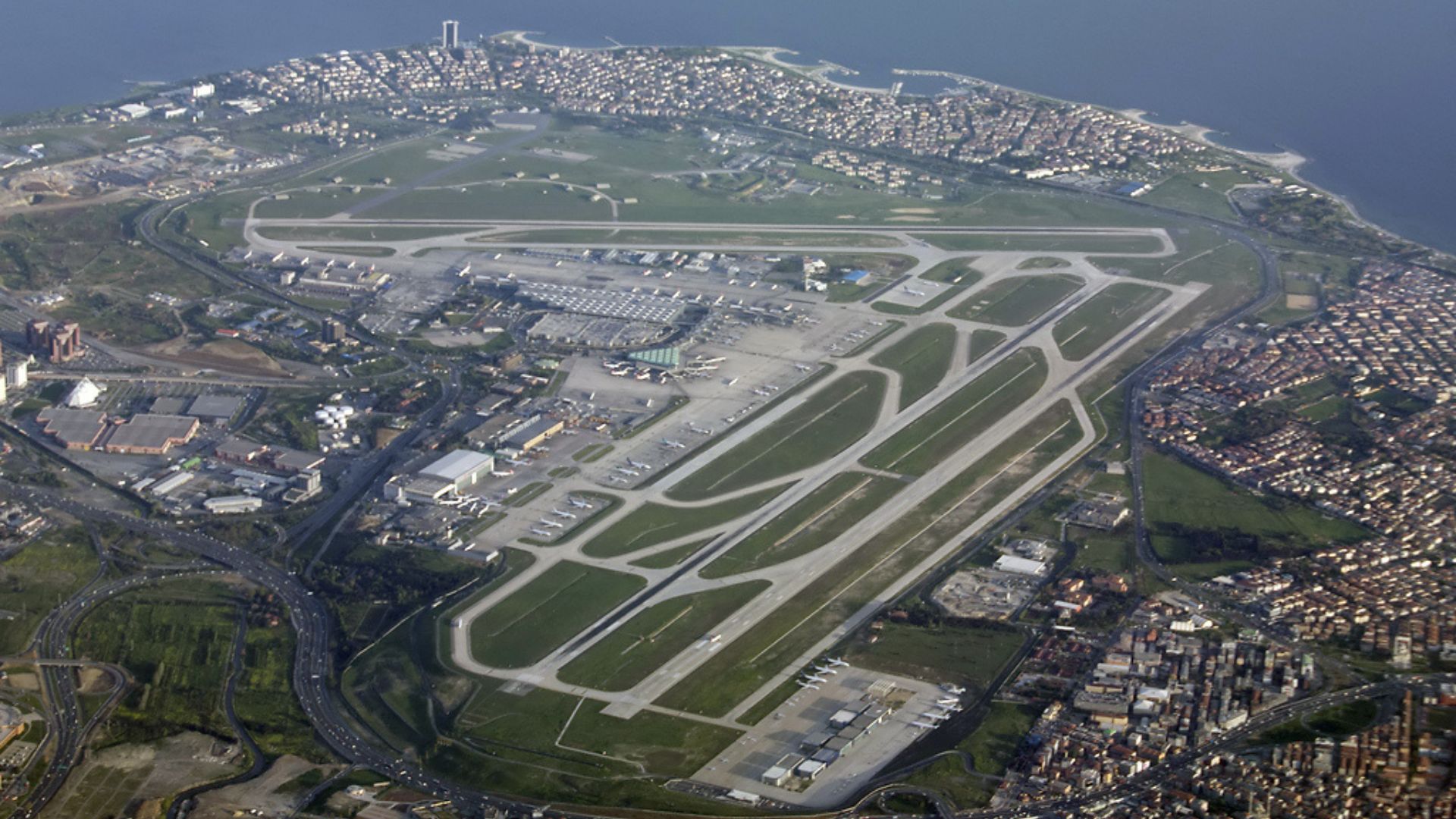

Turkey built an emergency hospital with 1,008 beds in just 45 days at the former Atatürk Airport in Istanbul.
Amid the advance of the Covid-19 pandemic in 2020, Turkey decided to drastically accelerate the construction of emergency hospital structures in Istanbul. The project that drew the most attention was the Professor Murat Dilmener Emergency Hospital, built within the area of the former Atatürk Airport in just 45 days. The hospital was inaugurated in May 2020 with 1,008 beds, including intensive care units, emergency rooms, diagnostic sectors, and infrastructure prepared for large-scale patient care. The pace of the construction was impressive because hospital structures of this size normally take years between design, licensing, construction, and operation.
The construction became a symbol of Turkey’s emergency response to the pandemic and showed how large public works can be drastically accelerated in scenarios of health crises.
Emergency hospital was built within the area of the former Atatürk Airport
The choice of location was strategic. The hospital was built within the area of the former Atatürk Airport, one of Turkey’s most important airports before the transfer of main commercial operations to the new Istanbul Airport.
-
Two-Bedroom Home Built in a 40-Foot Shipping Container Delivered and Ready for Same-Day Living in São Paulo Countryside

-
China Constructs Artificial Island 32 km Offshore for Yangshan Port, Connected to Shanghai by 32 km Bridge, Unloading 3,000 Containers in 20 Hours
-
China’s $70 Billion River Diversion Project, the World’s Largest, Moves 44.8 Billion Cubic Meters Annually, Crosses Under the Yellow River, and Displaced 330,000 People
-
Indian Driver Spends 14 Years Digging 10-Meter Tunnel Through Mountain to Connect Isolated Village to the World




The vast available area allowed for accelerated earthworks, equipment logistics, and the movement of thousands of workers simultaneously. The fact that turned the project into international news was precisely the timeline.


According to Turkish authorities and reports published at the time, the Professor Murat Dilmener Hospital was completed in approximately 45 days from the start of construction to the official inauguration.
The number was impressive because permanent hospitals usually require long processes involving foundation, structure, complex medical installations, and hospital certifications.
Structure was created to serve patients during the Covid-19 pandemic
The pandemic put enormous pressure on health systems in several countries in 2020. Turkey decided to quickly expand its hospital capacity in Istanbul, the country’s most populous city and main urban center.
The new hospital was specifically planned to treat patients infected with the coronavirus and reduce pressure on other medical units in the region. Despite the speed of construction, the structure was not just a simple makeshift center.

The complex included full hospital beds, emergency sectors, diagnostic areas, ICUs, and medical support infrastructure for intensive care.
The proposal was to create a large-scale operational unit capable of functioning as a permanent emergency hospital.
Thousands of workers participated in the accelerated construction
As occurred in other emergency projects during the pandemic, the speed of construction depended on the simultaneous mobilization of a large number of workers, engineers, and suppliers.
The construction operated almost continuously, with multiple teams working simultaneously in different sectors of the construction.
This strategy allowed for the acceleration of the foundation, metal structure, plumbing, electrical installations, and finishing at the same time.
Modular structure helped accelerate the execution of the hospital construction
Part of the construction speed came from the use of industrialized systems and modular structures. Such methods allow for the pre-fabrication of components in parallel with the main civil works, reducing total execution time.

During the pandemic, several countries began using faster construction systems for temporary hospitals and emergency structures. The unit was named in honor of Professor Murat Dilmener, a Turkish doctor who died from Covid-19 during the pandemic.
The gesture turned the hospital into a national symbol linked to the health crisis faced by the country at that time. The inauguration was attended by Turkish President Recep Tayyip Erdoğan.
Turkey also built another emergency hospital during the same period
The Professor Murat Dilmener Hospital was not the only large accelerated medical structure built by Turkey in 2020.
The country also developed the Feriha Öz Emergency Hospital on the Asian side of Istanbul, following a similar logic of rapid response to the pandemic.
The two projects demonstrated the Turkish government’s attempt to rapidly expand hospital capacity in the country’s largest city.
Speed of construction drew international attention during the pandemic
The accelerated construction became the subject of international reports precisely because of the contrast with the traditional pace of large hospitals.
Hospital structures normally involve long engineering processes, complex installations, and highly specialized equipment.
The fact that a hospital with more than a thousand beds was completed in a few weeks turned the project into one of the most cited examples of emergency construction during the pandemic.
Decommissioned airport offered ideal space for heavy logistics
The use of the former airport area greatly facilitated the logistics of the construction. Wide runways, open areas, and easy access allowed for intense circulation of trucks, heavy equipment, and construction materials.
Moreover, the available space reduced common urban limitations in large projects within densely populated regions. The 2020 health crisis forced governments to rethink the speed of execution of hospitals, medical centers, and temporary structures.
In several countries, accelerated projects emerged using metal structures, prefabricated modules, and industrialized assembly. The Turkish hospital ended up joining this group of projects executed in extremely reduced time due to the global emergency.
Construction showed how extreme situations completely change the pace of public engineering
The most impressive aspect of the project might be precisely the difference between the normal pace of civil construction and the speed achieved in an emergency scenario.
Permanent hospitals usually take years in planning, licensing, budgeting, and execution before inauguration.

In the case of the Professor Murat Dilmener Hospital, the urgent need to expand medical capacity made all these stages occur in an extremely accelerated manner.
Turkish hospital became a symbol of how giant projects can be accelerated in critical situations
The project in Istanbul showed that when there is political mobilization, concentrated resources, and maximum priority, large structures can be built much more quickly than usual.
The combination of a large area, rapid construction systems, thousands of workers, and sanitary urgency allowed for part of an old airport to be transformed into a functional hospital with 1,008 beds in just 45 days.
In the end, the construction became one of the most impressive examples of accelerated hospital building during the pandemic, showing how extreme crises can completely change the traditional pace of engineering and public infrastructure.








