






 Portuguese
  Spanish


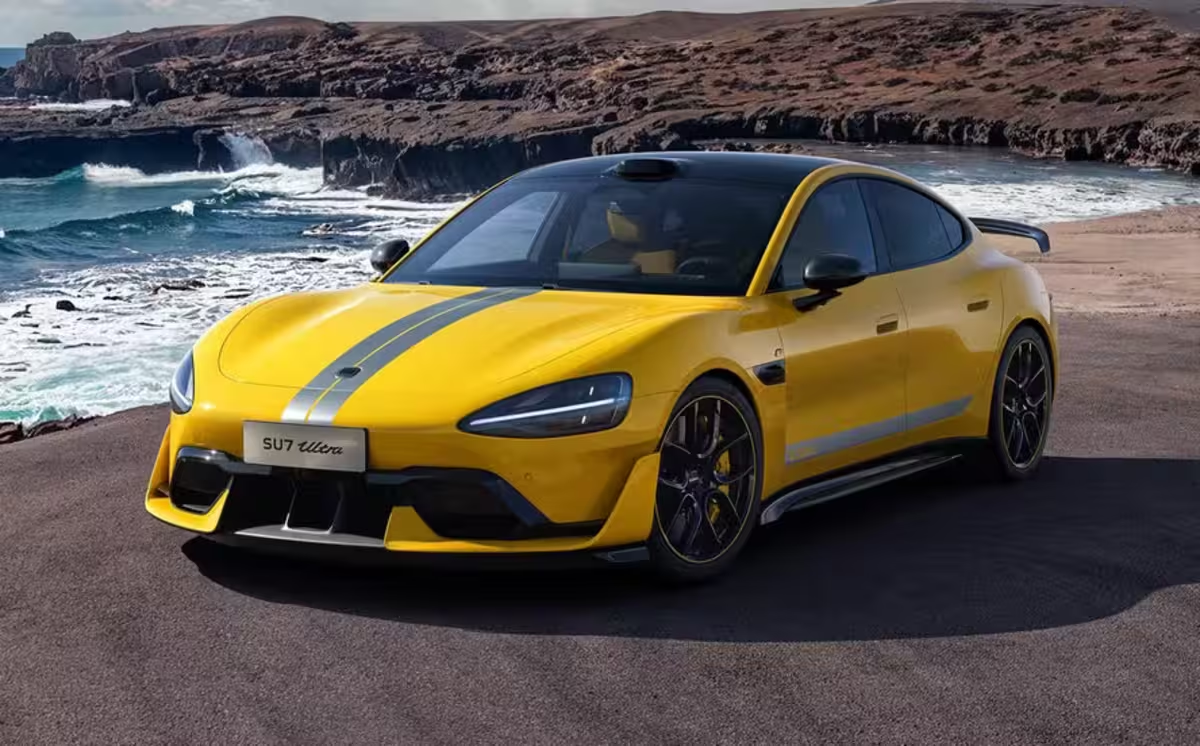

Xiaomi Faces Crisis With Its Electric Car SU7 Ultra That Suffers Technical Failures, Lawsuits, and Criticism After Fatal Accident
Xiaomi is going through its toughest moment since entering the automotive market. After capturing the public with its first electric car, the Chinese company is now dealing with complaints, lawsuits, technical failures, and even a tragedy.
Problematic Hood and Deformed Bumpers
It all started with praise. The initial production was a success and the Xiaomi SU7 Ultra, the sporty version, surprised everyone by outperforming traditional brand models. But criticism soon followed.
Owners of the SU7 Ultra report serious problems. One of the main issues is the front hood, sold for over US$ 5,000, approximately R$ 28,233, which fails to fulfill its promise: dissipating engine heat.
-
2027 Toyota Corolla Cross Unveiled: New Design, Enhanced Fuel Efficiency, Reduced Maintenance Costs, Advanced Technology, Connected Services, and Up to 10-Year Warranty

-
Fiat Cronos Precision 2018: Affordable Sedan with Spacious Trunk and Reliable Maintenance
-
Volkswagen to Cut Production by 1 Million Cars by 2030, Reducing Jobs and Platforms, Focusing on More Profitable Models

-
Toyota Launches First 100% Electric Car in Brazil: bZ4X with 343 HP, All-Wheel Drive, 361 km Range, Priced at $419,990 BRL, Limited to 99 Units




Instead, it deforms, misaligns with the headlight, and bulges on hot days. Xiaomi proposed a settlement: return the original hood to customers or offer 20,000 credits in its store. Many refused and are demanding a refund for the car.
In total, over 400 lawsuits have been filed. The main accusation is false advertising. Regulators in Beijing defended the company, but a class-action lawsuit with at least 70 people is ongoing.
Fire and Deaths in Accident Increase Pressure
Amid quality issues, a fatal accident raised the stakes of criticism. Three people died in a car from the brand that, according to initial reports, had the driver assistance system activated. The car reportedly caught fire after a collision.
Xiaomi acted quickly. They reduced the power of the SU7 Ultra with a software update, cutting more than 600 horsepower from the car.
To recover the performance, drivers were required to undergo track tests. This measure led to complaints, and soon after, the company reversed its decision and restored full power.
Even so, the crisis was only escalating. CEO Lei Jun stated he was facing one of the toughest weeks of his career.
He also claimed that the critical moment may be exacerbated by an alleged defamation campaign.
Allegations of Coordinated Bot Attacks
Xiaomi claims it faces a coordinated attack to damage its reputation right before the launch of the electric SUV YU7. According to the company, more than 10,000 social media accounts are spreading rumors and false news about the brand’s cars.
Images of alleged structural failures in the vehicles have gone viral. The records show the misaligned hood, deformed bumpers, and loose fittings.
The company responded by stating that repairs will be made at no cost, but emphasized that the SU7 Ultra does not suffer from these failures as it uses higher quality parts.
Xiaomi’s Actions to Contain Damage
Xiaomi has temporarily suspended deliveries of the SU7 Ultra and recommended that customers with reservations contact them to maintain their orders. It also warned that waiting times have changed.
Additionally, the manufacturer issued recommendations to drivers: avoid leaving the car in extreme heat and do not park under trees during severe storms. The company also provided a channel for reporting these issues through its brand app.
Company Promises Legal Actions Against Attacks
In the face of the wave of criticism, Xiaomi promises to defend itself in court. In a statement published by Lei Jun on social media, the company’s legal team stated: “The internet is not a lawless space. Xiaomi will resolutely use legal measures to protect our legitimate rights against slander and malicious attacks.”
Despite promises of a solution, the company’s image is tarnished. The reception of the SUV YU7, scheduled for May 22, will be the next test of consumer confidence in the brand.
With information from Xataka.








