






 Portuguese
  Spanish
  4 min of reading
  0 comments


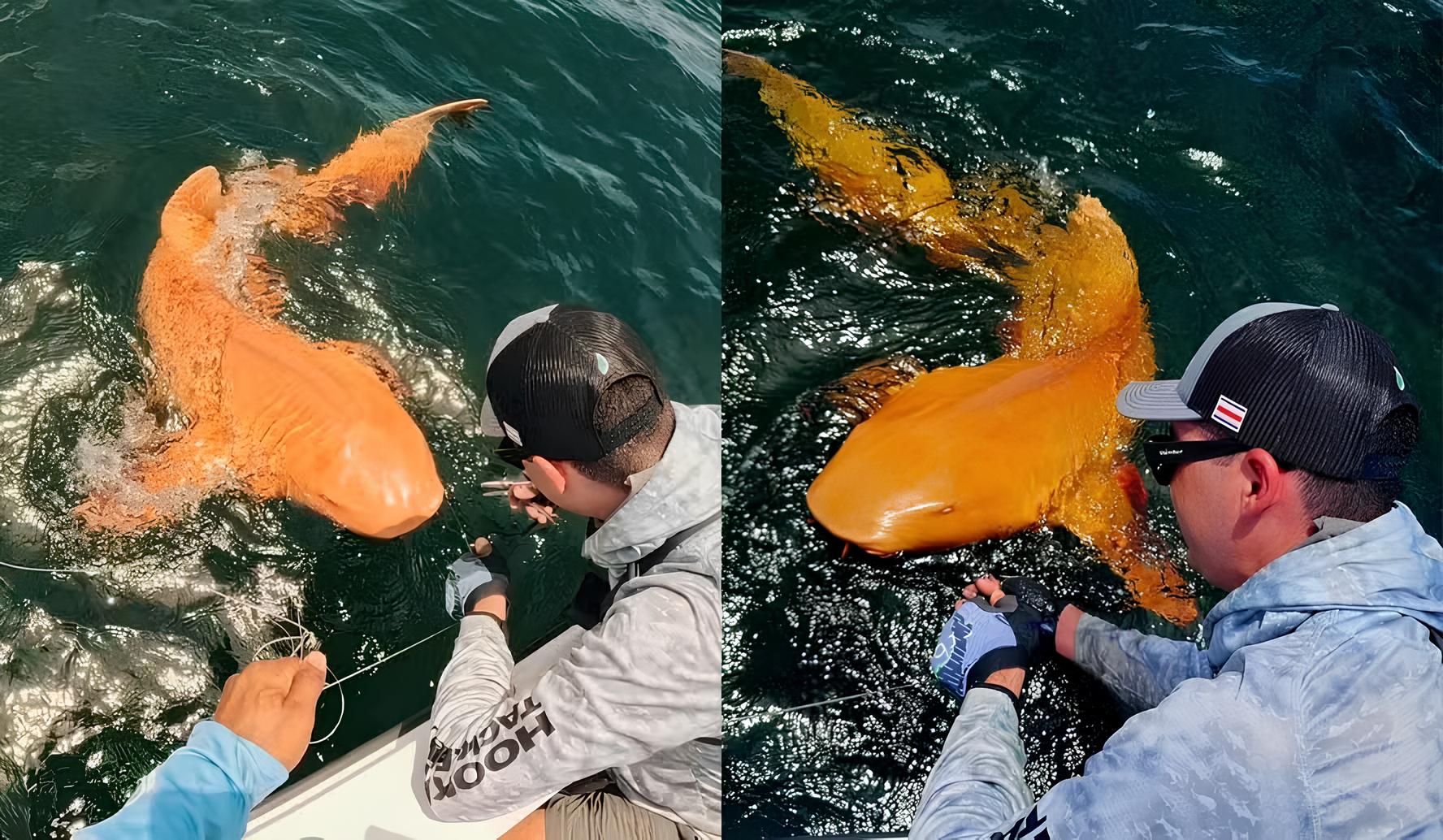
The First Orange Shark in the World Was Discovered Off the Coast of Costa Rica; Rare Species with Metallic Glow Intrigues Scientists and Challenges Marine Biology.
Nature has once again surprised science. In February 2024, researchers from the University of Costa Rica (UCR) and the Florida Museum of Natural History confirmed the discovery of a new species of shark, the first with a naturally orange coloration ever recorded on the planet. The finding occurred during a scientific expedition in the Pacific Ocean, off the island of San Lucas, about 360 km from the coast of Costa Rica, at a depth of approximately 1,000 meters.
According to the study published in the Journal of the Ocean Science Foundation, the animal was named Etmopterus benchleyi, in honor of the writer Peter Benchley—author of Jaws, the classic that inspired Steven Spielberg’s film. The orange hue and metallic shine of its body immediately caught the researchers’ attention, making the specimen a unique biological phenomenon.
A Shark Different from Anything Seen Before
The specimen, measuring just over 50 centimeters in length, belongs to the family of lantern sharks (Etmopteridae), known for emitting their own light through organs called photophores. However, the E. benchleyi goes beyond: its skin reflects ambient light in an unusual way, creating the visual effect of a metallic orange tone, something never observed before in sharks.
-
Helicopter Drops 180 Tons of Sand and Gravel on Swedish River to Revive Ecosystem Damaged by Decades of Exploitation

-
Brazilian Company Launches Retro Smartphone with 48 MP Camera, T9 Keyboard, and Privacy Features for Social Media-Free Use

-
Self-Taught Chinese Farmer Builds 5-Ton Submarine from Scrap, Launches It in Anhui River
-
Invisible Induction Technology Enables Wireless Power for Blenders, Coffee Makers, and Air Fryers, Reducing Countertop Cables





According to marine biologist David Ebert, one of the researchers involved, the coloration likely relates to evolutionary adaptations to the depths of the ocean, where sunlight is nearly non-existent.
“The shades of orange and copper may help with camouflage against predators, as the blue light of the ocean does not reach those wavelengths,” the specialist explained to Science News.
The Environment of the Depths and the Challenge of Discovery
The location where the shark was found is one of the least explored regions of the Eastern Pacific, featuring underwater canyons and temperatures ranging between 3°C and 6°C. Collections were made using high-pressure equipment and remotely operated submersibles.
The scientists report that the animal was first spotted in nighttime footage from an underwater vehicle. When brought to the surface, the change in pressure revealed more clearly the intense coloration that remained even after days preserved in the lab.
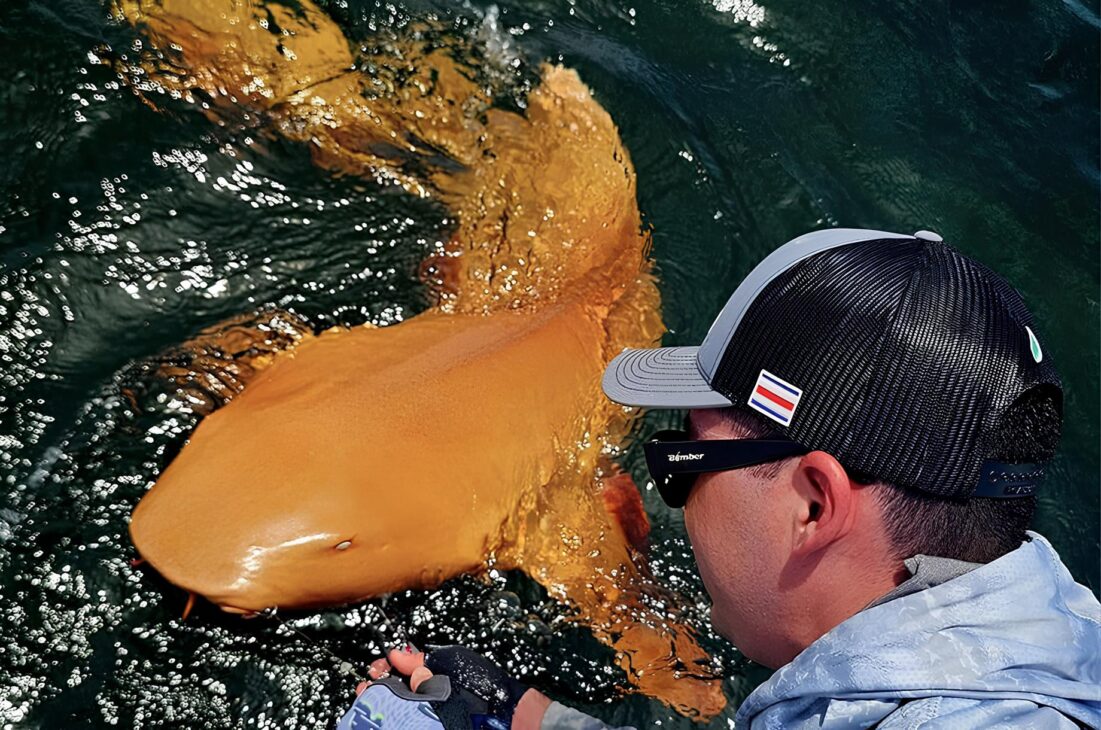
“It is one of the most visually striking discoveries of the last few decades,” said Martha Alfaro, a researcher at UCR. “We usually see gray, bluish, or black sharks. Finding one with a metallic orange shine is like finding a living jewel in the depths of the sea.”
Biological Mystery and Impact on Conservation
Studies are still ongoing, but scientists believe that the orange shark may have a limited distribution in the deep waters of Central America, especially in hard-to-reach areas near the Gulf of Panama.
The discovery also raises discussions about marine biodiversity threatened by bottom trawling and ocean mining, practices encroaching on abyssal ecosystems.
According to the Costa Rica Marine Research Institute, about 80% of shark species living below 500 meters have yet to be formally cataloged. The case of E. benchleyi reinforces the warning about the need for new preservation and mapping policies.
A Discovery That Fascinates the Scientific World
The record of the first orange shark is already reverberating among research institutions and marine collections worldwide. DNA samples have been sent to universities in the United States, Japan, and Germany, aimed at understanding whether the color is caused by structural pigments or genetic modifications.
The discovery has also opened the door for discussions about marine luminescence, as E. benchleyi features active photophores, which can produce biological light. If confirmed, it will be the first shark species to combine functional bioluminescence and natural orange pigmentation, a combination never before recorded.
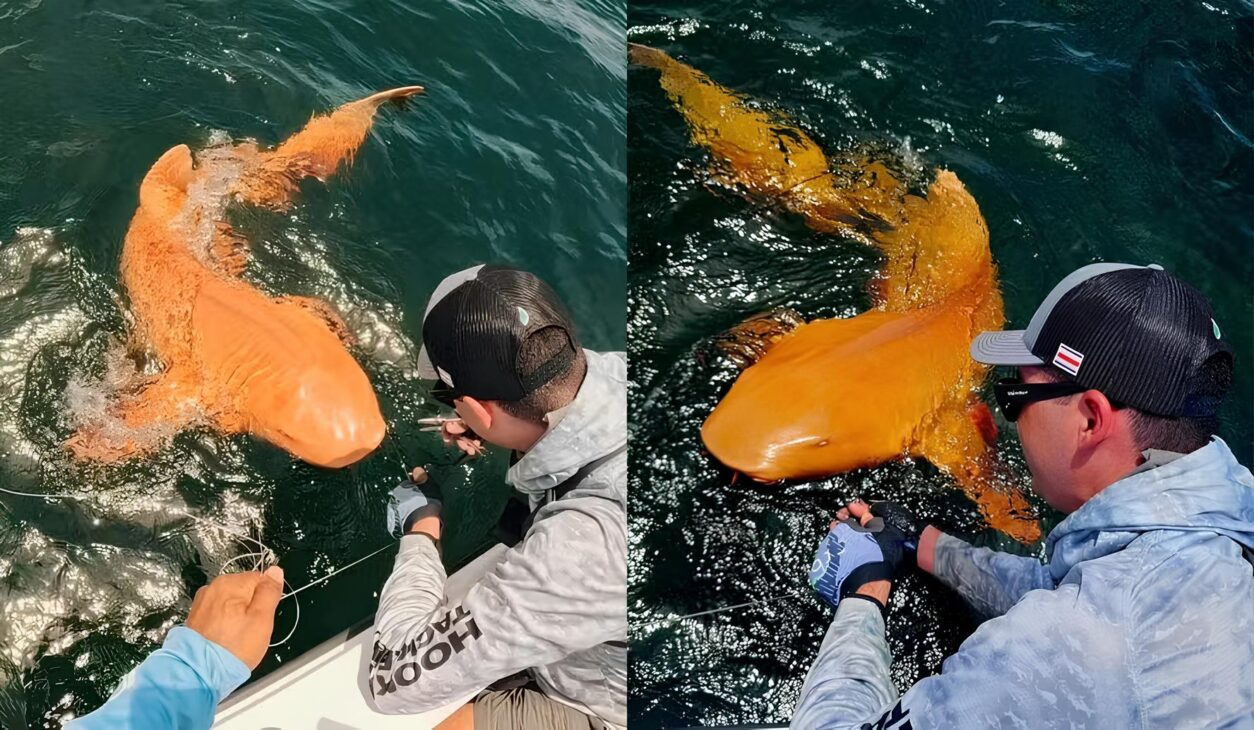
For the scientific community, the find symbolizes how much we still do not know about the depths of the ocean. It is estimated that less than 20% of the Earth’s underwater ecosystems have been systematically explored. The new orange shark is, therefore, a living reminder that the planet still holds fascinating mysteries.
“Every dive in abyssal regions can reveal something totally unexpected,” concluded researcher Ebert. “And this shark is proof that nature always has a new card hidden in the depths.”





-

-

-

-

16 people reacted to this.