





 Portuguese
  English
  Spanish
  3 min of reading
  6 comments


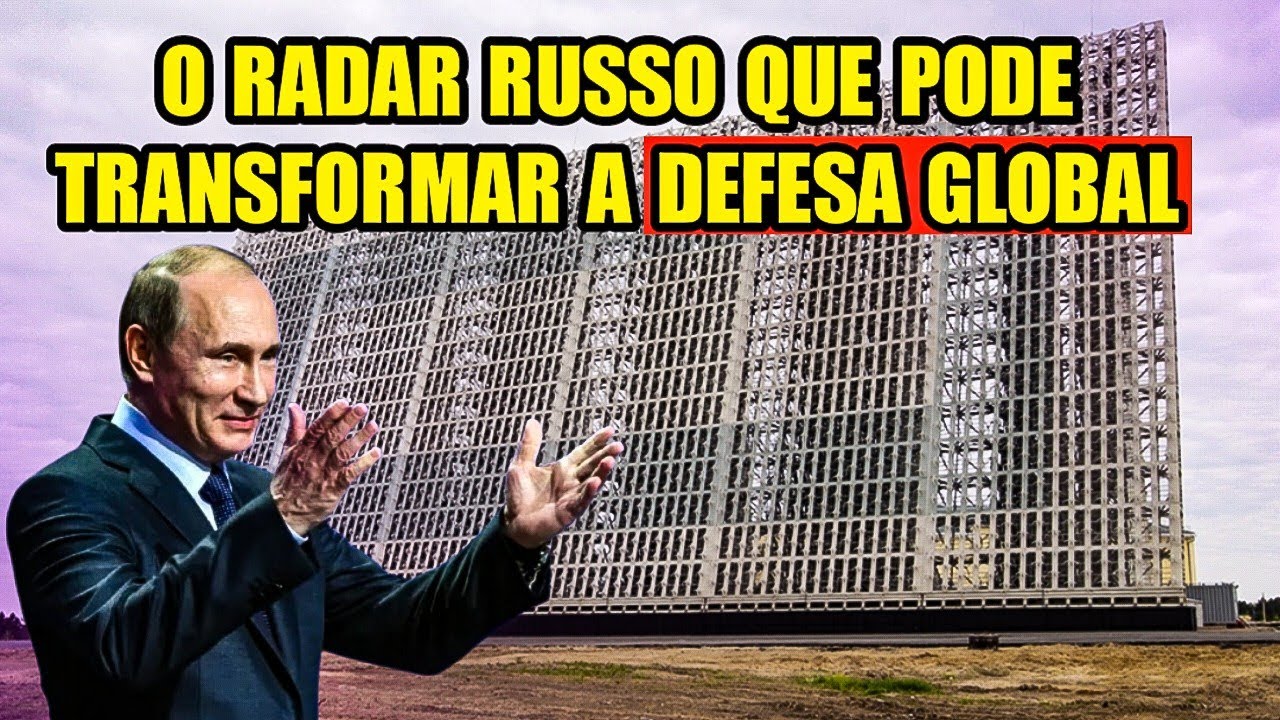


With a Range of Up to 6,000 km, the Voronezh Radar Integrates the Backbone of the Russian Nuclear Alert, Detects Ballistic Missiles in Minutes, and Redefines Strategic Deterrence.
The Voronezh radar is not an ordinary air defense radar. It is part of the strategic early warning system of Russia, designed to identify ballistic missile launches at long distances and trigger, within minutes, the command chain responsible for nuclear deterrence decisions. In practice, it is one of the sensors that give the Russian State the ability to “see first” in an extreme scenario.
Open sources and technical analyses converge on a central piece of data: the Voronezh operates with a typical range of up to 6,000 km (with specific official mentions reaching ~6,500 km). This means that a single station can cover entire regions of a continent, monitoring launch corridors coming from the North Atlantic, the Arctic, or the Pacific. In strategic terms, this range extends the warning time, minutes that are crucial in any nuclear doctrine.
Variants and Bands: Why Are There Multiple Voronezh Systems
The Voronezh program is a family of radars, designed to replace older Soviet stations with lower energy efficiency and longer construction time. Among the most cited variants:
-
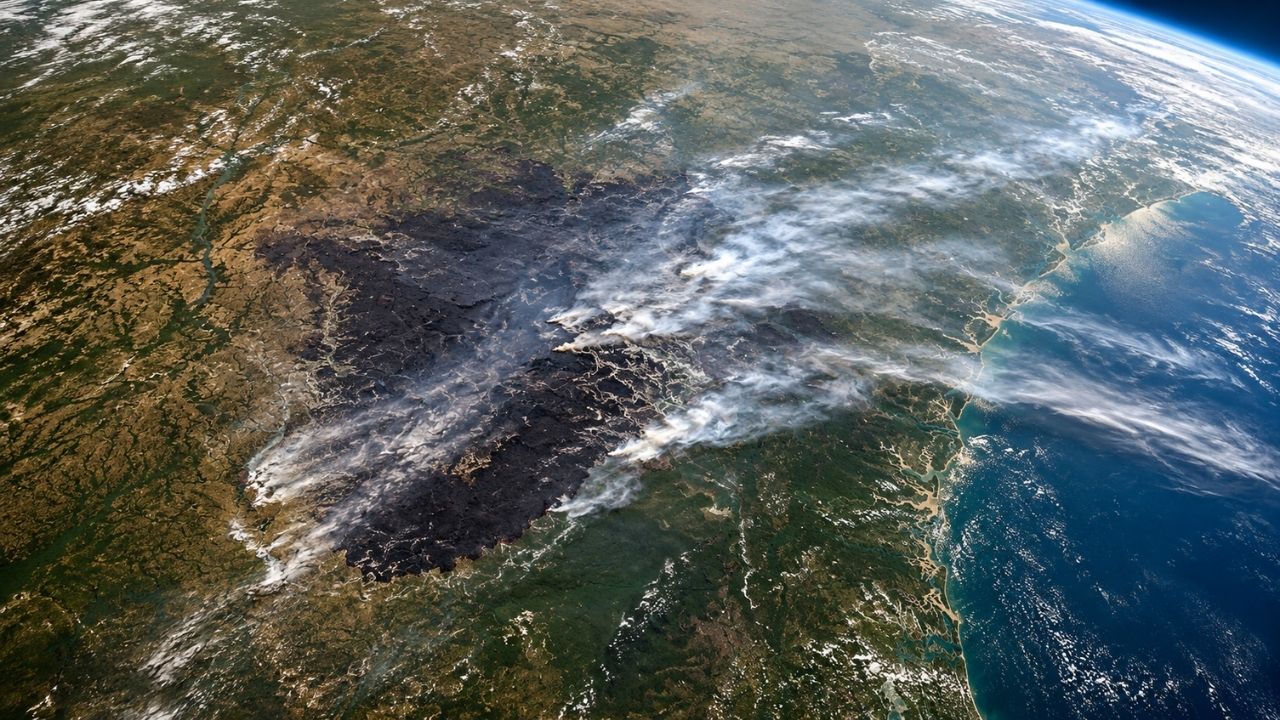
NASA satellite image shows a giant mark left by fires in Georgia, where extreme drought, winds, and remnants of Hurricane Helene helped the fire advance over more than 22,000 hectares in an area visible from space.

-
Second large cruise ship built in China departs from Shanghai for testing with 937 professionals from 12 countries on board. Adora Flora City is 341 meters long, has 2,130 cabins, and a capacity for over 5,200 passengers.

-
Researchers discover that the more ice melts in Antarctica, the more warm water can reach the base of the platforms and melt even more. A scientist says that the climate tipping point may arrive sooner than current models predict.
-
New wave energy machine is deployed in the sea in Spain and promises to convert wave motion into electricity during offshore tests



- Voronezh-M (VHF), aimed at long-range volumetric surveillance;
- Voronezh-DM (UHF/decimeter), with better resolution for tracking and classification;
- Voronezh-VP, often described as the version with greater potential, with enhancements in robustness and resistance to countermeasures.
This diversity allows coverage of different sectors and cross-referencing data, increasing the reliability of the alert.

Technical descriptions in open sources indicate that the Voronezh is capable of tracking hundreds of targets simultaneously. More important than the absolute number is the function: separating true ballistic trajectories from false alarms, fragments, and atmospheric phenomena, feeding command centers with high-confidence data.
Modular Construction and Energy Efficiency
A little-discussed but crucial differentiator is the modular concept of the Voronezh. The stations were designed to be assembled more quickly, with lower energy consumption than Soviet-era radars.
This reduced operational costs and accelerated the expansion of the network, allowing Russia to fill geographic gaps left after the fall of the USSR.

The Voronezh does not operate in isolation. It integrates a distributed network, positioned to cover specific potential attack vectors. The logic is simple: redundancy. Even if one station goes offline, others can maintain strategic vigilance, preserving alert capability.
Target of Modern War
The relevance of the Voronezh became even more evident when early warning stations started to feature in the radar of contemporary conflicts, with reports of attacks and attempts at neutralization.
This reinforces an uncomfortable conclusion: strategic detection infrastructures have become priority military assets, as interfering with them means reducing the adversary’s reaction time.
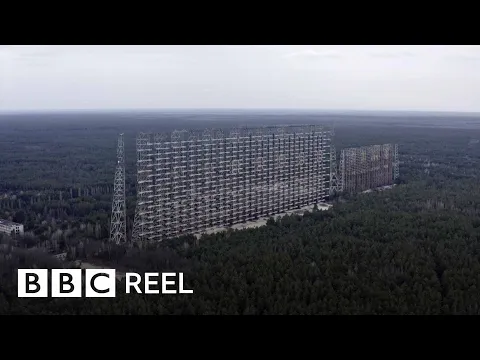
In nuclear equilibrium, seeing first equates to deciding first. The Voronezh does not launch missiles, does not intercept warheads, and does not appear in parades. Yet, it sustains deterrence by ensuring that an attack does not go unnoticed.
In a world of hypersonic weapons, multiple warheads, and complex flights, continental-range sensors continue to be the invisible line between stability and chaos.






Ccds charge couple device podem ser inutilizados com luz laser de pouco mais de 60 Watts de potência.
Um laser de 60 Watts custava. R$80.000,00 em 2009 a empresa Laser King vendia a época.
Eu sei disso pelo fato de uma empresa do interior de São Paulo esteve em Salvador alugando esse laser.
Eu que consertei o laser para atuar no carnaval.
Equipamentos de defesa é pra mim um marco de civilidade.
Detesto armas.
Felizmente para o mundo existe sempre que esteja mais à frente na área tecnológica e possa anular a melhor eficiência de cada inovação….principalmente aquela de países governados por loucos autocráticos como é o caso da Rússia.