Portuguese
  Spanish


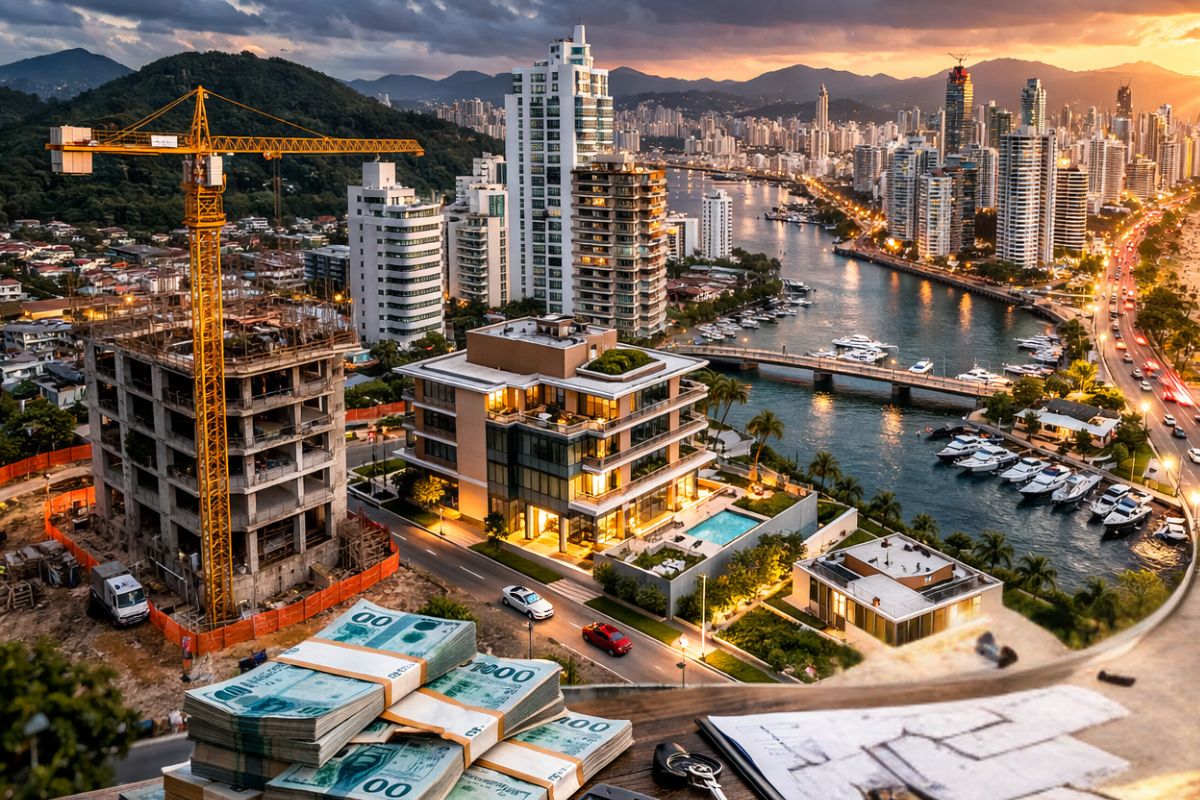

While Many Wait For The Launch, The Real Estate Market In Itajai Negotiates Behind The Scenes: Data From NF Indicate That 40% Of The Units In The Last Two Years Were Reserved Without Campaign, And In 2025 About R$ 900 Million Advanced Before The First Disclosure With Residents Leading Purchases And Changing Logic.
Itajai is seeing properties undergo a sort of “double life”: the one that happens before the announcement and the one that appears when the venture finally becomes a showcase. In this interval, approximately 40% of the units sold in the last two years were reserved during the internal phase, without campaigns, social media, or launch events.
What draws attention is not only the speed but the volume: in 2025, the municipality moved around R$ 2.2 billion in General Sales Value, and approximately R$ 900 million concentrated on these early negotiations, far from the radar of traditional advertising a sign that the competition for properties in Itajai begins when many still think it hasn’t even started.
Two Times For Properties: The Backstage And The Showcase
In Itajai, the machinery of real estate seems to operate in two well-defined stages. First comes the internal phase, when the offer circulates in a restricted manner and reservations occur without the typical “noise” of a launch. Only then does the second phase appear, when the venture reaches a broader public and gains publicity.
-
China wants to impress the world once again with a mega canal featuring giant locks, deep waters, and space for the largest ships, in a project aimed at shortening journeys, reducing queues, and rivaling the Panama Canal in global trade.

-
Brazil saved US$ 32.4 billion in 2025 by switching from fossil to renewable energy and only ranked behind China and the United States on the IRENA global podium.

-
A company from SC that moves R$ 125 billion in agribusiness is integrated into an international group, maintains its headquarters and jobs in Chapecó, and is preparing to expand software for cooperatives, grain companies, and industries while targeting new markets without leaving the western region of Santa Catarina.
-
Portugal “hides” gold reserves of 382 tons valued at 47 billion euros in an armored building, and the story involves gold from colonial Brazil, Nazi Germany, and a fortune that once amounted to 866 tons.




This disconnect alters the reference for those monitoring the real estate market by what has “appeared” in campaigns. The showcase ceases to be the starting point and often becomes an endpoint: when the announcement arrives, part of the inventory no longer exists for those who waited for the official communication.
The Sensation Of Scarcity That Arises Before The Announcement

When a venture is presented to the public and a significant portion of the units is already unavailable, the practical effect is immediate: scarcity becomes part of the buying experience.
Those who enter later find fewer options, fewer combinations of layout, position, and view, which changes the behavior of those trying to decide calmly.
This scenario also pressures the pace. Instead of comparing properties leisurely, some buyers begin to act out of fear of losing the “chance” they imagined they had at the launch.
The logic becomes a game of timing: it’s not just “which property to buy,” but “when to buy,” and, in Itajai, that moment can be before there is an announcement.
Who Buys First And Where Is The Power Of The Movement
The profile of those who pull the line helps explain why properties “disappear” early. About 70% of sales are made to residents of the city itself, while 30% involve clients from other states. The local demand not only participates: it leads, sustaining a market described as mature and with a rare autonomy in the country.
The indicated projection is that this difference will diminish in the next five years, reaching a more balanced scenario of 50% for each group. This suggests a likely path: Itajai remains strong internally, but is likely to become even more contested externally, increasing competition for properties and reducing the advantage of those currently closer to the information.
Upgrade Culture: The Silent Engine Of High-End
The anticipation does not happen in a vacuum. It connects to a specific trait: the so-called “upgrade culture”, in which many residents, as they consolidate their financial life, trade medium-standard properties for units in more valued areas, such as the Fazenda neighborhood, central regions, and Praia Brava.
This movement creates a continuous cycle within the market itself. Those who sell to upgrade release a property for another buyer while feeding the demand for more sophisticated launches.
It’s a self-sustaining flow, maintaining the turnover of properties and strengthening the high-end segment, without solely relying on buyers coming from outside.
Buying “With The Blueprint In Hand”: Information, Network, And Timing
One detail reveals how much the dynamics are based on access and relationships. There are buyers who enter early because they know the city’s rhythm, maintain direct contact with local brokers and developers, and identify signs of movement before any public disclosure.
This leads to a behavior that seems paradoxical for those used to deciding only after seeing everything finished: many buy when there is still only the blueprint.
In practice, this turns time into a competitive advantage. Those who arrive first are not just choosing properties; they are choosing before the choice becomes limited.
For the market, this pattern reinforces anticipation “even up to the very first time,” as it has been called in the sector, consolidating a phase of negotiation that occurs off the main stage.
The Size Of The Money At Stake: R$ 2.2 Billion And The Weight Of The Backstage
The numbers help to dimension why properties in Itajai have become the target of a race. In 2025, the General Sales Value in the municipality was estimated at around R$ 2.2 billion. Of that total, approximately R$ 900 million corresponds to the 40% negotiated early, before the announcement.
This means that a significant portion of the market is being defined early, and the remaining approximately R$ 1.3 billion ends up being left for the more public phase, when competition already begins with fewer units available. The backstage is not a detail: it is a central slice of the market, capable of influencing the perception of supply and how people view their own purchasing chances.
Square Meter At R$ 12,848: The Sign That Itajai Has Joined The Group Of The Most Expensive
The warming is also evident in the indicators. In 2025, Itajai ended the year in fourth place in the ranking of the most expensive square meters in the country, with an average value of R$ 12,848 per square meter, according to the FipeZAP Index. This data puts the city’s properties at a level that changes the conversation: it’s not just a local dispute; it’s a dispute with a “national market” face.
When the square meter reaches this level, anticipation gains even more psychological and strategic weight.
For some buyers, waiting can mean losing options; for others, entering early can be an attempt to navigate an environment where prices and availability seem to move quickly. In both cases, the indicator acts as a pressure thermometer on properties.
What Changes For Those Seeking Properties: Strategy, Transparency, And Caution
For those trying to buy properties in Itajai, the main change is understanding that “launch” may not be the beginning. The decision starts to involve monitoring market signals, reading timing, and, above all, seeking reliable information, as the internal phase occurs with less public visibility.
At the same time, caution needs to grow in proportion to the urgency. Buying early may make sense for certain profiles but requires careful attention to conditions, documentation, deadlines, and what is effectively defined when the negotiation occurs based on preliminary materials.
Speed cannot replace clarity, especially in a scenario where scarcity appears before the announcement and amplifies emotional pressure.
Itajai is showing a property market where the “secret” is not a magic formula, but rather a set of concrete forces: strong local demand, anticipation of reservations, upgrade culture, and a square meter that has placed the city among the most expensive in the country.
When 40% of the units disappear before disclosure and R$ 900 million circulates behind the scenes, the message is clear: the competition begins early and changes the experience of those who arrive later.
And you, have you seen properties “disappear” before the announcement in your city? Would you buy an apartment with just the blueprint, trusting the developer’s history and what was presented in the internal phase, or would you only feel secure with everything officially disclosed? In Itajai, this detail is separating those who enter first from those who need to catch up.