Portuguese
  Spanish




The Mix-Markt Supermarket in East Berlin Sells Nostalgic Products from the Era of the German Democratic Republic, Including Exotic Meats, Soviet Brandy, and Communist-Era Sweets. The Store Has Become a Refuge for Those Seeking to Revive the Flavors of the 1980s.
In the heart of East Berlin, the Mix-Markt stands out as a supermarket different from the others. Instead of offering just modern products, the store specializes in items from the era of the German Democratic Republic (GDR), bringing back flavors that marked generations.
For those who lived under the communist regime or wish to experience typical foods from the Soviet era, the Mix-Markt is a true portal to the past. Exotic meats, drinks from the former Soviet Union, and Cold War sweets are part of the market’s shelves, attracting German customers and immigrants from Eastern Europe.
Nostalgic Products That Capture Customers

The meat counter at the Mix-Markt supermarket is one of the most curious points of the store. There, customers can find cow tongue, sheep lungs, and pig hearts, common ingredients in East Germany during the Soviet occupation.
-
Major Company Shuts Down 70-Year-Old Factory in Brazil, Relocating Production and Impacting Over 100 Families

-
Toyota Shuts Down Brazilian Plant After Producing Over 1 Million Vehicles, Plans Special Destination for Final Corolla Produced Following $2.1 Billion Investment and Expansion.
-
Shoe Factories Close, Leaving 528 Workers Jobless in Sudden Turn of Events Affecting Hundreds of Families After Decades of Operation.
-
Chinese Automaker Plans Second Mega Factory in Brazil with $2 Billion Investment to Produce Electric and Hybrid Cars in Strategic Location.


Besides the meats, alcoholic beverages from the communist era are popular. Armenian and Georgian brandy, which replaced French during the Cold War, is still very popular among market-goers. According to manager Daniel Dik, Georgian wine is one of the best-selling items in the beverage section.
The Neighborhood Preserving the Cold War Era
The Mix-Markt is located in the suburb of Marzahn, an area built in the 1970s by the GDR. The neighborhood is known for its brutalist architecture and concrete buildings, which still maintain the cold and gray appearance of Soviet times.
Customers of the supermarket are not just former citizens of East Germany. People from different nationalities, especially Kazakhs, Lithuanians, Ukrainians, and Russians, visit the market in search of traditional products from their home countries.
The War and Changes to the Market
With the start of the war in Ukraine in 2022, the Mix-Markt supermarket faced difficulties importing products from Russia. The German embargo affected the store’s supply, forcing the owners to seek alternatives in other countries.
Today, iconic products from the Soviet era, such as condensed milk and Russian sweets, need to be imported from Lithuania and other European countries. According to Daniel Dik, finding reliable suppliers has been a major challenge, but the store has adapted to continue serving its customers.
The Fascination with Soviet Drinks and Curiosities of the Supermarket
Among the most popular products at the Mix-Markt supermarket is Russian vodka, but ironically, the version sold today is produced in France. Even so, customers continue to seek out the traditional drink.
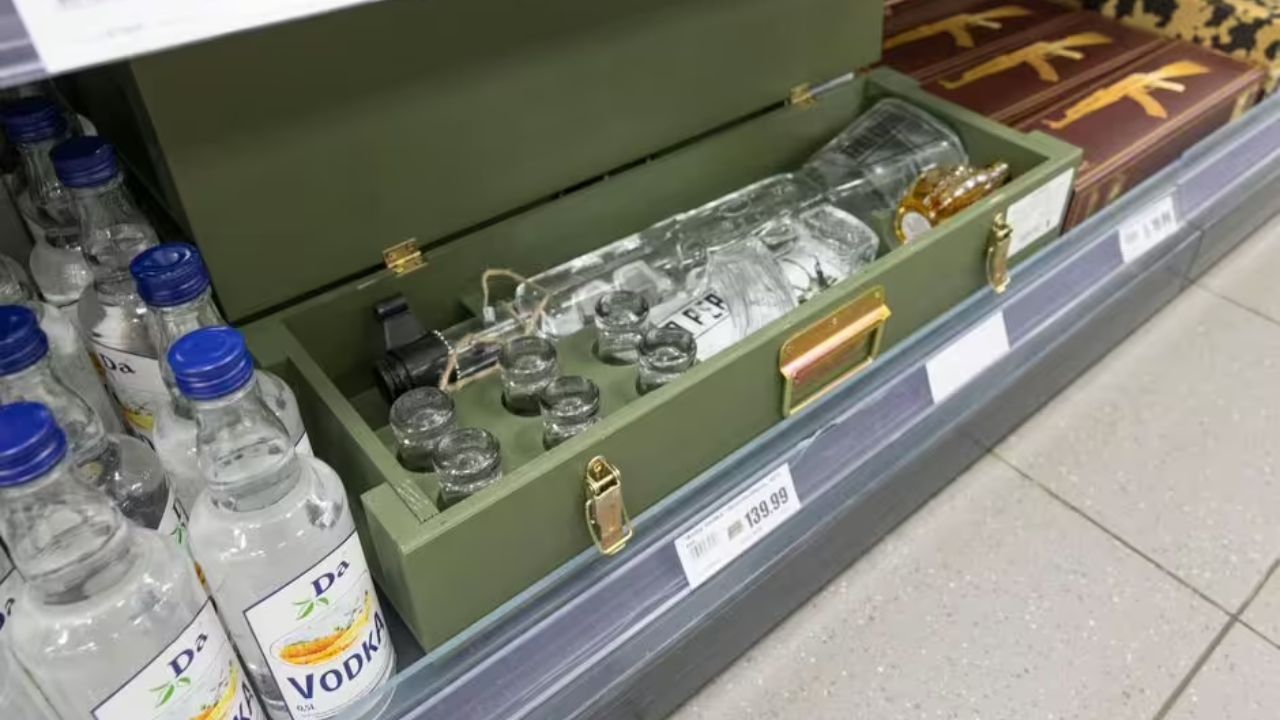
The market also sells unusual items, such as vodka bottles shaped like AK-47s and drink kits in ammunition boxes, a detail that catches the attention of German customers. For Russians, these products are common, but for Berlin residents, they represent a curious novelty of Soviet culture.