Portuguese
  Spanish


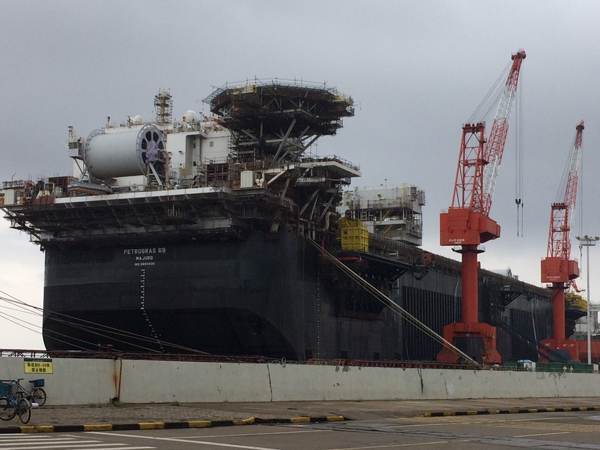

The First Among Many Works to Come, Jurong Aracruz Shipyard Celebrates This New Step Towards Resuming Activities.
[supsystic-social-sharing id=’1′]With our shipyards outdated due to the economic crisis that hit the entire naval construction and assembly industry, finally a prelude of optimism begins in the sector. The Jurong Aracruz Shipyard has just won a contract to assemble the FPSO P-68 under the CARRY OVER modality, which opens a range of new precedents for the economy and for those who are professionals in this field. Below is the transcript of the article from Petronotícias
“In difficult times for the Brazilian naval sector, at least one good news. The Jurong Aracruz Shipyard (EJA), in Espírito Santo, which belongs to the Sembcorp Marine group from Singapore, has won a contract worth US$ 145 million for carry over work on the FPSO P-68.
The contract was signed with the Tupi BV consortium, which is made up of Petrobras Netherland BV, BG, and Galp. In July 2012, Tupi BV awarded EJA the contract for the construction of modules and integration of the P-68 floating production platform.
-
China Tests Giant 582-Ton Magnets to Contain Plasma Hotter Than the Sun’s Core, Aiming to Cut Superconductor Costs and Generate First Electricity from “Artificial Sun” by 2030
-
Lenovo Unveils Legion Y700 Tablet with RGB Backlighting, 5G, and SIM Card Support
-
Lenovo Unveils Legion Y700 Tablet with RGB Backlighting, 5G, and SIM Card Support
-
Northern Brazilian City Prepares Task Force to Mitigate El Niño Impacts with Stockpiled Fish, Drone Monitoring, Firefighting, and Water Supply Reinforcement in Remote Areas


The vessel will operate in the pre-salt of the Santos Basin, with a production capacity of 150,000 barrels per day. The unit can store up to 1.6 million barrels of oil and will operate at a water depth of 2,200 meters.
The hull, which was built at the Rio Grande Shipyard in Rio Grande do Sul, weighs 52,000 tons, is 288 meters long, 54 meters wide, and has a draft of 31.5 meters (height from the bottom of the tanks to the main deck).” Source: PetroNotícias