






 Portuguese
  Spanish


Chinese plan to reduce food imports increases pressure on Brazilian soy, beef, and fertilizers, in a scenario that combines food security, trade disputes, and billion-dollar risk for the national agribusiness until 2030.
China’s strategy to reduce dependence on imported food has raised an alert in Brazilian agribusiness, especially in the soy and beef chains, which are currently highly exposed to the Asian market.
This movement appears in the 15th Chinese Five-Year Plan, valid from 2026 to 2030, and may pressure exports that move tens of billions of dollars per year.
More than a sanitary barrier or an isolated trade dispute, the Chinese directive combines food security, domestic production, supplier diversification, agricultural modernization, and advancement in new protein sources.
-
Man Revives 1930s Abandoned Trout Farm, Learns from Scratch, and Earns $1.1 Million Annually Selling Fish to Michelin-Starred Restaurants

-
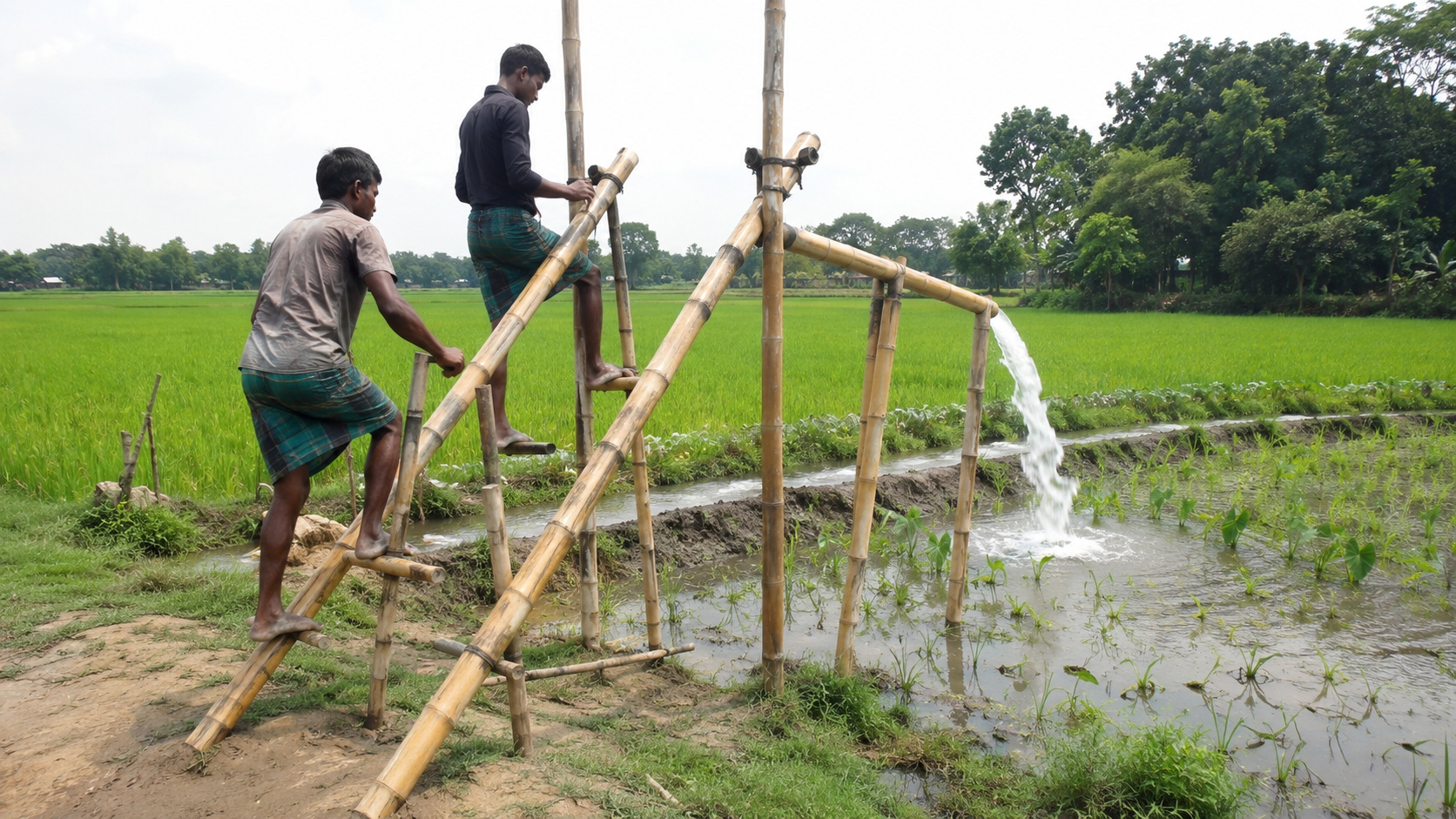
Bangladeshi Farmers Use Bamboo Levers to Pump Thousands of Liters of Water Daily Without Engines or Electricity

-
Brazilian Forests Could Expand by an Area Twice the Size of Switzerland by 2035, but Agricultural Sector Holds the Key, Study Finds

-
Brazilian Student Develops Solar-Powered Agricultural Machine Capable of Processing 250 Kilograms per Hour




With this set of measures, Beijing tends to alter the pace of global demand for agricultural products, especially those in which Brazil has built a strong commercial dependence.
According to Patrícia Ellen, managing partner of Systemiq in Latin America and former Secretary of Economic Development of the State of São Paulo, Brazilian agribusiness sells to China something between US$ 50 billion and US$ 60 billion per year.
The executive states that any potential loss would not occur all at once but could progress gradually, accompanied by market adjustments and changes in the organization of export chains.
“It is not an immediate loss. It can be gradual, there should be market adjustments, but the order of magnitude of the impact is this,” said Patrícia.
In her assessment, the Chinese weight in the purchases of soy, meats, and other Brazilian agricultural products makes the change in strategy of the Asian country a decisive factor for the sector.
China prioritizes food security in the Five-Year Plan
Among the priorities of Chinese economic policy, the 15th Five-Year Plan places food security in a central position and treats internal supply as a strategic theme for the coming years.
Beijing’s guidance is to expand national productive capacity, strengthen domestic supply, and maintain imports at a level considered moderate by the Chinese government.
In the report China’s Food Future, produced with support from the Gordon and Betty Moore Foundation, Systemiq points out that China has been one of the main drivers of global agricultural demand in the last four decades.
However, this role may change as the country reorganizes its supply chains and seeks to reduce exposure to external suppliers in areas considered sensitive.
The plan also includes investments in biomanufacturing, alternative proteins, precision agriculture, seeds, rural productivity, and livestock modernization, areas seen as fundamental to increasing self-sufficiency.
By combining technological innovation and strengthening domestic production, China can reduce the need for external purchases in segments where Brazil currently holds a significant position.
“It’s not a one-time shock. It’s a structural change. The question is not ‘if’ and ‘how’, but ‘when’ and ‘with what intensity’. And more importantly: how can Brazilian agribusiness reorganize itself?” said Patrícia Ellen.
Brazilian soy is at the center of the trade dispute
The main Brazilian agribusiness product sold to China, soy, represents one of the biggest vulnerabilities because the Asian country buys most of the grain exported by Brazil.
According to Systemiq estimates, if the Chinese strategy progresses as projected, China’s soy imports could fall 25% by 2030, equivalent to 23.5 million tons.
This scenario adds to recent episodes of increased rigor in Chinese phytosanitary inspections on Brazilian shipments, which have heightened the attention of exporters and sector authorities.
In March 2026, reports indicated the retention or return of about 20 vessels with Brazilian soy due to issues related to impurities, pests, or prohibited weed seeds.
After the episode, exporters reviewed shipments, and the pressure for sanitary negotiations between the two countries increased, especially because potential delays affect Brazilian logistics during peak harvest.
Although the sector treated the case as isolated, the situation showed how Chinese technical requirements can quickly interfere with the flow of Brazilian exports.
In the grain market, the dispute also tends to intensify, with the United States and Argentina trying to regain or expand their market share in sales to the Asian country.
Meanwhile, China seeks to avoid excessive dependence on a single supplier, a move that reduces predictability for Brazil even in years of strong national production.
Chinese purchases of US soy increase uncertainty
The commercial rapprochement between China and the United States adds uncertainty to the Brazilian scenario because it brings American soy back to the center of negotiations between the world’s two largest economies.
After a meeting between Donald Trump and Xi Jinping, American authorities announced Chinese commitments to purchase soy from the United States, with significant volumes over three years.
Even though part of the market sees limits for a quick replacement of Brazilian soybeans, the resumption of American purchases may reduce Brazil’s market share in certain periods of the year.
For industry analysts, the most likely effect would be a reorganization of flows and margins, not an automatic market loss for Brazilian exporters.
Recent data from the United States Department of Agriculture shows that China continues to have high demand in the short term, despite goals to reduce external dependency.
The USDA projected Chinese soybean imports at 114 million tons in the 2026/27 season, above the previous cycle, while reports from the American agricultural office in Beijing indicated a lower estimate of 108 million tons.
The difference between the projections shows that the market is still working with mixed signals, combining high short-term demand and an attempt at structural change by 2030.
In the long term, the Chinese directive points to less external dependency, especially if policies on productivity, new proteins, input substitution, and supplier diversification advance.
Brazilian beef enters the risk zone
In the case of beef, China adopted a safeguard that imposes an additional tariff of 55% on volumes exceeding annual import quotas.
For Brazil, the 2026 quota was around 1.1 million tons, a level lower than the volume sold to the Chinese market in 2025.
With a planned duration of three years, the measure seeks to protect Chinese livestock, which faces price pressure and excess domestic supply.
As the largest supplier of beef to China, Brazil is among the countries most affected by the limitation and now deals with less predictability in sales to the Asian country.
In 2025, Chinese purchases of Brazilian beef reached approximately 1.7 million tons, according to industry entities cited in international surveys.
In practice, the new quota forces Brazilian exporters to compete for space within a smaller limit or seek other destinations for part of the production that previously went to China.
The Brazilian industry still bets on the strength of Chinese consumption but already treats the safeguard as a permanent variable in commercial planning for the coming years.
Besides beef, the Systemiq report projects reductions in Chinese imports of pork, dairy, and eggs, while corn may see modest growth due to changes in feed formulation.
Agribusiness tries to reduce dependency on China
Reversing dependency on China will not be a quick process, as no other market buys Brazilian soybeans and meat in the same volume as the Asian country.
Even so, experts argue that Brazil should accelerate the diversification of destinations and increase the added value of agribusiness chains to reduce exposure to decisions made by Beijing.
Trade agreements such as Mercosur-European Union, Mercosur-EFTA, and Mercosur-Singapore are seen as instruments capable of diluting risks and opening new opportunities for Brazilian products.
These pacts do not replace the Chinese market, but they can expand access to buyers who value traceability, clear environmental requirements, and products with higher added value.
According to Patrícia Ellen, Brazil needs to expand the supply of processed products, strengthen the bioeconomy, invest in low-carbon agriculture, and participate in new chains linked to alternative proteins.
This strategy transforms a defensive agenda into an opportunity for repositioning, especially in sectors where the country can combine production scale, technology, and environmental assets.
Another point of attention is fertilizers, as China is among the relevant sources of inputs used in Brazilian fields and has imposed restrictions on external sales at certain times.
Besides Chinese dependency, wars and tensions in Eastern Europe and the Middle East keep the global supply of fertilizers unstable and increase the urgency of a national policy for the sector.
For Brazil, which imports a large part of the input used in crops, diversifying suppliers and encouraging domestic production remain among the main structural challenges of agribusiness.






Want to read in Chinese!
Thanks to our bad government!😡