






 Portuguese
  Spanish
  5 min of reading
  0 comments


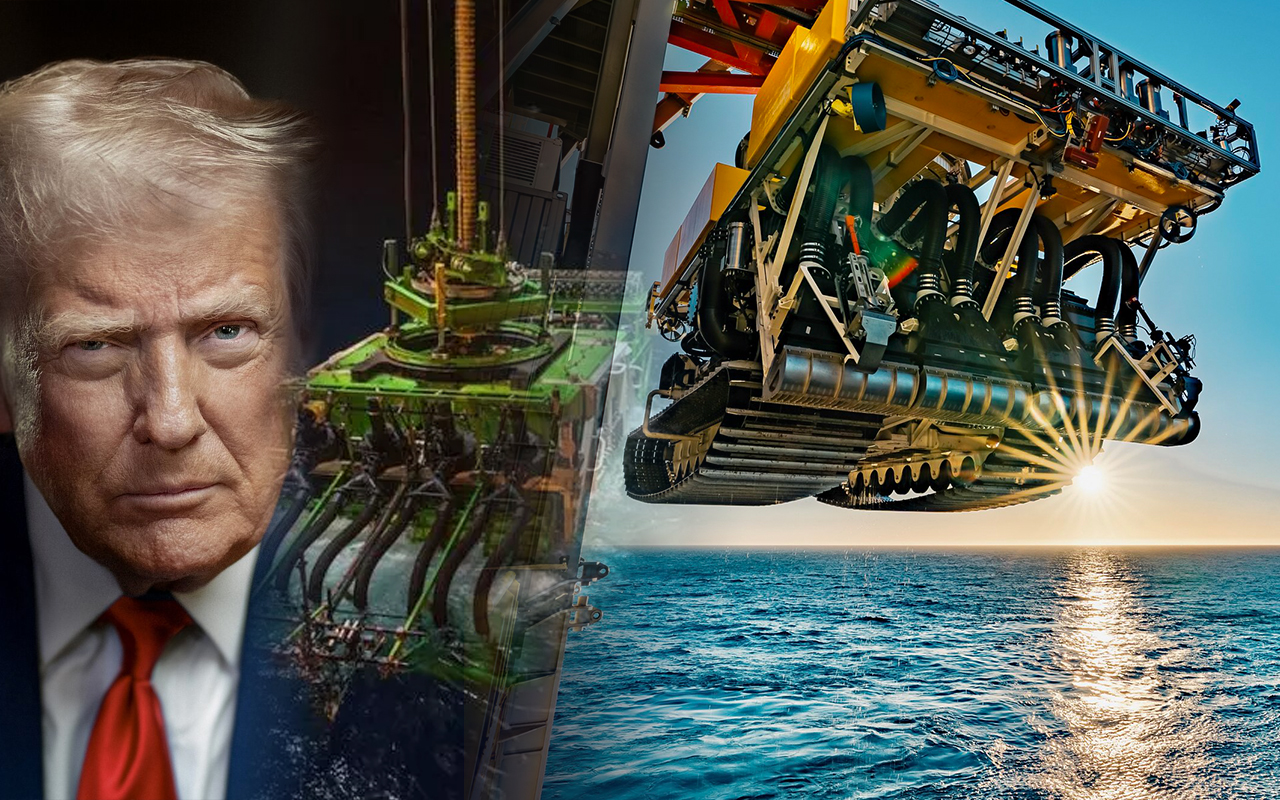
White House Released Guidelines to Accelerate Exploration and Recovery Licenses in Deep Waters, While the International Movement for a Moratorium Grows.
The race for nickel, cobalt, copper, and manganese, essential inputs for batteries and the energy transition, has put deep-sea mining back on the radar of governments and companies. The promise is to meet demand without depending so much on terrestrial mines, which are currently under pressure from costs and licensing.
In the United States, an executive order from April 24, 2025, instructed to speed up domestic procedures for commercial exploration and recovery under the DSHMRA law, a move followed by a rule proposal published on July 7 and by public hearings set for September.
At the same time, the International Seabed Authority (ISA) concluded its 30th session in July with “historic decisions,” but without a final code for the commercial exploration phase, the so-called Mining Code. The regulatory landscape remains under construction.
-
Son of a Chinese immigrant who sold tea in the countryside of São Paulo, Zhang Ye almost went bankrupt in 2021 and today, at 28 years old, claims to earn 1 million reais per day and has become the number 1 on TikTok Shop in Latin America.

-
Hidden in Shenzhen, a Chinese company claims to ship over 20,000 orders a day and promises to turn any dropshipping beginner into a respected brand for just 20 dollars.
-
Brazil has 8.4 million illiterates and more than half live in the Northeast, where 10.6% of people cannot read or write a simple note, compared to 2.3% in the Southeast, according to the Pnad Contínua Educação 2025 from IBGE.
-
A great economist predicted that by 2030 we would work only 15 hours a week, and John Maynard Keynes’s forecast is about to fail miserably almost 100 years later.




In the environmental field, recent studies indicate lasting impacts on deep-sea ecosystems, fueling calls for a moratorium from dozens of countries, companies, and scientists. The dispute is, at the same time, economic, legal, and ecological.
US Accelerates Licenses for Seabed Mining, What Has Been Signed and What Is the Practical Effect on the Market
The executive order “Unleashing America’s Offshore Critical Minerals and Resources” establishes guidelines for US leadership in ocean mineral exploration and for a domestic regulatory review. NOAA, the US ocean agency, has opened a formal consultation on revisions to licensing rules and commercial recovery permits.
The package includes public hearings on September 3 and 4, 2025, a key step to define how the country will apply DSHMRA to projects in international waters, a sensitive topic because the US has not ratified the UN Convention on the Law of the Sea.
In the private sector, The Metals Company (TMC) announced it prioritizes the American regulatory pathway, with submissions for exploration licenses and requests for commercial recovery through its US affiliate; the company reported that NOAA deemed the exploration applications complete.
Clarion-Clipperton Zone (CCZ), the “Delicacy” of Polymetallic Nodules and Why It Matters
The CCZ is a vast abyssal plain in the Pacific, between Hawaii and Mexico, known for its abundance of polymetallic nodules, concretions that concentrate manganese, nickel, cobalt, and copper. Its potential for the supply chain of electric vehicle batteries explains the geopolitical interest.
The ISA has already issued several exploration contracts in the area, but the transition to the commercial exploration phase depends on the Mining Code. So far, the process is advancing in stages, with partial decisions and no final consensus.
The dispute over “who regulates what” is intensifying, while the ISA coordinates contracts and multilateral standards, Washington signals that there is a domestic pathway for American companies under the DSHMRA, an arrangement that could generate legal and diplomatic frictions.
How Technology Operates, Collector on the Seafloor, 4 km Riser, and Drillship
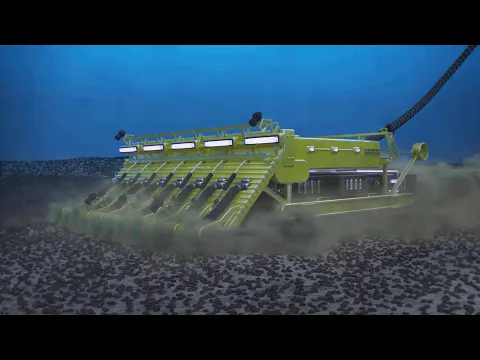

The most widely adopted technical concept involves three blocks: a collector vehicle that crawls on the seafloor, a vertical pipe (riser) up to ~4 km to lift the slurry to the surface, and a drillship that separates nodules from sediments and returns treated water to the sea.
Pilot-scale tests have already occurred: in 2022, a program in the Pacific lifted over 3,000 tons of nodules, providing data on mechanical performance and sediment plume behavior. These trials help calibrate models and practices for environmental monitoring.
Universities like MIT have developed field studies and modeling to understand the plume that forms in the water column and in the wake of the collector, one of the main vectors of potential impact on filter-feeding organisms and the carbon cycle.
Environmental Impacts of Seabed Mining: What Science Already Knows (and What Still Needs to Be Measured)
Recent evidence points out that physical marks and ecological changes in disturbed areas can persist for decades. In 2025, a study in Nature reported lasting changes in the benthic community, even with partial signs of recolonization, corroborating findings from European centers.
The underwater noise combined with the continuous operation of ships and pumps can affect marine mammals at long distances; research and modeling have been highlighting the risk to whales and dolphins, pushing for operational limits and acoustic exclusion zones.
Another sensitive front is the sediment plume, both raised from the seafloor and returned in the water column. The extent, grain size, and persistence of this plume influence impacts on filter-feeding organisms and can alter poorly understood ecosystem functions.
Governance and Economy: Moratorium Grows, Supply Chains in the Balance
Without a definitive Mining Code, countries and companies operate between economic incentives and regulatory uncertainties. In July, the ISA celebrated institutional advances, but the final text of the commercial rules has not yet been finalized.
The pressure for a pause, moratorium, or ban has gained traction: at least 38 countries have already expressed support for one of these measures, while companies and investors are calling for robust science, transparency, and accountability criteria.
On the pro-mining side, the central argument is supply security and diversification away from supply chains concentrated in few countries. The counter-argument highlights reputational risks, cost uncertainties, and potential environmental liabilities that could jeopardize projects in the medium term.
What to Watch in the Coming Months (and Why It Matters for Brazil)
In the US, NOAA’s regulatory calendar — with hearings and analysis of contributions — will dictate the real speed of the domestic pathway. Any approval of commercial permits will be a milestone with repercussions for global governance.
At the ISA, continuity in negotiations concerning environmental rules, monitoring, and accountability is expected. Each regulatory advancement could redefine costs, timelines, and mitigation requirements.
For Brazil, the agenda intersects with ocean diplomacy, science, and high-seas fishing. The country has a direct interest in supply chains of nickel and copper, but also in the conservation of stocks and marine ecosystem services — a discussion that is likely to grow in 2025/26 with new scientific data and multilateral decisions.








-

2 people reacted to this.