





 Portuguese
  English
  Spanish
  4 min of reading
  0 comments


Accessories that seem useless can still contain valuable materials, serve new uses, and prevent improper disposal of electronic waste.
Old or broken chargers often remain forgotten in drawers for years. Many end up discarded with household waste, even though they are part of the electronic waste category and contain materials that still have economic and environmental value.
Components such as copper, plastic, connectors, metal wires, and small electronic boards can remain useful even after the accessory loses its original function. Proper reuse of these materials contributes to reducing electronic waste and supports the recovery of raw materials used by the industry.
Data from the National Information System on Solid Waste Management indicates that the reverse logistics of electronic equipment became nationally regulated by Decree No. 10,240, published in February 2020. The measure strengthened initiatives aimed at the collection and reuse of these products after the end of their useful life.
-
The country’s primary deficits are expected to continue indefinitely, the same applies to the public debt, which will continue on an upward trajectory until it reaches the level of 90% of GDP (R$ 10.53 trillion) in the coming years.

-
Gas stations will sell gasoline at R$ 4.24 for a limited time, and the campaign with 50,000 liters promises to attract drivers looking for savings.

-
Behind a simple payment via Pix, Brazil is building a layer of financial sovereignty to reduce exposure to the dollar, foreign brands, and U.S. economic sanction instruments.

-
Pix has ceased to be just a means of payment, becoming a high-profile brand at the INPI, gaining protection that spans all sectors of the economy, and now enters a legal category reserved for well-known, strong, and difficult-to-copy names in Brazil.


Initial sorting determines the best destination for each charger
Assessing the physical condition of the accessory is the first step before any attempt at reuse.
Signs such as exposed wire, burning smell, overheating, deformations, or damaged connectors indicate that the charger does not offer safe conditions for continued use.
Older models that remain intact, on the other hand, can still perform secondary functions safely when used within the technical specifications indicated by the manufacturer.
Simple analysis prevents household accidents, reduces waste, and extends the lifespan of electronic components that still have adequate operating conditions.
Investigation of components reveals materials that remain useful
Chargers store various elements that retain value even after the end of their main function.
Internal wires often contain copper. Connectors can serve as replacement parts. Old power sources can also power small compatible devices when they remain in good working condition.
The importance of this reuse goes beyond household savings.
Material recovery reduces the need for new raw material extraction, decreasing environmental impacts associated with the manufacture of electronic equipment.
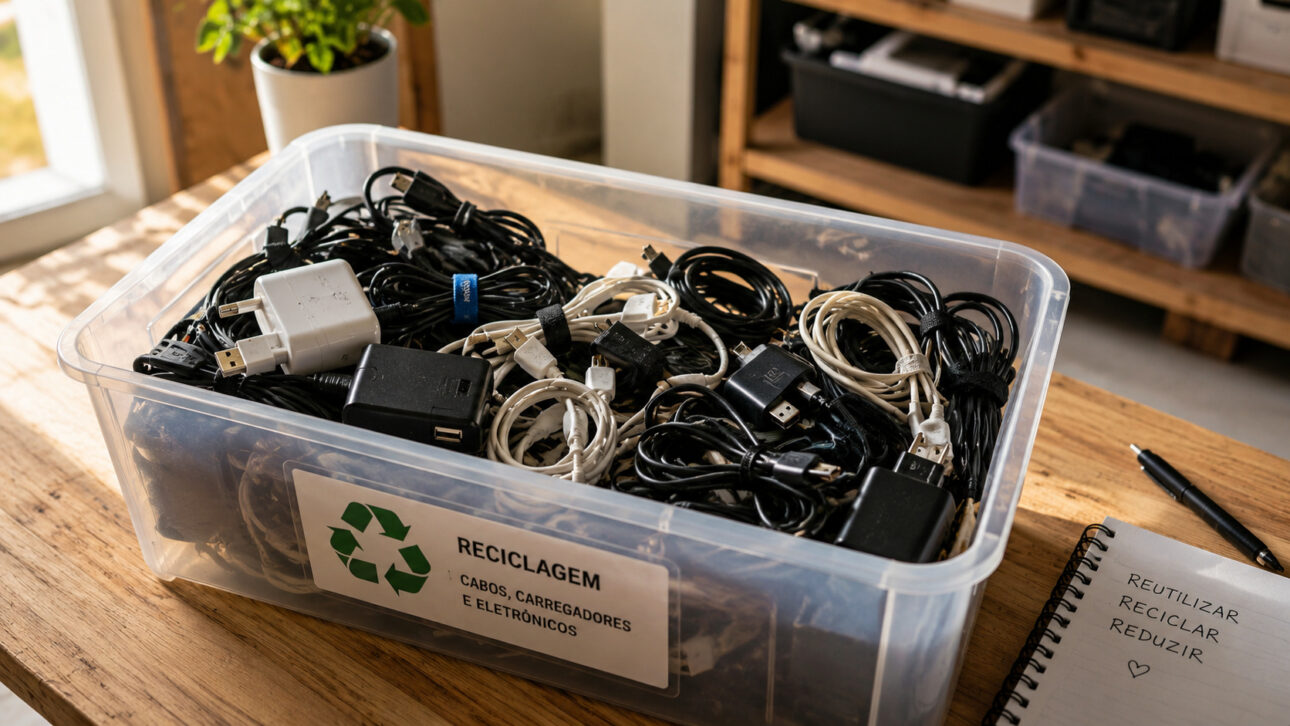
First form of reuse can extend the accessory’s lifespan
Chargers that remain in perfect condition can function as a power source for low-energy consumption equipment.
USB lamps, compact fans, simple speakers, and other compatible accessories can continue using these chargers without any need for adaptation.
Basic checks should be performed before use:
- Cable without cracks or exposed wires;
- No excessive heating;
- Compatibility between voltage, current, and connected equipment;
- Plug firmly in the socket;
- No sparks, noises, or poor contact.
Counterfeit, deformed, or burnt-out equipment requires immediate disposal at appropriate electronic waste collection sites.

Old cables can continue to perform important functions
Preserved cables can still be used for data transfer, organization of electronic accessories, or small repairs carried out by people with adequate technical knowledge.
Internal manipulation of cables should not be performed by those unfamiliar with concepts related to polarity, electrical insulation, and voltage.
Organization by connector type represents a practical and safe alternative.
USB-A, USB-C, micro-USB, and Lightning models can remain useful for testing, compatible charging, and file transfer between devices.
Recycling is the best path for damaged chargers
Chargers with electrical defects, bent connectors, abnormal heating, or recurring failures should be sent for specialized recycling.
The correct disposal process can be carried out through a simple routine:
- Separate chargers, cables, and adapters in a dry container;
- Keep away from batteries, accumulators, and organic waste;
- Look for eco-points, participating stores, and municipal campaigns;
- Deliver the complete equipment;
- Remove labels containing personal information.
Recycling centers have the appropriate structure to recover valuable materials and correctly dispose of components that cannot be reused.
Situations where reuse is not recommended
Chargers that have already caused electric shock, emitted smoke, melted, or presented a strong burning smell should not be used again.
Persisting in the use of these devices increases the risk of short circuits, damage to connected devices, and even domestic fires.
The most important criterion remains proper screening.
Old and preserved chargers can gain a new function. Damaged equipment should be sent for specialized recycling.
The result of this process transforms forgotten objects into an opportunity for savings, reduction of electronic waste, and recovery of important materials for the technology production chain.






Be the first to react!