





 Portuguese
  English
  Spanish
  6 min of reading
  0 comments


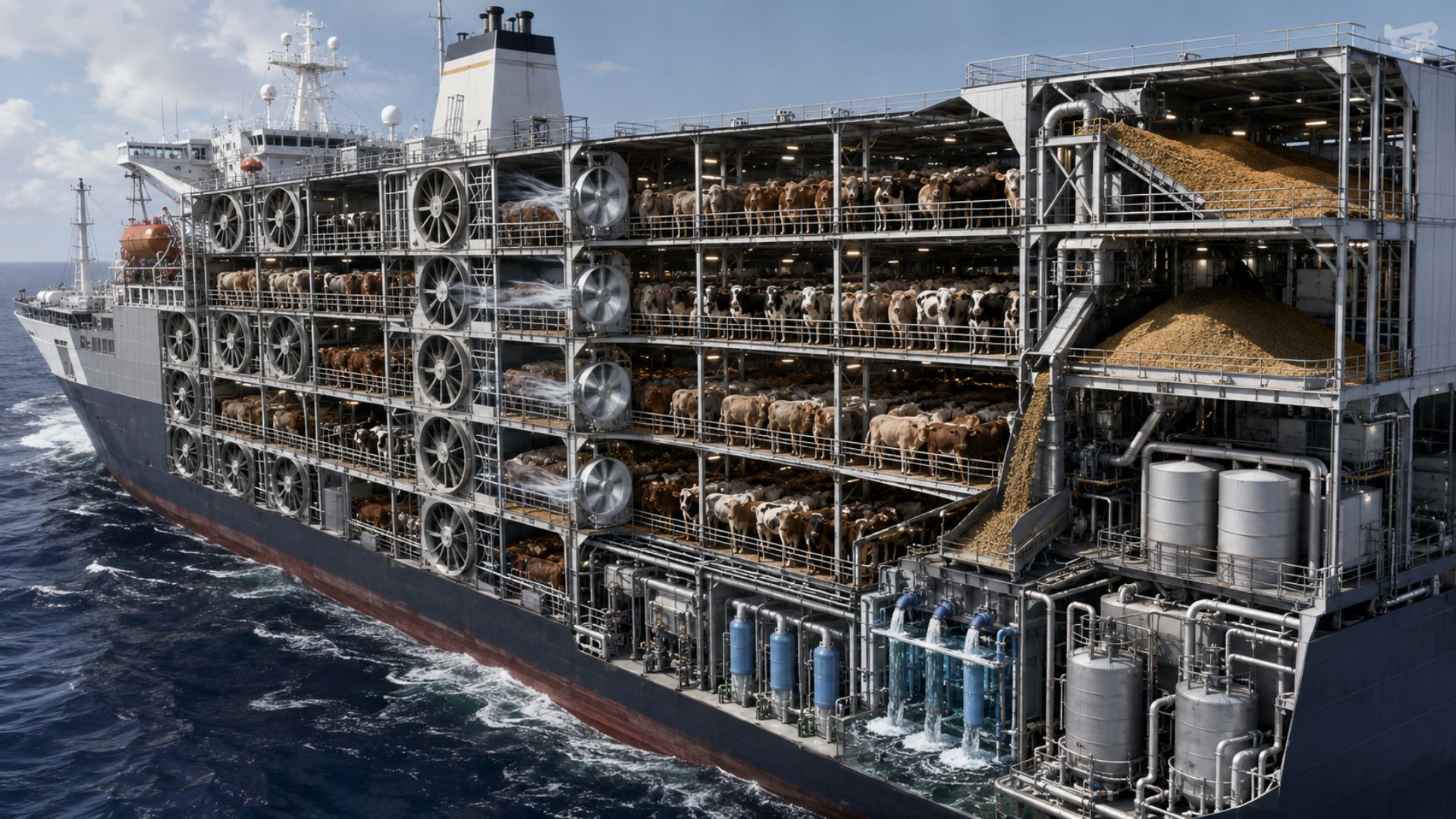
Built in 2002 in Croatia and renamed Ocean Drover in 2009, the Italian ship became a symbol of live animal export, a trade that brings billions to Australia but faces strong opposition due to animal suffering and already has a date to end with sheep.
Keeping 16,000 live animals, and even fatter, in the middle of the ocean is the job for which the Becrux ship was designed. Built in 2002 in Croatia for the Italian company Siba Ships, it was for years the largest purpose-built livestock carrier in the world and became known in a 2008 television documentary, which followed a journey from Darwin, Australia, to Jakarta, Indonesia, with 16,000 head of cattle on board. The ship cost about US$ 100 million, around R$ 540 million, and carried a cargo valued at US$ 12 million, something like R$ 65 million.
To accomplish the task, the ship functions as a floating city dedicated to animals. It uses about 300 tons of feed per day, desalination units capable of extracting more than half a million liters of fresh water from the sea per day, and 84 fans that, according to operational data, renew all the air every 60 seconds. Renamed Ocean Drover in 2009, when it was purchased by the Australian company Wellard, the ship remains in operation but also carries the weight of one of the most contested activities in global agribusiness, the export of live animals.
A ship designed for 16,000 animals
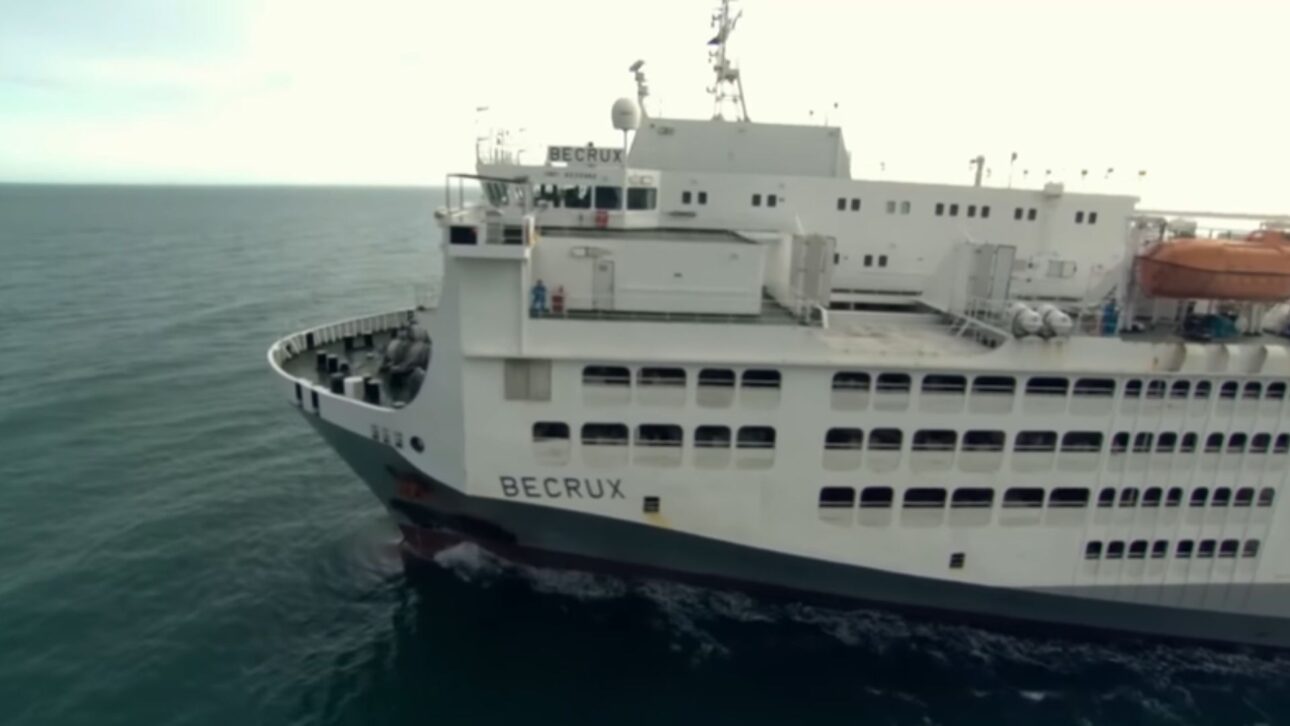
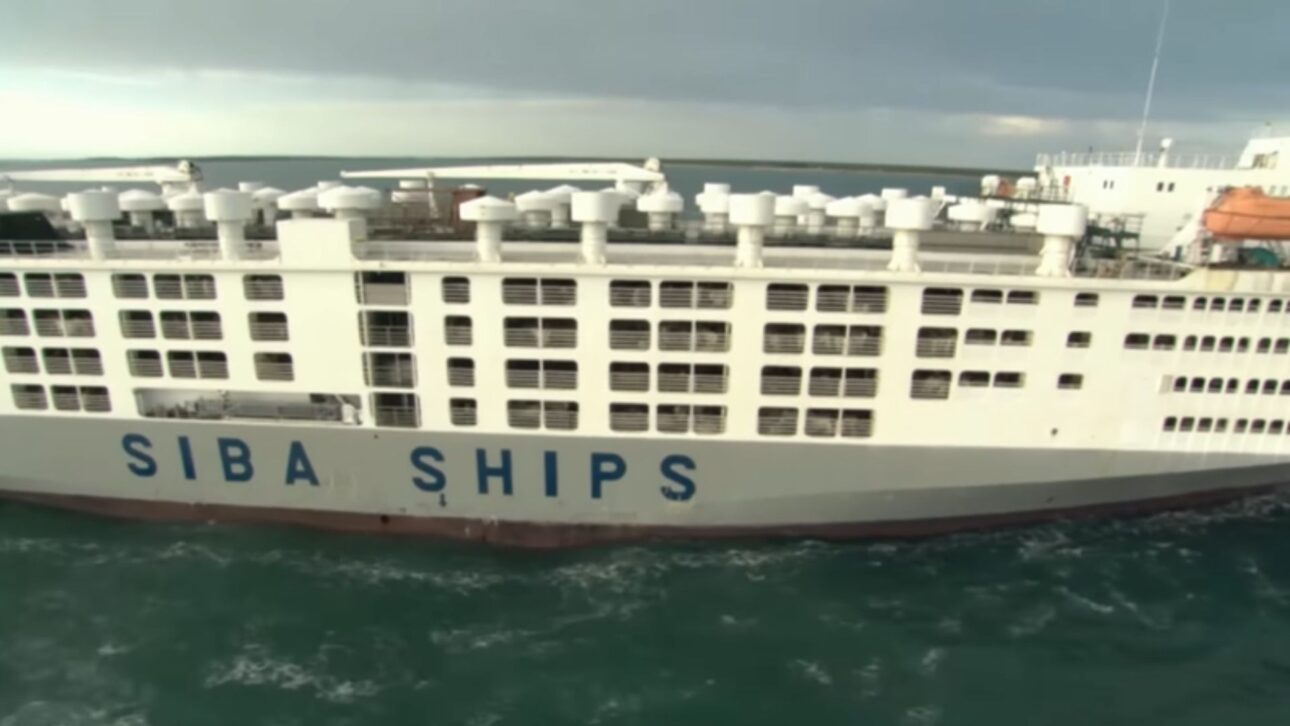
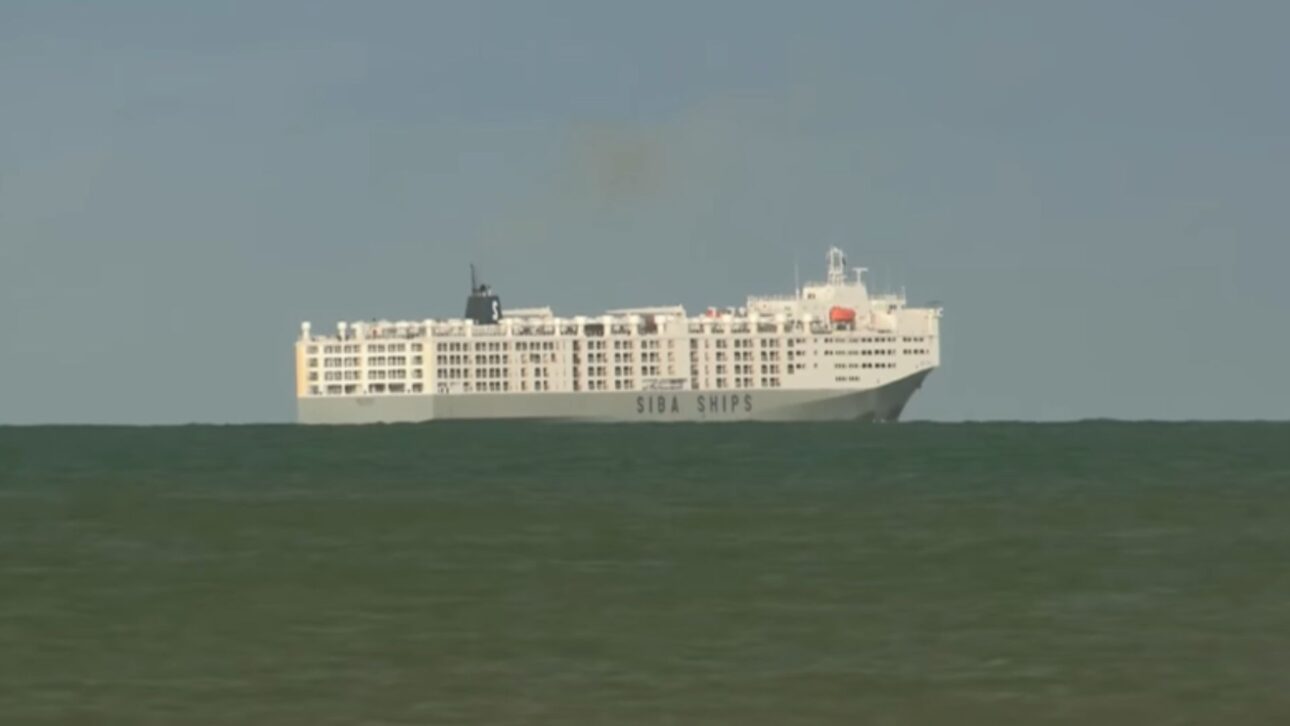
The Becrux was the first large ship designed from scratch to transport animals, not an adapted cargo ship. Built at the Uljanik shipyard in Croatia, it is about 177 meters long and can carry up to 20,000 cattle or nearly 70,000 sheep, distributed over nine decks. In the journey depicted in the documentary, there were 16,000 head of cattle traveling from Darwin, in northern Australia, to Jakarta, in four days at sea.
-
Workers were building a hotel near Washington when they found an 18th-century ship buried in the mud of the Potomac River: a hull of almost 15 meters, colonial warehouse, and even old shoes reveal a hidden city beneath Alexandria.

-
Picanha beware: brisket tip is no longer a forgotten cut, enters the radar of Brazilians, attracts attention for its cost-benefit, and becomes a juicy bet for World Cup barbecues.

-
Refugee mother sees schools closing and marries off 16-year-old daughter out of fear of the crisis in Rohingya camps; nearly 500,000 children are left without classes in Bangladesh as aid cuts push families towards child marriage and child labor.
-
To avoid fighting over the best part of the beachfront property, three sisters had three identical houses built in Australia, transported everything to an island, and set up narrow two-story homes.


What impresses is not only the size, but the system that keeps the animals alive far from land. On board, four reverse osmosis desalinizers can produce more than 500,000 liters of fresh water per day, while a network of silos, conveyors, and pipes distributes about 300 tons of feed to the troughs of each pen.
The air is the most sensitive point, and that’s why 84 fans work to exchange all the air in the closed decks every 60 seconds, according to operational data.
How cattle are boarded and cared for at sea
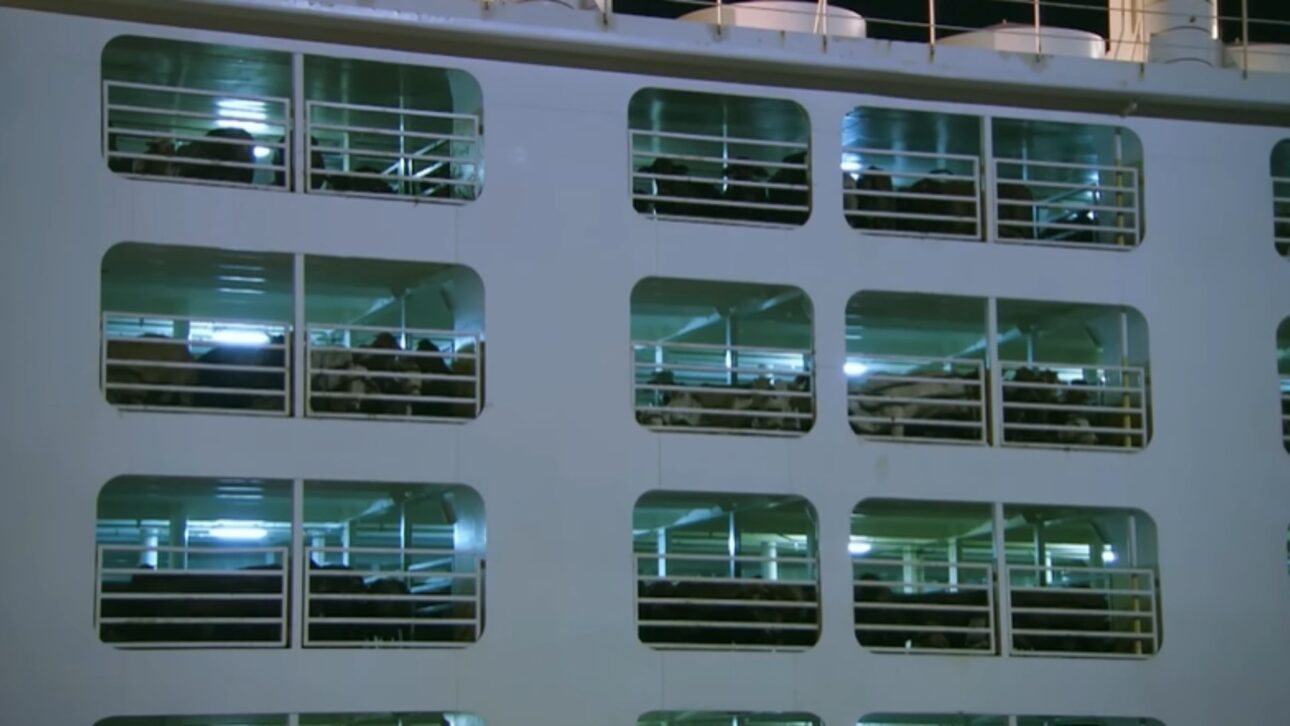
Loading 16,000 animals onto the ship is a marathon that can last more than two days. In Darwin, long trucks take the cattle from the pens to the dock, and the team works at a pace of about 500 animals per hour, under intense heat and humidity. Beforehand, each batch undergoes mandatory health inspection, and any suspicion of disease can halt the loading, because an outbreak would endanger a sector that moves billions.
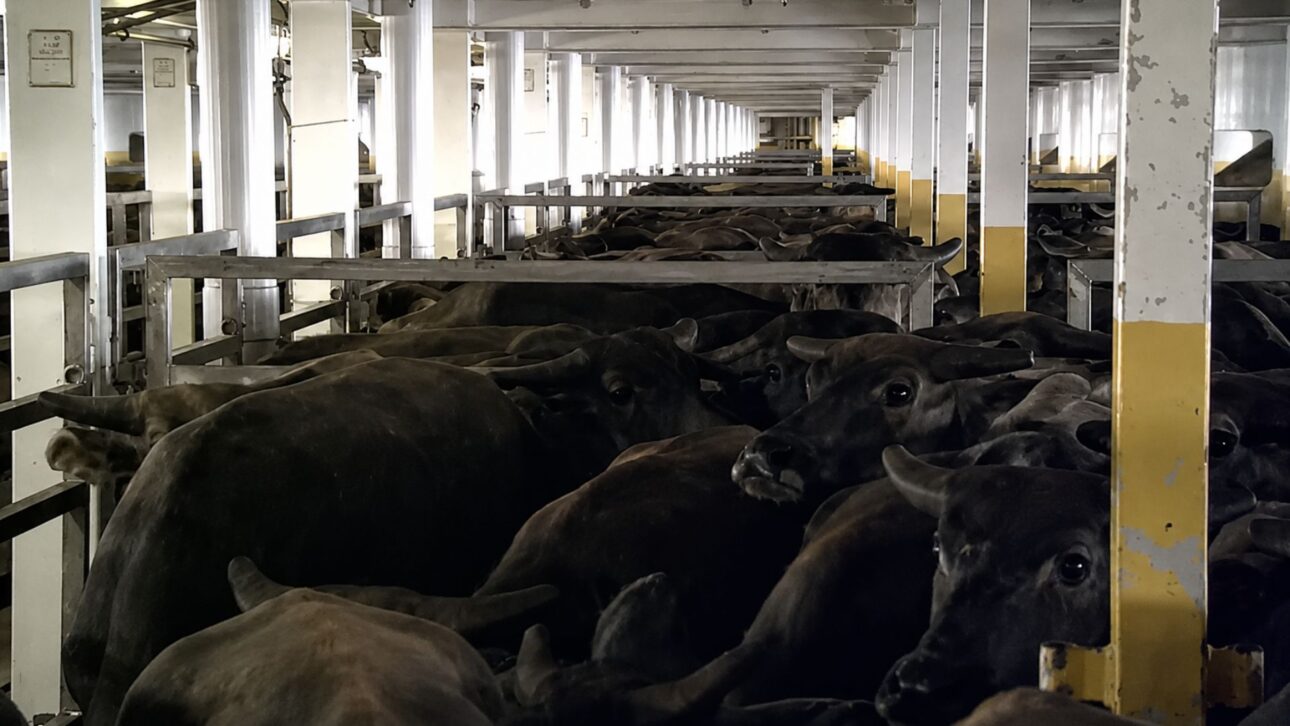
At sea, caring for the animals is the task of embarked cowboys and veterinarians. The younger cattle go to the upper decks, the older ones stay in the middle decks, and there are reserved pens as infirmaries to treat sick animals with antibiotics. The sector claims that losses are low, and the president of Siba Ships, Mauro Balzarini, states that modern ships transport the animals “safely, with space, light, food, air, and water.” Weight is closely monitored, as stressed animals eat less, lose weight, and reduce the trip’s profit.
Pirates, monsoons, and the narrow Java Sea
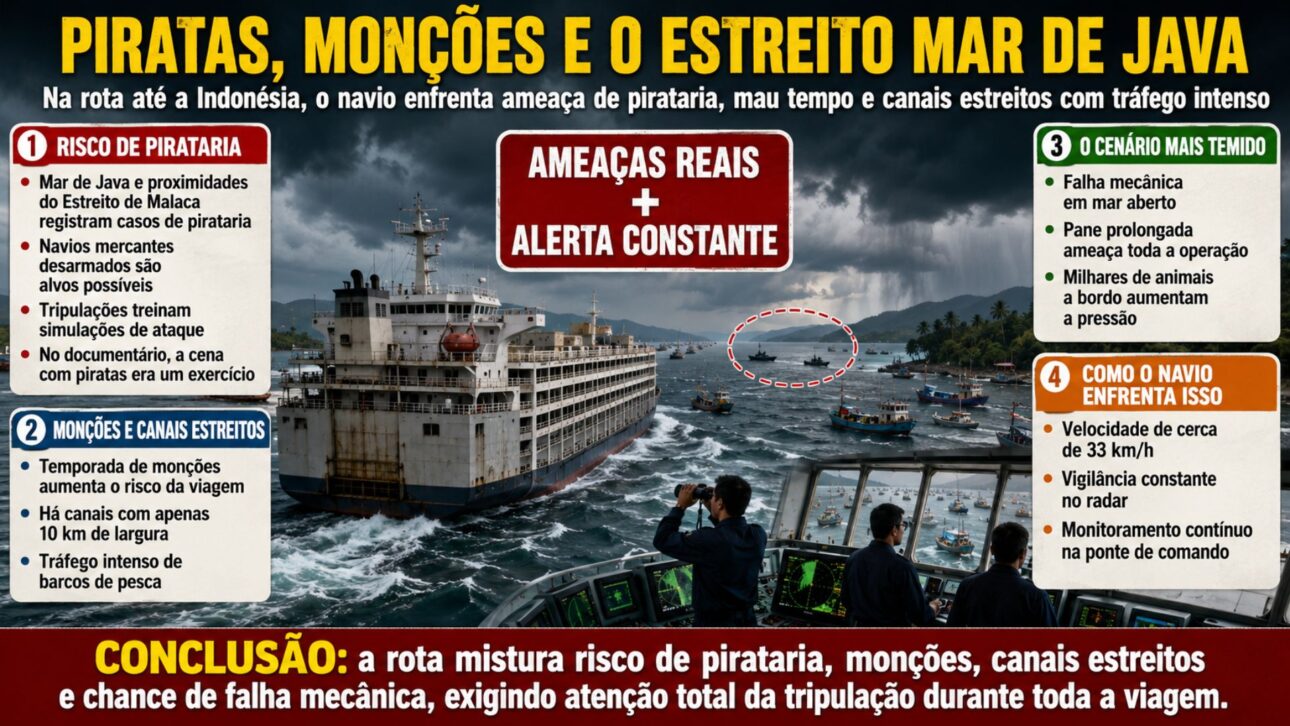
The route to Indonesia crosses waters where risks go beyond bad weather. The Java Sea and the vicinity of the Strait of Malacca report cases of piracy, and unarmed merchant ships are possible targets, which leads crews to train for attack simulations. In the documentary, the tense scene with pirates was actually an exercise, not a real encounter, although the threat in the region is real.
Added to this are the monsoon season and channels only 10 kilometers wide, with heavy fishing boat traffic. Any mechanical failure in open sea, with thousands of animals on board, is a scenario feared by the crew, because a prolonged breakdown threatens the entire operation. Therefore, the ship sails at about 33 kilometers per hour, with constant surveillance on the radar and the command bridge.
The controversy that the shine of technology hides
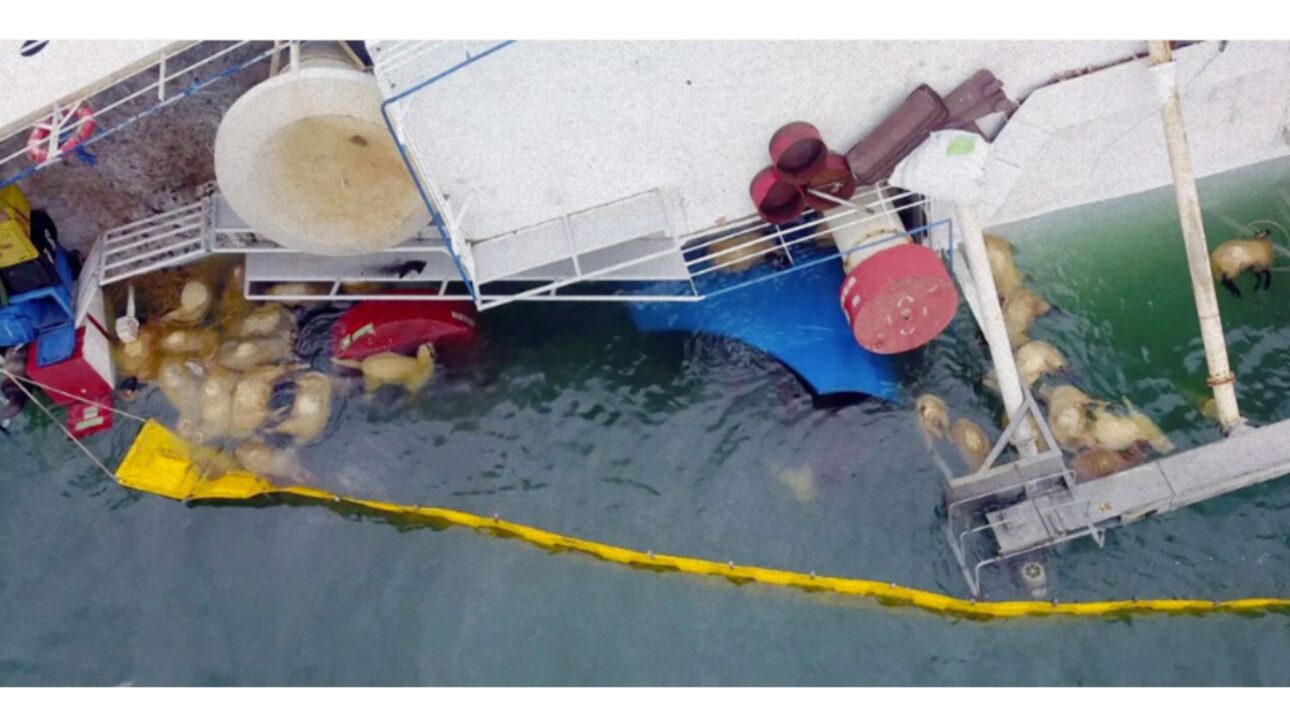
Behind the engineering, live animal export is one of the most contested practices in global agribusiness. The very maiden voyage of the Becrux, in 2002, ended with the death of about 880 cattle due to heat exhaustion en route to Saudi Arabia, according to industry records. More recent cases have reinforced the criticism, such as the sinking of the Queen Hind in 2019, which killed about 14,000 sheep near Romania, and the Gulf Livestock 1 in 2020, which took thousands of animals and dozens of crew members to the bottom of the sea near Japan.
For animal protection entities, such ships are called “death ships”. The criticisms focus on heat stress, overcrowding, the duration of the journeys, and the slaughter conditions at the destination. The industry counters by stating that modern ships offer space, ventilation, and water and that survival rates are high, keeping the debate open between those who see an essential trade and those who see avoidable suffering.
The announced end of sheep export by Australia
The pressure on live animal transport has already changed the law in Australia, one of the world’s largest exporters. In 2024, the Australian Parliament approved, by 33 votes to 30 in the Senate, the bill that ends the export of live sheep by sea starting May 1, 2028, with a transition package of more than 100 million Australian dollars, about R$ 380 million. Agriculture Minister Murray Watt said that from this date, sheep will no longer make long journeys that put them “at great risk of suffering.”
The decision, however, does not end all live animal trade. The ban applies to sheep transported by sea, while the export of cattle continues, including the route from Australia to Indonesia that made the Becrux famous. The cattle trade with Indonesians had already been briefly suspended in 2011, following reports of mistreatment in slaughterhouses, showing how the issue repeatedly returns to the center of the debate.
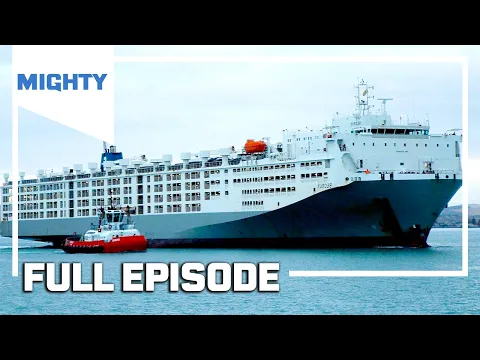

The Becrux, now Ocean Drover, continues crossing oceans with thousands of animals on board, from Australia to Asia and even from South America to China. It is, at the same time, a feat of naval engineering and the symbol of a trade that the world increasingly discusses, divided between the demand for protein, the income of those who export, and the treatment given to animals. More than admiring the size of the ship, it is worth following where this activity is headed.
And you, are you for or against the transport of live animals over long distances by sea? Share your opinion, with respect for different views on the topic.




Be the first to react!