Portuguese
  Spanish


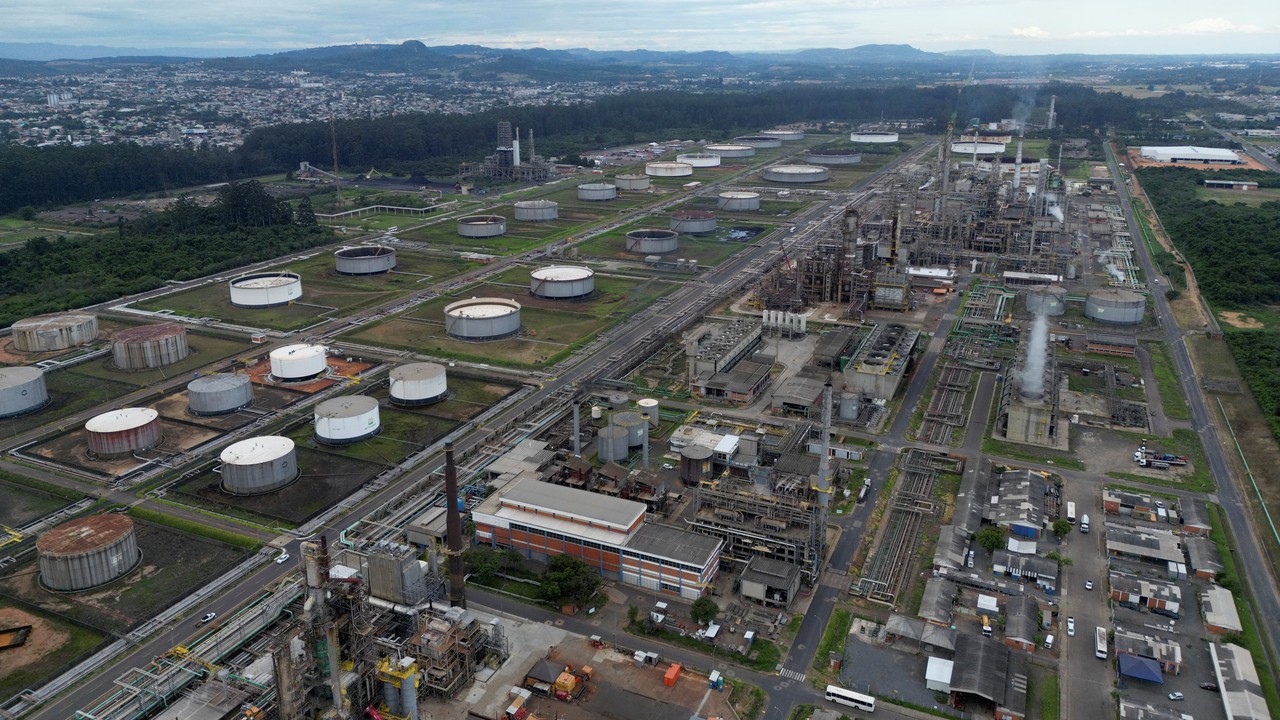
After nearly six decades as a key player in the world’s largest oil cartel, the United Arab Emirates exit OPEC this Friday — and analysts say the market will operate with more “market logic” from now on
On May 1, 2026, OPEC loses one of its largest members: the United Arab Emirates. The exit ends a 59-year alliance, initiated in 1967.
The move removes from the cartel a country with 113 billion barrels of proven reserves — the sixth largest on the planet — and the technical capacity to become one of the world’s top five producers.
The official announcement came on April 28, 2026, three days before it took effect. As reported by Click Petróleo e Gás, the Emirati government cited “national interests” as justification.
-
To erect the “Baleia” building on the richest avenue in Brazil, he bought 35 houses, paying with trips to Disney, a truck, and even an apartment, waited over 20 years, and today the complex is valued at R$ 2.5 billion.

-
The land belonged to her great-great-grandfather and was worth R$ 25 per square meter during the pandemic; the couple sold 250,000 m² for the nearly R$ 30 billion project that is transforming the “neighbor of Jericoacoara,” and today a house in the region goes for R$ 4.2 million.

-
Labor shortage reaches the truck drivers’ area: Brazil is already facing a deficit of 120,000 drivers, 65.1% of transport companies feel the impacts, and Mercedes-Benz strengthens training in the face of the new generation of technological trucks.
-
An important sector in Brazil is suffering from a labor shortage, requiring the qualification of 14 million workers by 2027, leading companies to invest R$ 5 million to train professionals and address the technical deficit.




In parallel, the move signals a distancing from historic Saudi leadership and a possible rapprochement with the United States, in a geopolitical realignment relevant to the sector.
For the global market, the exit is more than symbolic. The Emirates want to double their production from 3 million to up to 6 million barrels per day — something impossible under the rigid quotas of OPEC. And Saudi Arabia, the historic leader, will now have to coordinate 11 remaining members in an even more fragmented scenario.
The history of the cartel: how OPEC was born — and why it emerges fragmented in 2026
OPEC was founded in September 1960, in the city of Baghdad, by five countries: Saudi Arabia, Venezuela, Iran, Iraq, and Kuwait. The declared objective was to coordinate oil policies to stabilize prices and protect the revenues of exporting countries against the so-called “Seven Sisters,” the major American and European oil companies.
The Emirates joined in 1967 and participated in defining moments of the oil market, including the Arab embargo of 1973 and the price war of the 1980s. In 2016, the cartel gained the suffix “+”, in an expanded alliance with non-OPEC producers, especially Russia.
In fact, fragmentation is not new. Qatar left OPEC in 2018 to focus on LNG. Ecuador exited in 2020. But none of these exits carry the weight of the Emirati one — because the Emirates are, after Saudi Arabia, the second-largest producer among the founding members of the bloc.

The post-exit strategy: how OPEC+ should operate with 11 members
The group has already signaled its next step. OPEC+ plans to increase production by 411,000 barrels per day starting in June 2026, offsetting part of the influence lost with the Emirati exit.
In parallel, Saudi Arabia assumes an even more centralized leadership. Under pressure from volatile trade flows and growing competition from American shale, Riyadh tries to maintain quotas, calibrate prices, and hold the cartel’s cohesion — an increasingly difficult task.
To understand the scenario, it’s worth listening to analysts. Pedro Rodrigues, partner at the Brazilian Infrastructure Center (CBIE), told Poder360 that the decision is “smart”: “The Emirates have idle capacity and it’s smart to leave the group now that oil prices are high.”
As Rodrigues added, “it’s positive for the market, which becomes less dependent on the Arabs and can start functioning more with a market logic.” In other words, more supply, less political coordination, and potentially lower prices for consumers like Brazil.

The impact on Brent prices in the short term is smaller than it seems
Despite the symbolic weight of the exit, experts say that Brent prices should not drop immediately. This is because the Emirates were already producing near their technical ceiling, and the expansion to 6 million bpd would take years to materialize.
As reported by Click Petróleo e Gás recently, Brent closed at $111 per barrel on April 28, in the seventh consecutive rise — sustained by tensions in the Strait of Hormuz and persistent demand, not by the coordinating power of OPEC.
This means that, in the short term, price foundations come more from regional geopolitics than from production quotas. In March 2026, for example, OPEC‘s production shrank by 8 million bpd compared to February — a 27.5% drop — due to attacks on energy infrastructures, not quotas.

The strategic victory of the United States and shale
For Washington, the Emirati exit is a victory on a silver platter. The sitting American president has been pressing since taking office for less dependence on Arab producers — and with the Emirates out of OPEC, American shale gains room to grow with less political resistance from the bloc.
The United States today produces about 13 million barrels daily — more than Saudi Arabia or Russia.
Without rigid quotas, the shale industry operates with agility that OPEC countries simply cannot replicate.
This is the reason, according to Rodrigues, why the Emirati exit is “positive for the market.” More independent supply, less political coordination, and prices that respond to real supply and demand.
In comparison, Argentina is also accelerating. As a recent article from Click Petróleo e Gás showed, the Vaca Muerta shale led the country to a record energy surplus of $7.8 billion in 2025 — something unthinkable for Argentinians a decade ago.
The remaining OPEC: the new design of the cartel in 2026
With the exit, OPEC is left with 11 members: Algeria, Congo, Equatorial Guinea, Gabon, Iran, Iraq, Kuwait, Libya, Nigeria, Saudi Arabia, and Venezuela. Together, they still account for more than 60% of the world’s oil reserves.
Even weakened, OPEC does not die. Saudi Arabia alone has about 267 billion barrels in reserves, and Iran, more than 200 billion — giving the bloc enough resources to influence the market for decades.
On the other hand, internal fragmentation may become increasingly significant. African countries like Nigeria and Libya face political crises and depend on the European gas market (which is undergoing full reorganization). Meanwhile, Venezuela is under heavy sanctions. The cartel’s cohesion will be tested like never before.
The energy transition pressures the cartel from the demand side
There is also another factor of long-term erosion: the energy transition. Global demand for oil is expected to lose strength between 2030 and 2040, according to projections from the International Energy Agency (IEA), as electric cars, industrial batteries, and renewables gain scale.
In this context, the Emirati exit gains a geopolitical reading. Instead of maintaining quotas that limit sales today, the country chooses to maximize revenues while oil is still worth over $100 — anticipating a demand curve that may be declining in 5 or 10 years.
In other words, leaving OPEC is also a climate hedge strategy. Whoever produces and sells more oil now, before the world needs less, gains a comparative advantage. This is exactly the calculation of the Emirates.
- 1967 — Emirates join OPEC
- 2016 — Cartel gains the “+”, alliance with Russia
- April 28, 2026 — Official announcement of Emirati exit
- May 1, 2026 — Exit takes effect
- 113 billion barrels — Reserves leaving the bloc
- 3M → 6M bpd — Emirati production expansion target
What this means for Brazil
For Brazil, the reading is positive in the short term. As a net oil exporter since 2022, the country tends to benefit from any movement that reduces the coordinating power of OPEC — because it leaves more room for the Pre-Salt to compete in the global market.
On the other hand, there is a real risk. If the Emirates double production and the cartel loosens quotas, Brent could fall in the medium term.
This would compress Petrobras’ margins and reduce federal revenue via royalties — a delicate balance between competitive gain and loss of public revenue.
Finally, the lingering question is uncomfortable. If the cartel that controlled oil for six decades begins to unravel now, who will coordinate global supply when demand truly starts to fall? And is Brazil, which bet everything on the Pre-Salt, ready for a market where no cartel sets the price?