Portuguese
  Spanish


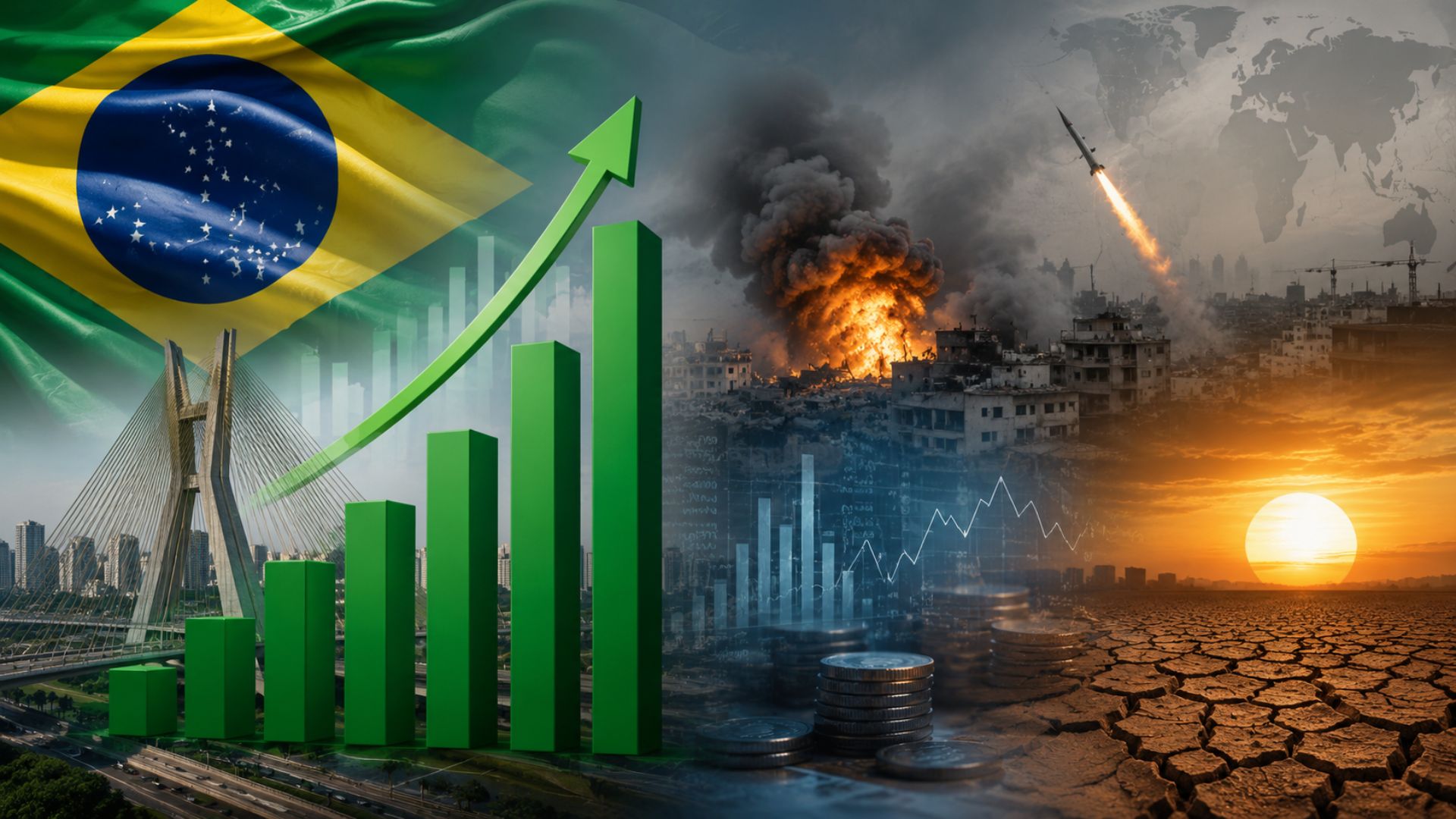


IBGE announced this Friday that Brazil’s GDP grew 1.1% in the first quarter of 2026, a result above expectations and the highest expansion rate in four quarters. The GDP was supported by the services sector, which represents 70% of the economy, by record soybean production and cattle slaughtering in agriculture, and by the extractive industry of oil, gas, and iron ore. However, Tendências Consultoria warns that GDP is expected to lose momentum in the coming quarters due to still restrictive interest rates, the rise in fuel prices caused by the conflict in the Middle East, and the risks of El Niño on agricultural production.
Brazil’s GDP started 2026 with the pedal to the metal, but the road ahead is full of obstacles. The 1.1% growth in the first quarter confirmed the expectation that the beginning of the year would be the strongest point of the Brazilian economy in 2026, before a slowdown that economists consider inevitable. According to information from the TIMES BRASIL Channel, the GDP result was driven by a combination of record soybean harvest, growth in service consumption, and initial effects of government-announced programs, factors that boosted economic activity even with still high interest rates.
Alessandra Ribeiro, managing partner of Tendências Consultoria, explained that the dynamics between the first and second half will be “quite different.” GDP is expected to lose momentum in the coming quarters because the restrictive monetary policy will continue to have effects, fuel costs pressured by the war in the Middle East will spread through the production chain and the risk of a strong El Niño could affect agricultural production by the end of 2026 and in 2027.
What drove GDP up in the first quarter

The services sector, which accounts for approximately 70% of Brazil’s GDP, maintained an important growth pace driven by household consumption and investments in information technology and artificial intelligence. Commerce stood out among the service segments, benefiting from government programs that helped sustain consumption even in a high-interest-rate environment.
-
El Niño Threatens Brazilian Food Production, Economists Predict Rising Prices for Coffee, Corn, and Rice

-
Brazil’s First Freight Railway Built from Scratch, EF-118 Connecting Espírito Santo to Rio de Janeiro, Goes to Auction in October Attracting Chinese Giant in Multi-Billion Dollar Bid for Southeast Rail Network

-
Audit in Rio de Janeiro’s State Government Uncovers Ghost Employees Across All 77 Departments, Leading to Over 4,000 Dismissals and Significant Cost Savings

-
Audit Reveals 80% of Ghost Employees in Rio Government Departments, Leading to Over 4,000 Dismissals and Saving the State $3.3 Million Monthly
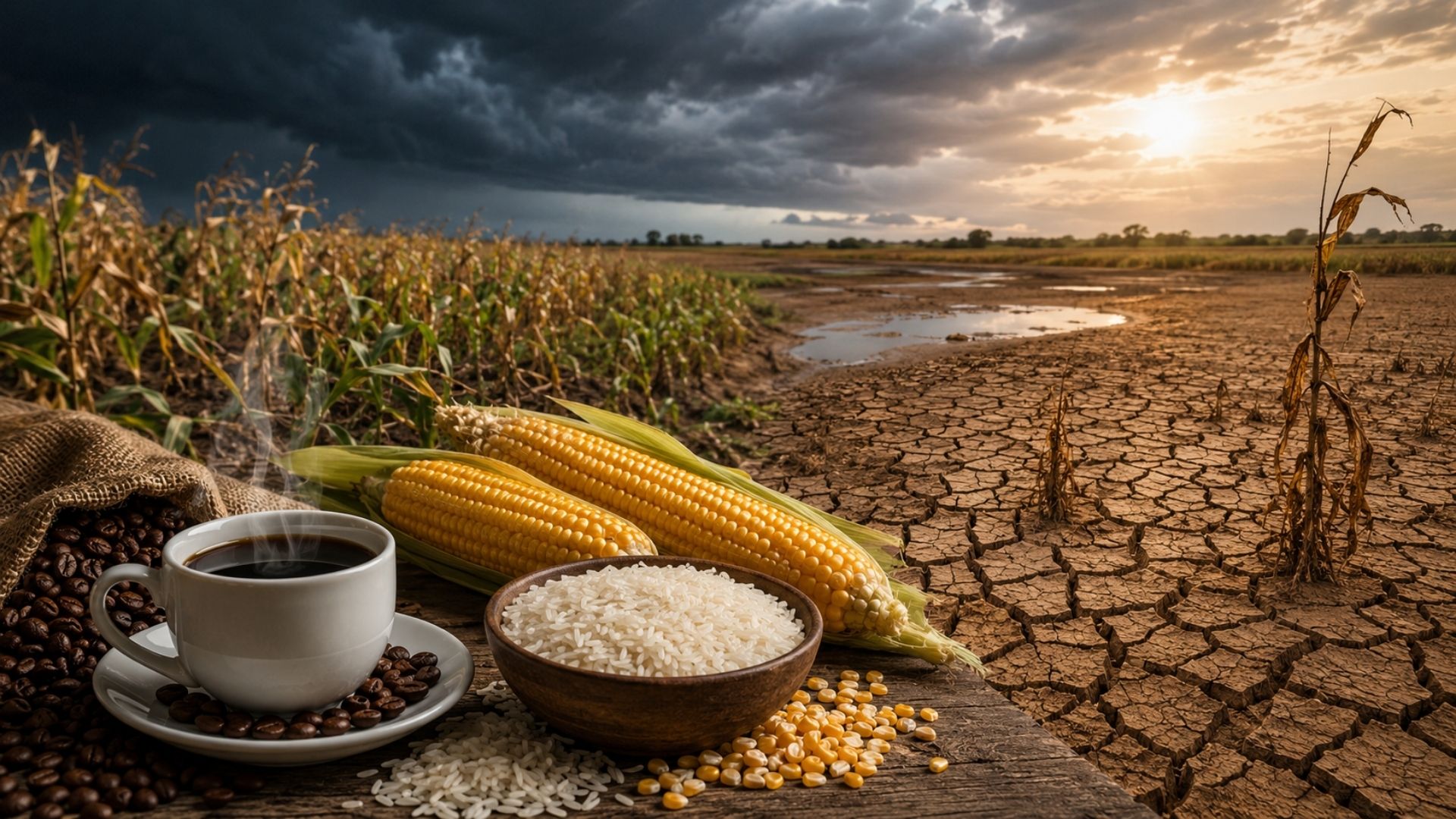


In agriculture, the GDP recorded a historic result in soybean production and solid performance in cattle slaughtering. In the industry, despite the weakness in manufacturing, the extractive and construction sectors helped the result: oil, gas, and iron ore production continues to expand, and civil construction is beginning to capture the initial effects of the investment programs announced by the government.
The three factors that could slow down GDP in the second semester
The first factor is monetary policy. The Central Bank is cautiously reducing interest rates, but the Selic rate remains at a restrictive level that compresses credit, investment, and consumption. The effect of high interest rates on GDP is not immediate, it accumulates over quarters, and the heaviest part of this impact is expected to be felt precisely in the second semester.
The second factor is the conflict in the Middle East. The rise in oil prices caused by tensions in the Strait of Hormuz pressures fuel costs in Brazil, and even with government efforts to smooth the pass-through, the effect spreads throughout the production chain via freight, making food and manufactured products more expensive. The third factor is El Niño, which could affect agricultural production and compromise the agribusiness contribution to GDP in 2027.
Brazil among the 10 largest economies in the world
The GDP result reinforces Brazil’s position among the ten largest global economies. In 2024, the country was the ninth largest economy in the world, and the 1.1% growth in the first quarter of 2026 consolidates this position. Ribeiro highlighted that the result has “much merit from the domestic reality itself,” especially the expressive dynamics of agriculture, which reached the highest production level in the historical series, and the growing weight of the extractive industry.
Brazil’s GDP does not grow just because other economies slow down. The 1.1% result has internal support. China and the United States continue to grow, albeit at a slower pace, and remain at the top of the ranking. Brazil’s differential lies in diversification: services, agriculture, extractive, and civil construction simultaneously contribute to a GDP that sustains itself even when the manufacturing industry operates below potential.
What to expect from GDP in the coming quarters
The expectation is that quarter-to-quarter GDP growth will decrease throughout 2026. The combination of restrictive interest rates, inflationary pressure from fuel, and climate risks creates a scenario in which the Brazilian economy gradually slows down without necessarily entering a recession, but with a significantly lower pace than the 1.1% recorded in the first quarter.
The manufacturing industry remains the weakest link in the GDP, directly suffering the effects of high interest rates and competition with imported products. Services should continue to sustain the economy, but with less vigor as government programs lose momentum and credit becomes more expensive. For agribusiness, everything depends on the weather: if El Niño proves strong, the 2026/2027 harvest may disappoint and remove one of the main drivers that boosted GDP at the beginning of the year.
Do you think GDP will maintain its pace or is the slowdown in the second half inevitable? What worries more: high interest rates, the war in the Middle East, or El Niño? Share in the comments.