Portuguese
  Spanish


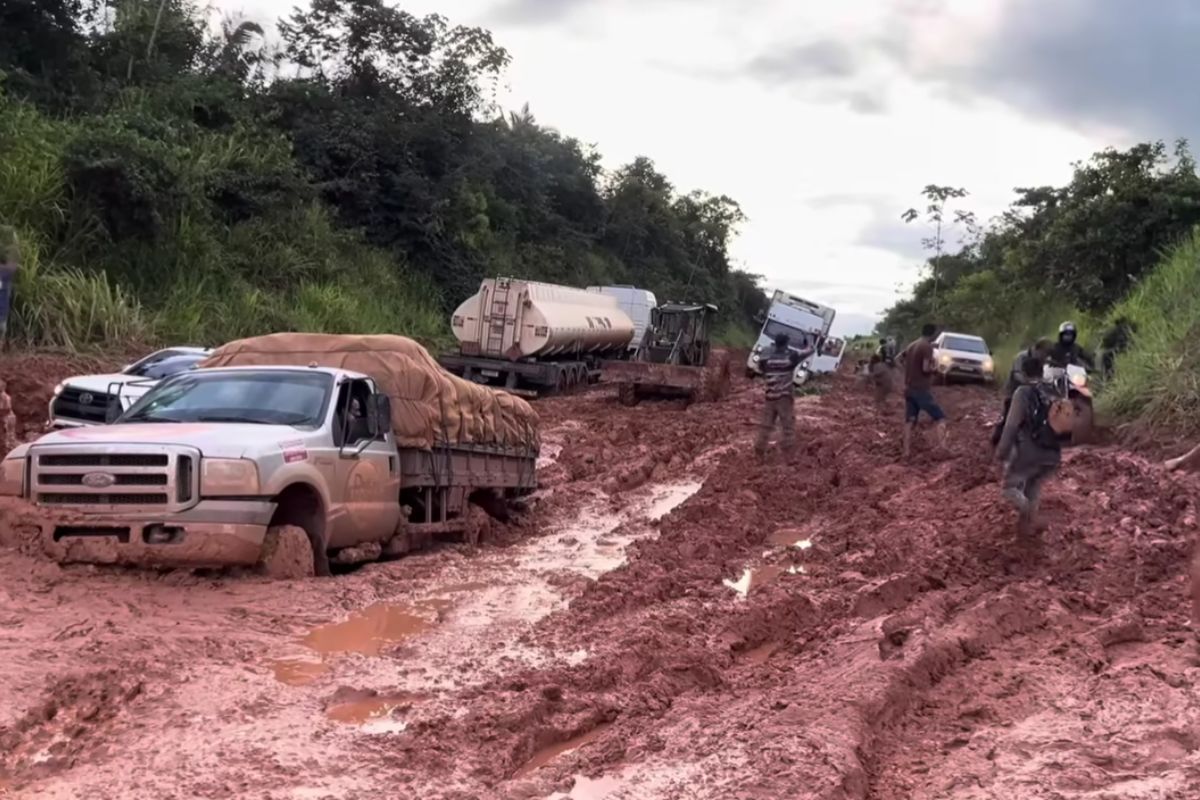

A stretch of unpaved BR-230 in Pará has turned into a mud trap so deep that even the CBT 8060 tractor with a winch couldn’t pull out first-gear vehicles, and the video recorded by a local resident exploded to 1.2 million views in five days on a channel with only 5.5 thousand subscribers.
The video from the Girino da Transamazônica channel shows the same point of the road swallowing trucks, cars, and motorcycles for three consecutive days in April 2026. The CBT 8060 tractor, equipped with a winch, worked non-stop pulling vehicle after vehicle as the rain worsened the mud pit every hour. On the third day, according to the video’s author, the mud hardened in some spots and sank even more in others, sticking the tires to the ground and tearing off entire bumpers from the rescued vehicles.
The scene is familiar to those who know the Transamazônica during the rainy season, but the scale of this mud pit caught the attention even of those who have been following the highway for years.
Why does the Transamazônica still have stretches that turn to mud in 2026?

BR-230 is the third largest federal highway in Brazil, stretching 4,260 km from Paraíba to Amazonas.
-
Collector adapts forklift electric motor in a Kombi Corujinha pickup, hides 16 batteries under the bed, and makes the Brazilian classic run silently with up to 90 km of range.

-
Goodbye traditional vacuum: Samsung surprises and launches 2-in-1 robot with steam, AI that recognizes floors and stains, self-cleaning station, hot air drying, automatic emptying, water refill, and app control.
-
Brazil is transforming acerola waste discarded by the pulp industry into an ambitious and surprising project that could forever change the way the country utilizes one of the most invisible by-products of the fruit sector.
-
Scientists have created a colossal digital twin to predict tsunamis in real time, a simulation of 55.5 trillion unknowns run on 43,520 GPUs that reduced 50 years of calculation to 0.2 seconds and could change the defense of coastal cities.


Inaugurated in 1972 still unfinished, the road maintains large stretches of unpaved sections in 2026, especially in Pará, where the clayey soil turns into deep mud during the rains and hardens during the dry season.
The most critical period runs from October to March, but late rains in April still hit the unpaved stretches hard.
The problem is not a lack of technology. Engineers who worked on paving sections of the Transamazônica in the Miritituba region of Pará have already demonstrated that it is possible to pave with appropriate drainage and soil stabilization techniques.
BR-163, which cuts through a similar Amazon region, has been successfully paved. What is lacking, according to professionals in the field, is political will and continuous investment.
Without drainage, soil replacement, and base reinforcement, any asphalt applied will break apart within a few months.
What does the viral video show about the reality of those who depend on this road?
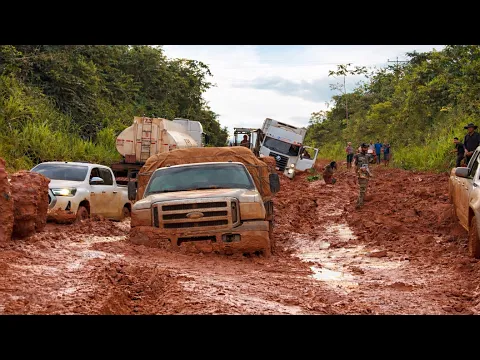

The video is not an influencer production or a planned expedition. It is a record from a resident who lives with the road and documents what happens in daily life.
The Brazil nut trees loaded with fruits that appear in the background confirm the location in Pará, in the region where the harvest of Brazil nuts depends on this same road to transport production.
In one section, the tractor tries to pull a truck that is not moving. It uncouples, repositions the winch, pulls again. The mud pushed by the winch forms mounds on the sides.
Motorcyclists try to pass and sink. A vehicle leaves with the bumper destroyed by the accumulated mud. The video’s author summarizes in one sentence: the winch did more work than the tractor itself.
How much does it cost Brazil to maintain the Transamazon highway in this condition?
Each mud pit that blocks the road for days represents cargo that does not arrive, products that spoil, fuel wasted in waiting, and the risk of accidents.
The Transamazon highway was designed in the 1970s to integrate the Amazon with the rest of the country, but more than 50 years later, entire sections still function as dirt roads that become impassable for months each year.
The DNIT has already paved segments in urban areas and those with higher traffic, but the rural sections in the heart of Pará remain without a concrete completion forecast.
Meanwhile, it is residents, truck drivers, motorcyclists, and rural producers who pay the price with hours and days stuck in the mud, waiting for a tractor with a winch to decide who goes first.
And you, have you ever been stuck in a mud pit or know someone who depends on the Transamazon highway to work? Do you think this road will ever be paved or has it become a lost cause? Comment below.