Portuguese
  Spanish


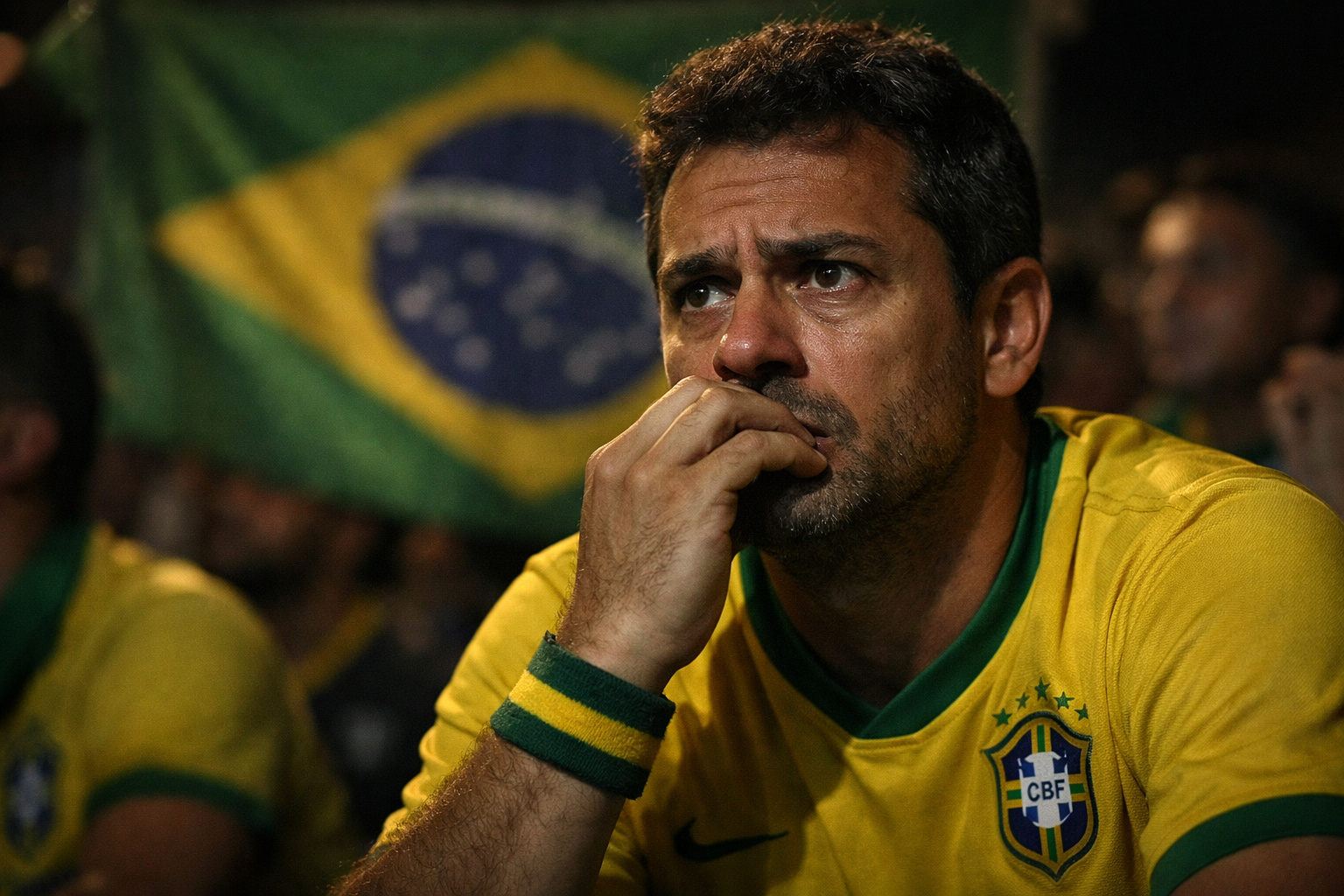

Research reveals historic drop in population optimism and exposes generalized distrust about national team performance in next World Cup
Amid a scenario of growing skepticism and low national expectations, a recent survey revealed an alarming statistic for Brazilian fans: only 25% believe that Brazil will achieve the long-awaited sixth championship in the 2026 World Cup. At the same time, an impressive 68% of respondents stated they do not trust the national team’s victory, highlighting a crisis of confidence that gains strength on the eve of the tournament.
The information was released by “Folha de São Paulo”, based on a survey conducted by Genial/Quaest, which interviewed 2,004 people aged 16 or older in 120 municipalities across Brazil, between April 10 and 13. Additionally, the study presents a margin of error of 2 percentage points more or less, with a confidence level of 95%, ensuring statistical robustness to the presented data.
Drop in optimism and return to the worst level since 2025 increase tension about the future of the national team
When analyzing the evolution of the numbers, a progressive deterioration in the population’s sentiment regarding the Brazilian national team becomes evident. Currently, the disbelief index (68%) has returned to the worst level recorded since April 2025, marking a negative escalation in the survey cycle.
-
Orphaned Youth Turns Dismissed Idea into Global Prestige with Innovative Wristwatch

-
English Skills Boost Career Opportunities in the Oil and Gas Industry

-
Brazil Secures Second Place at WorldSkills 2024 in Lyon, with 64 Young Professionals and 8 Medals, Including Gold from a Rio de Janeiro Hairdresser

-
3,000 Military Personnel from 10 Countries, Including US and Chinese Marines, Train Together in Brazil’s Savanna: Operation Formosa Becomes Largest Naval Ground Exercise Before First Cancellation Since 1988



On the other hand, when compared to October 2025, there is a significant worsening: at that time, 61% of Brazilians did not believe in the title. In other words, there has been a substantial increase in distrust over the months, reinforcing the scenario of uncertainty.
Interestingly, the scenario was completely different before. In April 2023, for example, optimism prevailed, with 50% of the population believing in the achievement of the world title, against 42% who did not believe. Thus, the change in perception shows a drastic turn in collective mood, indicating a possible crisis of sports identity.
Moreover, 7% of respondents stated they did not know or preferred not to answer, which also reflects a segment of the population disconnected or indifferent to the team’s performance.
Evaluation of Ancelotti divides opinions and raises doubts about technical leadership
While the future performance of the national team raises doubts, the work of Italian coach Carlo Ancelotti has also been put to the test by public opinion. In this sense, the numbers reveal a divided scenario, which further amplifies the feeling of instability.
According to the survey, 41% of respondents approve of the coach’s work, while 29% disapprove of his performance in charge of the team. On the other hand, 30% said they did not know or preferred not to answer, demonstrating an evaluation still undefined by a significant portion of the population.
In light of this data, it is evident that, although there is a support base, the coach has not yet managed to consolidate a consensus, which may directly impact the overall confidence in the national team’s performance in the 2026 World Cup.
Lack of enthusiasm for the 2026 World Cup raises alarm and increases sense of crisis
In addition to disbelief in the title, another data point draws even more attention: the low excitement of Brazilians for the 2026 World Cup. According to the survey, an absolute majority of the population shows little or no enthusiasm for the event.
In this context, 54% stated they are not at all excited about the competition, while 32% said they are somewhat excited. Only 12% declared they are very excited, reinforcing the scenario of widespread disinterest. Another 2% did not know or did not respond.
Consequently, these numbers reveal a possible emotional detachment of fans from the national team, something unusual in a country historically passionate about football. Therefore, the data raises important questions about the impact of the team’s recent performance and sports management on the relationship with the public.


Detailed methodology reinforces the credibility of the presented data
To ensure the accuracy of the results, the survey was conducted through face-to-face interviews, shortly after the last matches of the national team preceding the final call-up, scheduled for May 18. This factor is relevant as it captures the most updated perception of the population regarding the team’s current moment.
Additionally, the study included a sample of 2,004 respondents distributed across 120 Brazilian municipalities, covering different social and regional profiles. With a margin of error of 2 percentage points and a confidence level of 95%, the data provides a true picture of the national sentiment.
Given all these numbers, it is clear that Brazil arrives at the 2026 World Cup under a climate of tension, distrust, and low expectations — a scenario that can directly influence not only on-field performance but also the historical relationship between the national team and its fans.
In light of this scenario of distrust and low expectations, do you still believe that Brazil can surprise and win the sixth championship in 2026?
Read the full survey in the integral.