






 Portuguese
  Spanish
  4 min of reading
  0 comments


The Race For Electricity Became A Bottleneck, And The Solution Has Been To Generate Energy On-Site To Avoid Waits That Can Reach Ten Years.
OpenAI has fully entered the competition for energy to sustain the expansion of artificial intelligence. Demand has grown so quickly that electrical infrastructure has become a real bottleneck, with long delays to connect new projects to the grid.
The impact is direct: without available power, data centers cannot grow at the pace of software. To circumvent this blockage, on-site energy generation is gaining traction, even with higher costs and environmental effects.
Urgency became evident when Sam Altman reached out to Blake Scholl, CEO of Boom Supersonic, with a simple and desperate request: to secure energy.
-
The owner of Facebook, Mark Zuckerberg, opened his wallet and paid the equivalent of R$ 72.9 billion, or US$ 14.3 billion, to hire a 28-year-old and put him in charge of Meta’s new superintelligence.

-
They wanted artificial intelligence, but they drained the water from a village in Mexico: the water consumption of data centers caused a hepatitis outbreak, and big tech companies Amazon, Microsoft, and Google were forced to halt billion-dollar projects.

-
System created to save lives in disasters turned ‘against’ Brazilians overnight: a hacker attack sent out a false alert from Civil Defense with the word “misantropia” that went off on the phones of half the country, even in silent mode, and took down the Cell Broadcast.
-
In the cold desert of Ladakh, where it hardly rains, engineer Sonam Wangchuk created the ice stupa, a tower that freezes winter water and stores it for irrigating crops in the spring, a simple engineering feat that mimics nature.




What Happened And Why It Got Attention
The technology industry accelerated AI in just a few months but encountered a physical obstacle. In some regions, the wait to get connected to the grid can take ten years.
This mismatch created a shortcut: avoid the grid and install on-site generation next to the machines. The idea is to power operations without waiting for permits and lengthy construction projects.
The consequence is a strategic shift. Instead of relying on the local electrical system, companies are building a parallel structure to ensure supply.
The Cost Of Haste Weighs On The Wallet

Producing electricity on-site addresses short-term needs but comes at a high price. A gas plant built for Meta in Ohio shows a cost of 175 dollars per megawatt hour.
This amount is nearly double the average cost for an industrial customer. The difference alters the economics of operating large data centers.
Even with the higher expenditure, the priority is to keep the expansion running. The logic is simple: stopping equipment becomes even more expensive.
Environmental Impact Grows With Off-Grid Generators
The advance of local generation brings a significant environmental effect. Emissions from these plants can be worse than those of the overall grid, which combines more efficient gas with renewables.
The pressure is so great that regulations are also being debated. In Virginia, a global hub for data centers, there is discussion to relax emission rules and allow for more frequent operation of generators.
Even facilities that were set to close have returned to service. The Fisk plant in Chicago canceled its closure to meet demand related to AI.
Boeing 747 Engines Turn Into Turbines For Data Centers
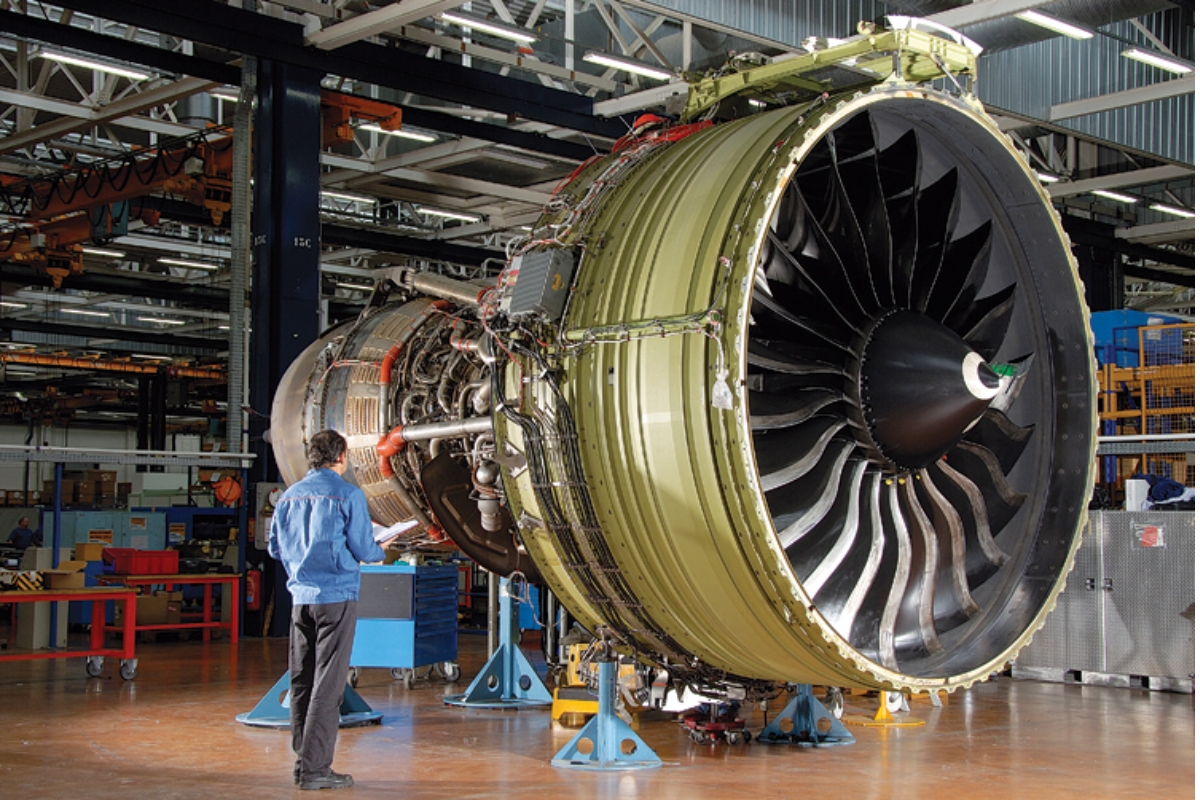
The most unusual solution came from aerospace engineering. ProEnergy buys CF6 80C2 engine cores from Boeing 747 and rebuilds them as on-site power units.
Each turbine can reach 48 megawatts, a capacity described as sufficient for a city of 40,000 homes. The scale highlights how energy has become a central piece of the sector.
The technology is already appearing in large projects. GE Vernova provides this type of solution for the Stargate data center in Texas, linked to OpenAI Microsoft.
Diesel Reemerges As Primary Energy
Besides aeroderivative turbines, the market has resurrected diesel. What was once used as backup has started to be purchased as a primary source to sustain continuous operation.
Cummins sold 39 gigawatts of energy for data centers and doubled capacity this year. The figure shows how demand has shifted from emergency mode to permanent mode.
This shift changes how infrastructure is planned. Generators are no longer a backup and become part of the system’s core.

U.S. Government Enters The Debate
The discussion has reached the federal level. The U.S. Secretary of Energy, Chris Wright, mentioned in Fox News a measure resembling mobilization: requiring data center generators and large networks like Walmart to assist the grid when the system weakens.
The proposal points to a scenario of tension between rising consumption and system capacity. AI starts to compete for energy with cities, industries, and services.
If this moves forward, the issue will no longer be just technology but will enter the energy policy agenda.
Solar Energy Off The Grid Appears As An Alternative
Not every solution requires smoke. There is a path based on off-grid solar microgrids, focusing on the speed of implementation.
A system with 44% solar energy appears as cost-effective as gas. Another, with 90% renewables, proves more profitable than nuclear projects.
The advantage is the timeline: these solar farms can be completed in less than two years in desert areas of Texas or Arizona.
AI Became Physical And The Bottleneck Is Now Energy
The scene has turned into a paradox: to run the most advanced software, the use of motors and fossil fuels on a large scale is increasing. The so-called bridge turbines sustain expansion today, but there is an expectation of a reduction in this momentum when giants cut capital expenditures.
The message is clear: artificial intelligence depends as much on chips and models as on those who can turn on the plugs. Without available electricity, even the cloud needs to touch the ground.


-

-

3 people reacted to this.