






 Portuguese
  Spanish
  6 min of reading
  0 comments


Bricks recovered from demolition become facade cladding in Norway, with cutting into thin slices, metallic fixation, and reuse of 1,800 m² in a solution that reduces waste, preserves old texture, and shows another path for construction waste
Millions of bricks discarded every year in Norway are at the center of a solution that changes the fate of rubble into a new facade. HØINE, a Norwegian brick reuse company, cuts old pieces into thin slices and transforms the material into cladding for buildings.
The information was published by Lesjöfors Engineering, an industrial engineering company linked to metallic components. The case involves the Clay Shingle system, which uses bricks recovered from demolitions as facade panels, without treating these pieces as part of the building structure.
The idea draws attention because it does not attempt to remake an entire brick. The old material is sliced, secured with a metallic system, and reused in a 1,800 m² facade, maintaining marks, colors, and texture from a previous life.
-
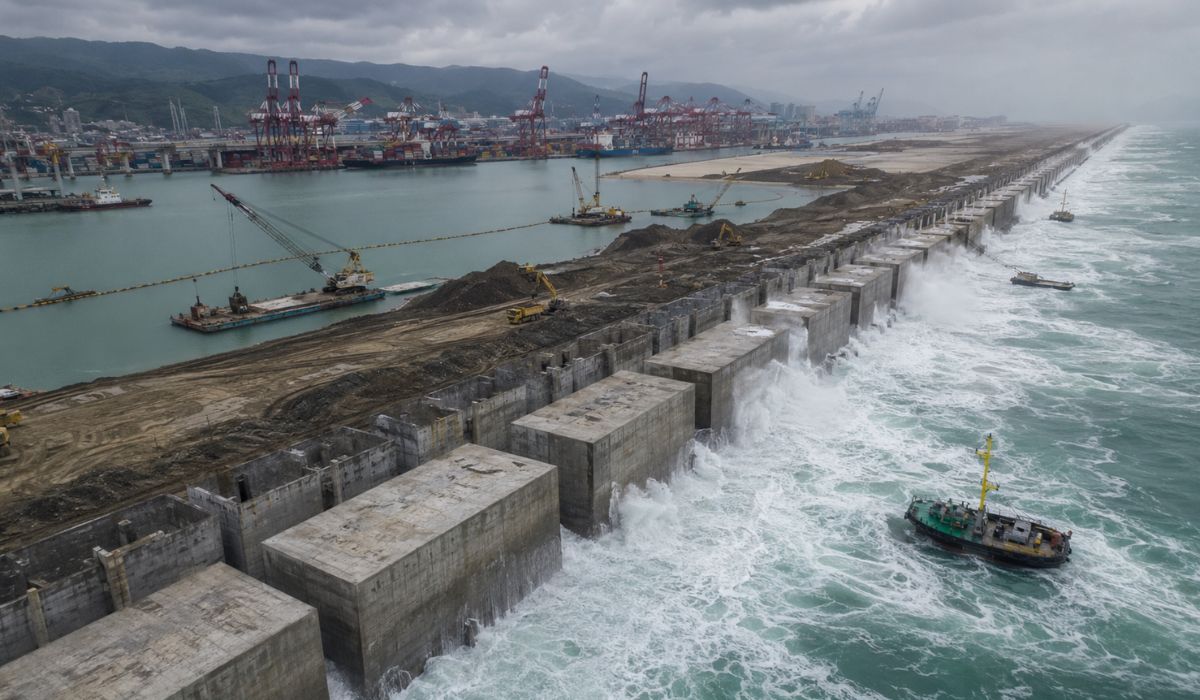
Taiwan erects a 4 km maritime wall in the Port of Taipei, installs concrete coffers against waves up to 7 meters, and transforms dredged sediments into new land to expand one of the island’s most strategic ports.

-
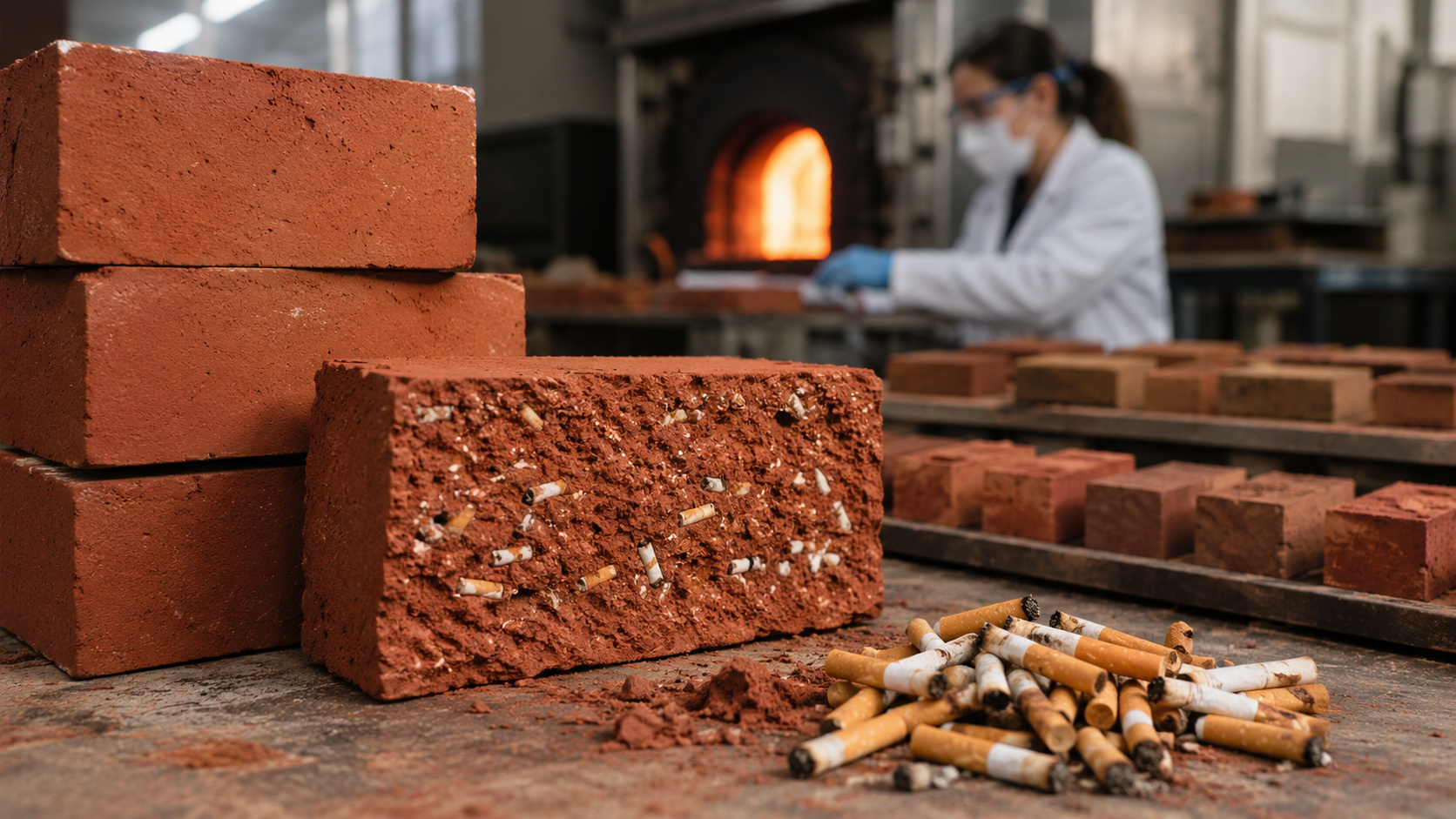
While cigarette butts appear on sidewalks, beaches, and sewers, researchers tested the waste in clay bricks and calculated a 10% savings in burning with just 1% in the mixture.

-
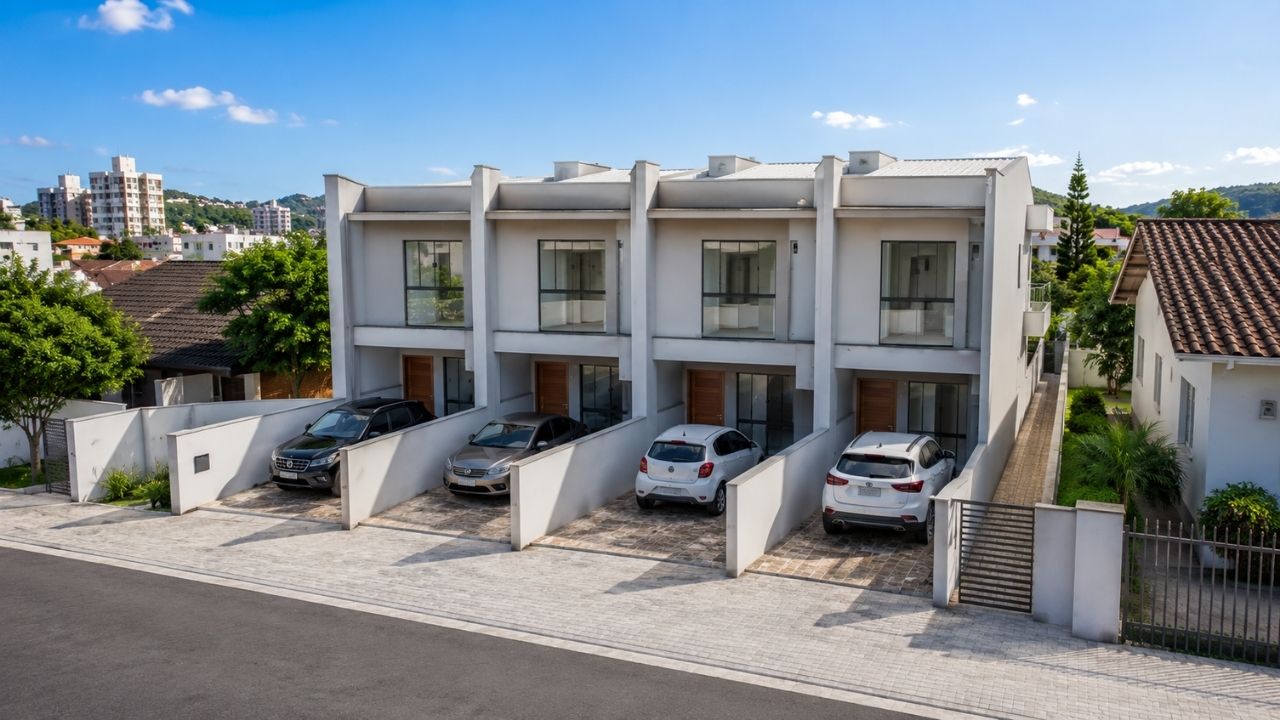
Common land turns into 4 compact townhouses with two parking spaces, suites, skylights, and free space at the back for expansion, a solution that tries to tackle the high price of lots and keep affordable housing in the Minha Casa Minha Vida program outside expensive gated communities in Blumenau.

-
A Japanese carpenter took five months to build a house by hand with screwless joints, knot-free cedar, and a finish that a 40-year veteran American contractor said he had never seen anything like anywhere in the world.


The brick that would come from demolition gets a new use in the facade
In many constructions, the brick removed from old walls loses value right after demolition. When there is no separation, cleaning, and proper destination, it becomes just another heavy waste in the dumpster.
In Norway, about 20 million bricks are discarded every year. This number shows the size of the problem and helps to understand why a reuse solution can make a difference in construction.
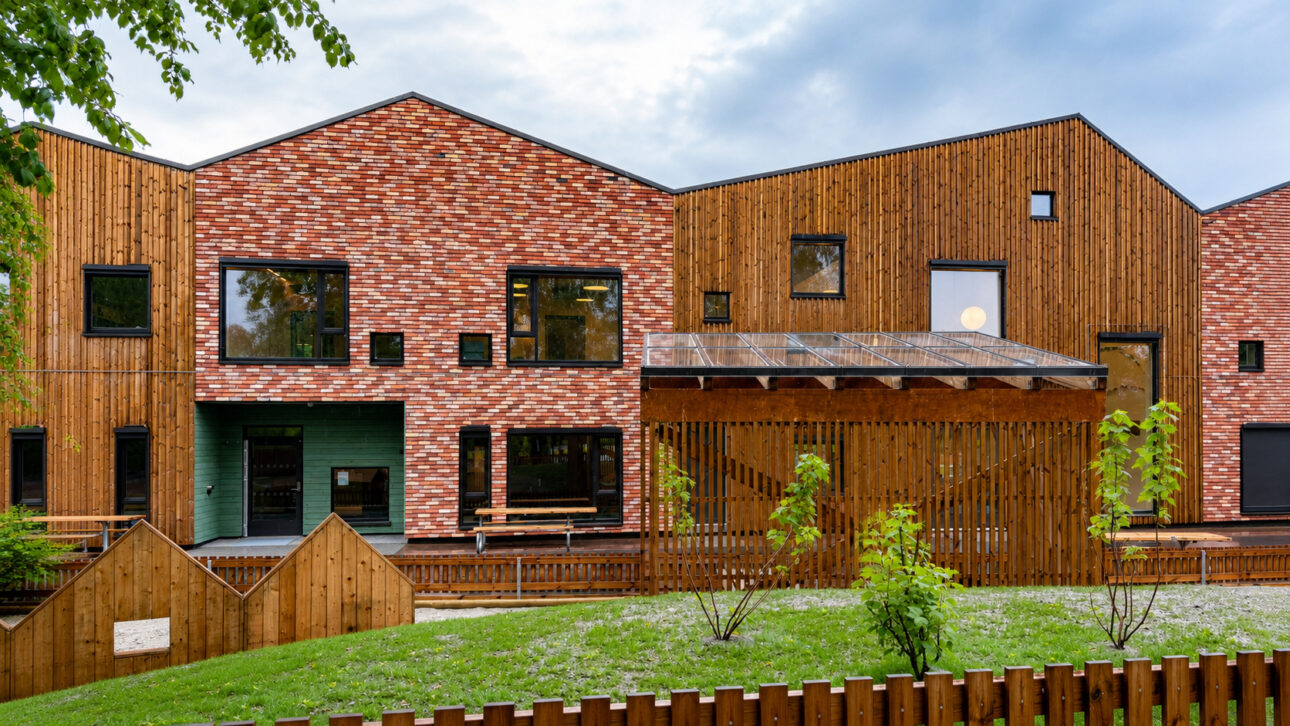
HØINE’s system looks at this waste differently. Instead of seeing just rubble, the company treats the old brick as raw material for a new external layer of the building.
This external layer is the facade, meaning the visible part from outside the construction. In the case of Clay Shingle, it functions as cladding, not as a wall that supports the building.
How Clay Shingle transforms old pieces into thin slices
The most curious point of the process is in the cutting. The recovered bricks are collected and cut into thin slices, creating smaller pieces that can be applied as panels on the facade.
This changes the logic of reuse. Instead of relying on the whole brick, the system takes advantage of the surface and appearance of the old material. Thus, a piece that could be discarded now yields more coating area.
The name Clay Shingle can be understood as a thin clay tile or panel for the facade. The expression is maintained because it is part of the official name of the system, but the function is simple: to cover the exterior of the building with reused material.
For the lay reader, the easiest comparison is to imagine a common brick being cut into slices. These slices do not support the construction but help form the final appearance of the building.
The metal clip solves a practical problem without drilling the brick
Lesjöfors Engineering, an industrial engineering company linked to metal components, detailed the creation of a patented metal clip to attach the panels without drilling the recovered bricks.
This part is important because old bricks can break more easily during preparation. Drilling each piece could also slow down the work and increase material loss.
The clip functions as a small fastening piece. It holds the coating in the facade system and allows the assembly to be done with more control.
Another relevant point is disassembly. Since the panels do not need to be drilled, the system is closer to the idea of future reuse, as the material can be removed with less damage.
1,800 m² facade shows that reuse has moved beyond a small scale
HØINE presents the case as a transformation of 300 tons of waste into 1,800 m² of facade. This data helps visualize the scale of reuse.
A facade of this size is not just a small decorative piece. It covers a large area of the building and requires repetition, fitting, and installation pattern.
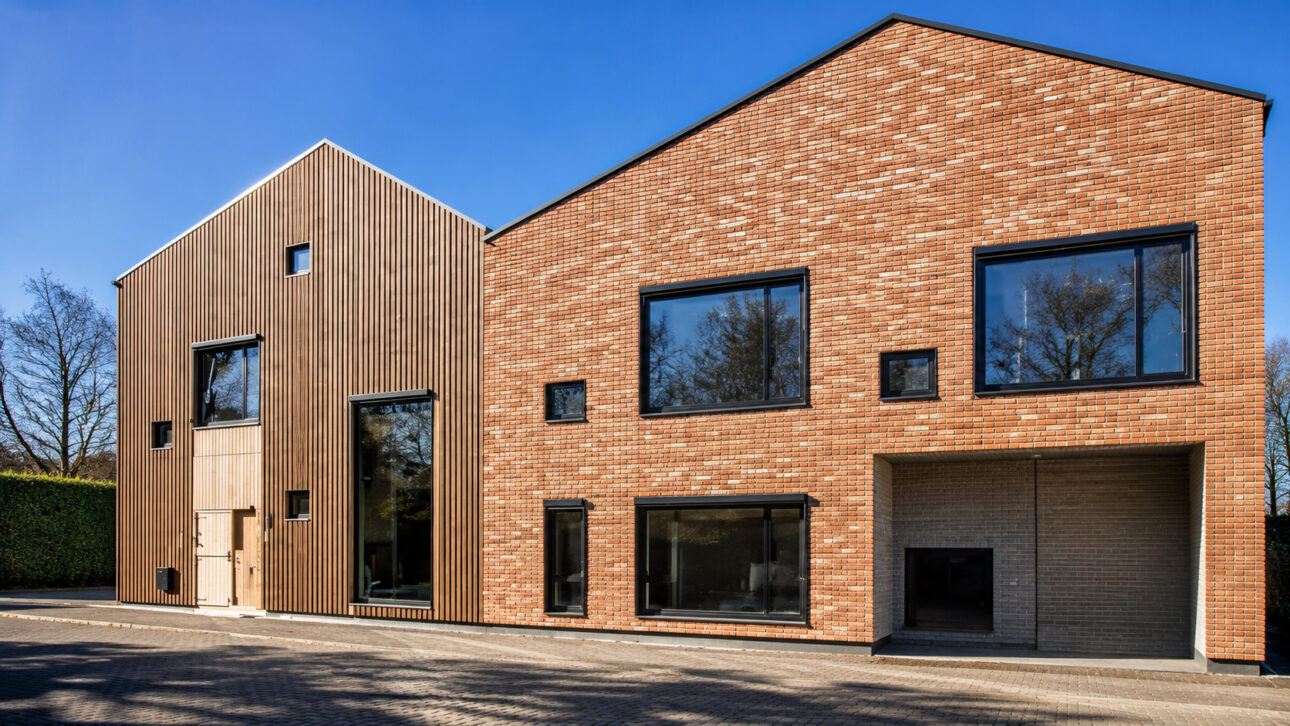
Even so, the main concern remains the same. The cut brick appears as architectural cladding, that is, as an external finish. It should not be confused with a structural piece.
This difference matters to avoid misinterpretations. The system changes the destination of part of the waste and creates a new visual surface, but the building’s safety depends on a complete technical project.
The old texture becomes part of the building’s visual value
Old bricks often have marks, color variations, and signs of time. In a regular construction, these differences might be seen as defects. In reuse, they become part of the aesthetics.
The facade made with recovered material does not have a completely uniform appearance. It carries different shades and small marks that show the origin of the brick.
This effect can appeal to architects and residents looking for a construction with more visual identity. Instead of appearing as a new and smooth surface, the facade reminds that the material once had another function.
In the end, reuse not only delivers material savings. It also preserves a part of the physical memory of the old construction.
The idea resonates with Brazilian demolitions, but requires technical care
In Brazil, renovations and demolitions also discard bricks, tiles, floors, and claddings in large quantities. Often, these materials come out mixed and lose the chance of being reused.
The Norwegian case shows a possible alternative to look at this waste with more attention. Better separation, cleaning, and preparation of the material can pave the way for new uses in facades and finishes.
This does not mean that any construction can replicate the model without study. Cutting, fixing, and installation need to follow technical criteria, because facades also endure rain, wind, and wear.
Even so, the idea is simple to understand: a material that would go to waste can return as a quality finish when there is an appropriate project and process.
What changes in practice when demolition is no longer just rubble
The main change is in the way of viewing the waste. The old brick is no longer treated just as construction debris and starts to be seen as a material with potential for new use.
HØINE’s solution shows that demolition can feed another stage of construction. What comes out of an old building can enter another as cladding, with a new function and preserved appearance.
This type of reuse also helps to question the common model of discarding first and thinking later. When the construction better separates the materials, part of the value that would go away can continue circulating.
The case of the 1,800 m² facade shows that the reuse of bricks does not need to be limited to small experiments. With cutting, fixing, and planning, old material can return on a visible scale.
The story also leaves a simple warning. Reused brick in facades is not a magic solution nor does it replace technical design, but it can reduce waste and give new life to materials that still hold value.
If demolition bricks still have color, texture, and utility, does it make sense to treat them as debris or as raw material for new facades? Comment and share your opinion.







Be the first to react!