






 Portuguese
  Spanish


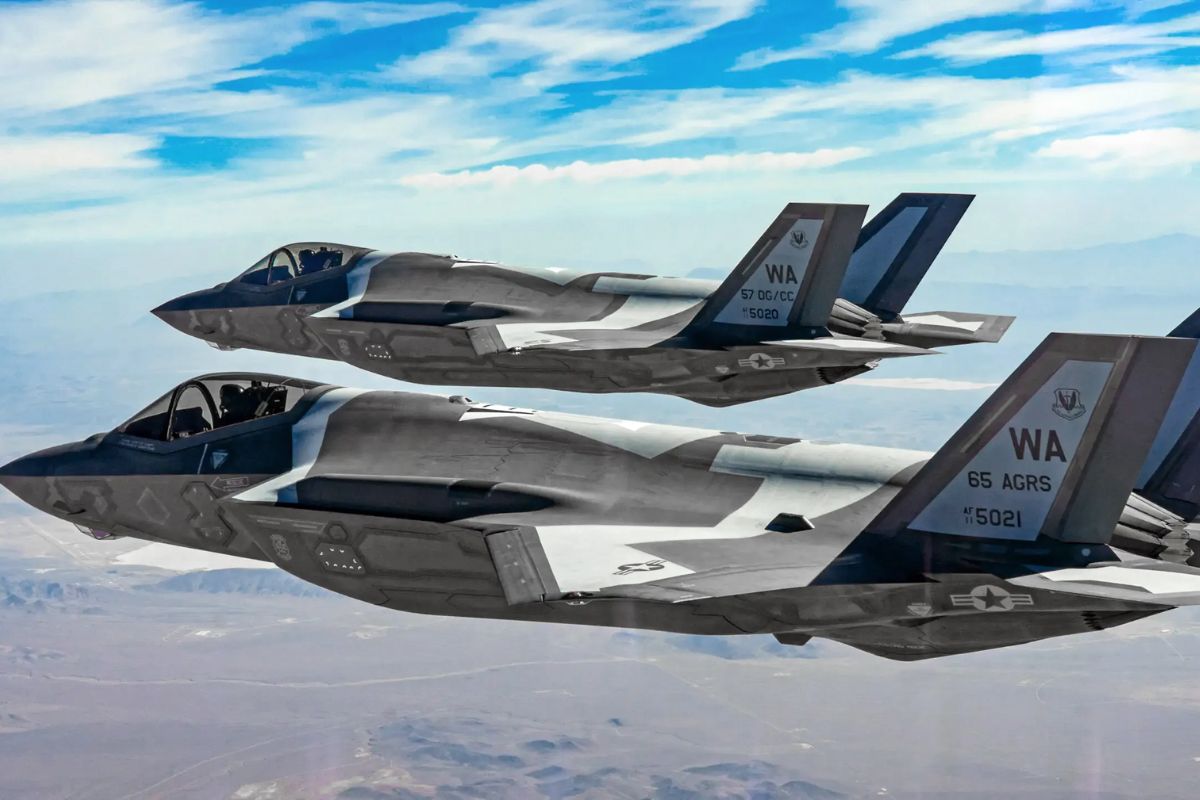


The F35 Boosted by the Overwatch Project Signals an Operational Change in the U.S. by Combining Sensor Fusion, Embedded AI, and Cognitive Electronic Warfare to Identify Unknown Emissions, Label Threats in Minutes, and Reduce Dependence on Slow Reprogramming Cycles Between Consecutive Missions in Scenarios Saturated by Adaptive Air Defenses.
The F35 boosted by the Overwatch Project appears as a turning point in air combat because it brings to the cockpit a capability that, until recently, relied on post-flight analysis. The central change is not just in better detection, but in learning during the mission and reducing the time between identifying a new signal and acting on it.
For years, advanced fighters have expanded situational awareness with sensor fusion and data links, but remained tied to pre-loaded threat libraries and update cycles that could take days or weeks. In a changing air defense environment, this gap creates a vulnerability window that the Overwatch Project seeks to close.
From the Legacy of the Gulf War to the Bottleneck of Threat Libraries

Historical comparison helps to understand the magnitude of this transition. In 1991, during the Gulf War, many missions still depended on threat maps loaded before takeoff and analyses that took hours to be updated after each flight.
-
World’s Largest Particle Accelerator Begins Four-Year Hiatus for Magnet Overhaul, Aiming to Hunt Dark Matter by 2030

-
“Sahara Dust Turns Rain Red, Startling Residents Across Europe”
-
Stanford Scientists Develop 20-Cent Paper Centrifuge Inspired by Ancient Toy, Spins at 125,000 RPM Without Electricity, Separates Plasma in 1.5 Minutes, Aiding Diagnostics in Remote Areas

-
World’s Largest Vaccine Manufacturer, Immunizing Two-Thirds of Global Infants, Originated in a Pune Horse Farm





The digital revolution of the following decades improved sensors, links, and data fusion, but the problem of reacting to the unknown in a timely manner remained partially open.
In the case of the F35 boosted by the Overwatch Project, the target of the change is exactly this bottleneck. Previously, when an unknown emission or a radar operating in an unexpected mode appeared, the aircraft could signal the anomaly, but in-depth identification required downloading data post-mission, human analysis, and reprogramming for the next flight.
In saturated scenarios, this meant responding better to what was already known than to what had just appeared.
What Was Tested in Flight and Why Nellis Became a Key Point

According to the provided basis, Lockheed Martin tested in flight an AI model integrated into the F35’s combat identification system, capable of resolving ambiguities among transmitters and generating an independent identification displayed directly on the pilot’s helmet visor.
The relevant operational detail is the integration with the pilot’s interface, because the utility of AI depends on reaching the right moment and in an understandable way.
In tests at Nellis, the algorithm would have distinguished dubious signals, allowed the labeling of new emissions, retraining in minutes, and loading the updated version within the same planning cycle.
By simultaneously displaying information from the classic system and the new model, the F35 boosted by the Overwatch Project reduces decision latency and alleviates part of the pilot’s cognitive load in an environment where seconds can determine survival and lethality.
Why Modern Defenses Challenge Traditional Identification
The problem accelerating this technological race lies not only in the advancement of the fighter but in the evolution of air defenses. Modern systems no longer always emit the same signature and can change radar modes, frequencies, and patterns to confuse adversarial electronic warfare.
This behavior has been associated, in the provided basis, with variants such as S300 and SA20 operating in unexpected configurations that complicate identification.
Until now, the aircraft could alert to the anomaly, but deeper investigation still depended on a subsequent human process.
This delay can become a structural vulnerability when AI itself begins to accelerate the adaptation of defenses. It is in this context that cognitive electronic warfare gains importance, seeking to react to unprecedented signals without waiting for the next mission to update response and parameters.
What Changes with Cognitive Electronic Warfare in the F35 Boosted by the Overwatch Project
The ambition described for the F35 boosted by the Overwatch Project goes beyond labeling a new threat. The goal of cognitive electronic warfare is to detect an unprecedented emission, characterize, evaluate the best response, and adjust parameters almost in real-time in the heat of battle.
In practice, this shifts the fighter from a software executor to an adaptive platform.
This leap involves deciding whether the aircraft should avoid the threat, interfere with it, or exploit a vulnerability, as well as updating the threat library without depending on immediate external intervention.
If this logic matures on an operational scale, the F35 boosted by the Overwatch Project starts to transform survival into an instant tactical advantage because it learns while combat is still underway, not just after landing.
Next Step, Rapid Updates, and Distributed Defense Ecosystem
The next stage pointed out by the narrative itself is to further reduce the integration time of improvements derived from the mission. The reference to rapid updates in the Aegis system and to the effort to reduce F35 reprogramming from months to days and then to hours indicates an architecture where the data flow between platforms approaches real-time.
Here, software speed becomes a combat factor.
Lockheed Martin also associates this ambition with an ecosystem in which gains obtained from one mission can be quickly incorporated into other aircraft and even compatible naval systems.
In this scenario, the Block 4 package appears as a horizon of electronic capabilities, while the F35 boosted by the Overwatch Project anticipates a deeper transition, that of the fighter that not only sees and shoots first but learns beforehand, adapts its response, and preserves the pilot with more autonomy.
What makes this relevant advance is not only the promise of a smarter fighter but the attempt to shorten a cycle that historically separated detection, analysis, and response. When this interval decreases within the mission itself, air combat changes its pace, and the value of adaptation becomes as decisive as range, power, or radar signature.
If you had to point out the most transformative aspect of this change, what would weigh more in a real combat scenario—the ability to label new emissions in minutes, the almost immediate update of electronic responses, or the reduction of the pilot’s cognitive load when threats arise that the system has never seen?


Ya irán les a tumbado varios jeje🤭🤫