






 Portuguese
  Spanish


More than 400 gold coins found on the sea floor, off the coast of Devon, have been linked to the Dutch ship Dom van Keulen after 30 years of investigation. Simple artifacts, ancient documents, and archaeological analysis revealed the origin of the cargo and the 17th-century trade route.
The gold coins were found by divers on the sea floor, off the coast of Devon, England, at about 18 meters depth. After decades of investigation, researchers associated the treasure with the Dutch ship Dom van Keulen, a merchant vessel linked to Moroccan gold trade in the 17th century.
According to the Daily Galaxy, in a report published on July 1, 2026, researchers took about 30 years to identify the origin of the coins and the shipwreck. The find on the sea floor, now related to the coast of Devon and the Dom van Keulen, gained importance by connecting maritime archaeology, international trade, and simple objects.
Treasure remained scattered on the sea floor for centuries
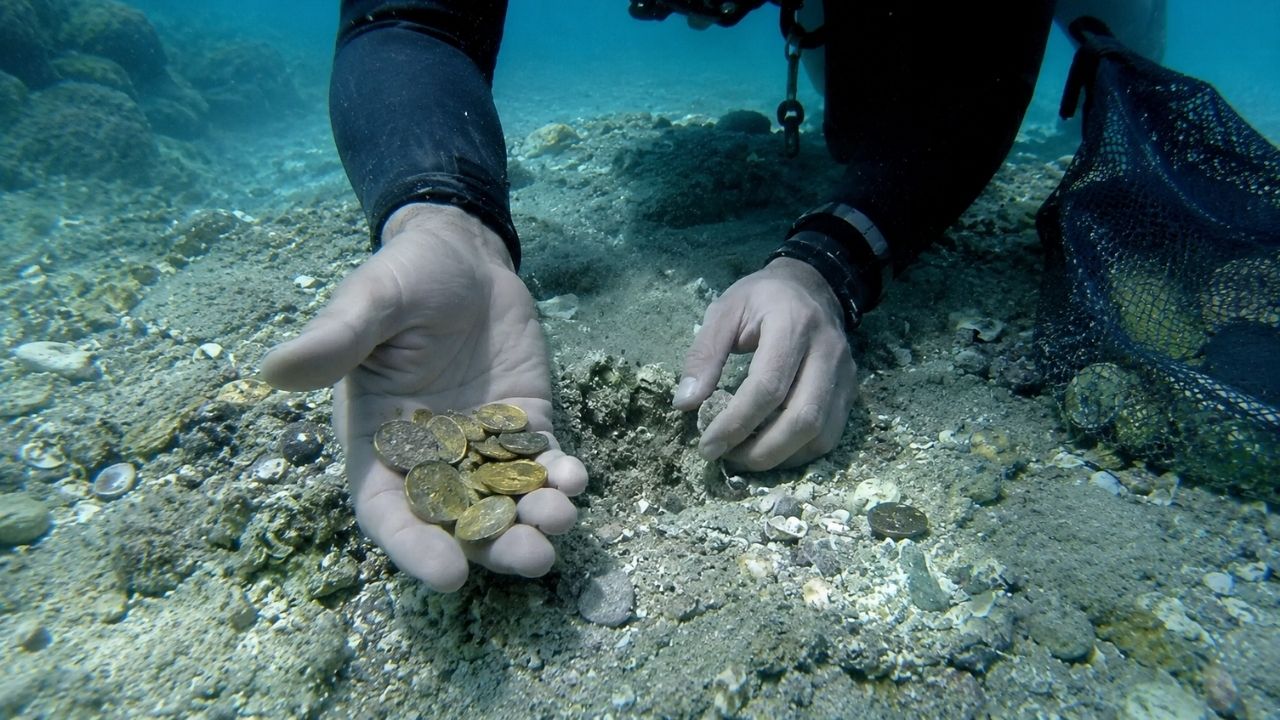
The gold coins were discovered off the coast of Devon, England, in a shipwreck that remained submerged for almost four centuries. The collection drew attention for its quantity and origin: hundreds of pieces made with gold linked to African and Moroccan routes of the 17th century.
-
Why Many People Choose to Keep Silica Gel Packets Instead of Discarding Them

-
São Paulo Unveils $19 Billion Metro Project: 15 Stations, 15.3 km, Cutting Commute from 90 to 23 Minutes with Trains for 2,044 Passengers After Record-Breaking Tunnel Excavation.

-
Brazilian Nurse Turns Unscheduled Massage Sessions into a Franchise Network with 24 Locations, Generating Up to $42,000 Monthly per Store

-
New Mold Removal Method Eliminates Stains Without Damaging Paint and Tackles Root Cause in Humid Conditions Over 70%


The find did not appear in isolation. Around the coins, divers found jewelry, a gold nugget, ceramics, cannons, anchors, and fragments of wood, rope, and lead. The scene indicated that there was an important commercial vessel there, but the identity of the ship remained open for decades.
1995 dive initiated a 30-year investigation
The discovery began in 1995, when divers located the material about 18 meters deep. At first glance, the highlight was the gold coins, but researchers soon realized that the historical value of the shipwreck depended on a bigger question: from which ship did this treasure come?
Answering this question took about 30 years of maritime archaeology and documentary research. The shipwreck stretched approximately 30 meters on the seabed, but no item found at the beginning provided a direct answer. The mystery required piecing together small clues, common objects, and ancient navigation records.
Dutch ship Dom van Keulen entered the center of the case
The final identification pointed to the Dom van Keulen, a Dutch merchant ship that transported Moroccan gold during the 17th century. The vessel was associated with the shipwreck because the cargo described in historical documents closely matched the artifacts found on the seabed.
Professor Dave Parham, from Bournemouth University, appears as the editor of the new book detailing the investigation. According to the report, the cargo of the Dom van Keulen included 150 bags of gum arabic, 64 bags of saltpeter, 320 goat skins, and 9,000 Barbary ducats, precisely the type of Moroccan gold coins linked to the find.
A common bowl became a decisive clue
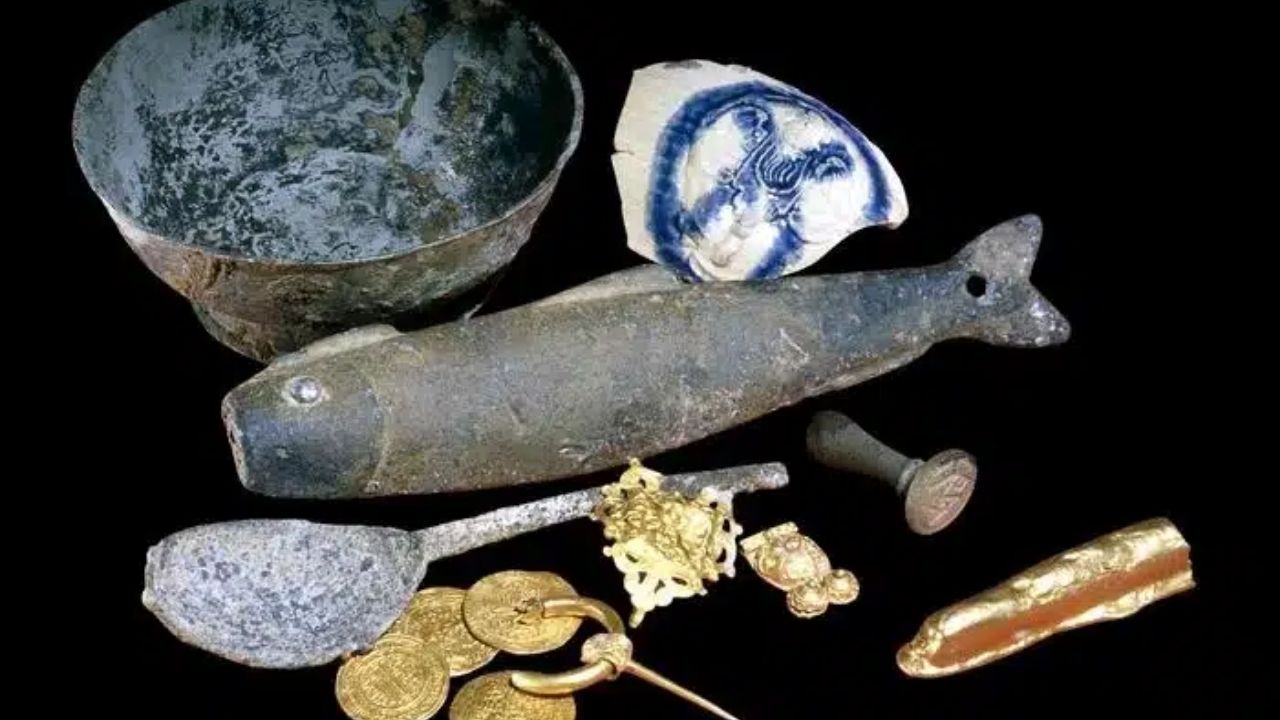
The most curious detail is that the key to identifying the shipwreck did not come from the gold coins, but from seemingly simple objects. A bowl and a pewter spoon recovered at the site were analyzed and pointed to a Dutch origin, strengthening the hypothesis that the ship came from the Netherlands.
At the same time, maritime historian Ian Friel found archival documents describing a merchant ship with cargo very similar to that discovered by the divers. The combination of the common bowl, the spoon, and the ancient records helped solve a mystery that the gold alone could not explain.
Coins were minted with gold from West Africa
The gold coins recovered were minted on the Barbary Coast, in Morocco, with pure gold from West Africa. This detail places the shipwreck within a broad trade network that connected African, Moroccan, Dutch, and English markets during the era of great maritime routes.
According to the context presented by the British Museum, Dutch merchants exchanged manufactured goods for gold obtained through Morocco. This gold could be melted down and turned into Dutch coins, which circulated as important instruments of exchange on the trade routes of the time.
Cargo reveals trade between Morocco, Holland, and England
The shipwreck of the Dom van Keulen shows how a single vessel could carry signs of different economies. The presence of gum arabic, saltpeter, goat skins, jewelry, and gold coins reveals a diverse trade, in which high-value goods circulated between distant ports.
The route also helps explain why an African and Moroccan treasure ended up at the bottom of the sea off the coast of Devon. The discovery speaks not only of a lost ship but of an international trade network that moved wealth, raw materials, and manufactured products in the 17th century.
British Museum holds part of the finds
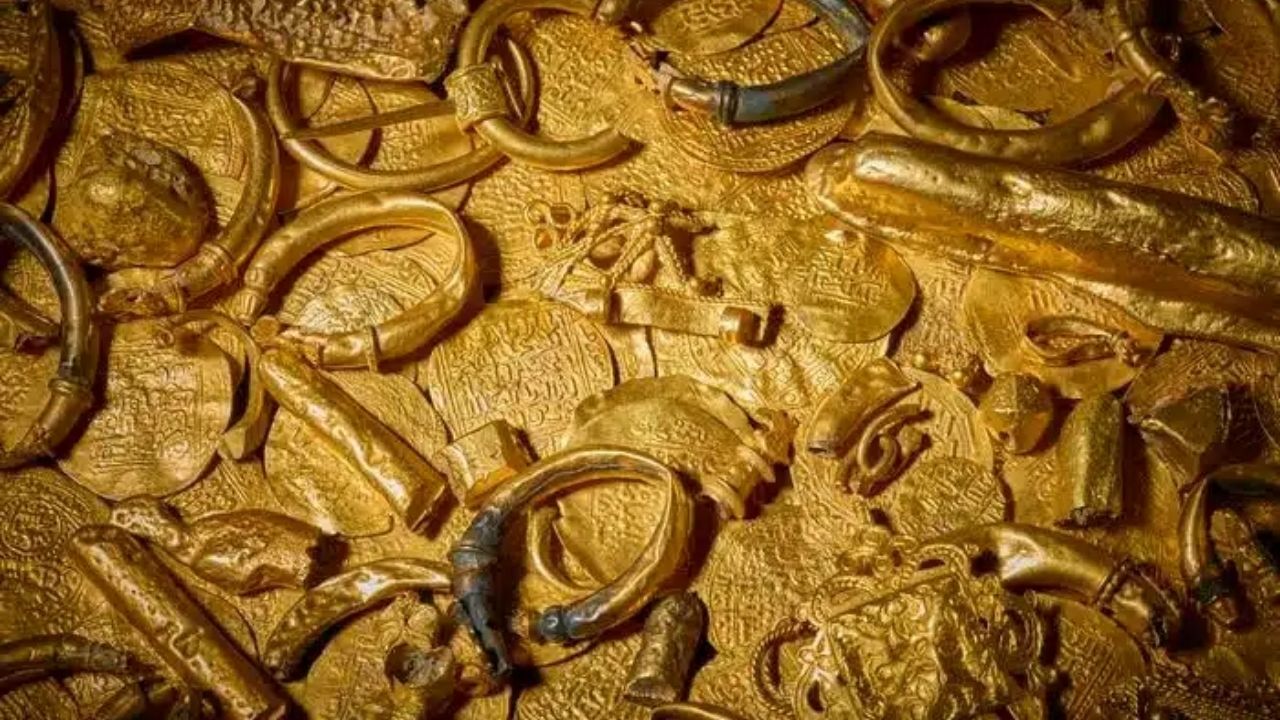
The gold coins are now on display at the British Museum, along with other objects recovered from the shipwreck. Among the items associated with the site are Moroccan jewelry, a gold nugget, a fish-shaped sounding weight, ceramics, resin-coated pills, and other remnants of the cargo.
These objects help tell a story that goes beyond the shine of precious metal. For researchers, each artifact adds a layer of interpretation about the vessel, the origin of the cargo, trading habits, and the circulation of rare goods between North Africa and Europe.
Not all the cargo was recovered at the time of the shipwreck
Researchers believe that a good part of the cargo was recovered shortly after the shipwreck, as was common when merchant ships sank near accessible areas. Even so, more than 400 gold coins remained at the bottom of the sea until they were found by the Southwest Maritime Archaeology Group in 1995.
This permanence helps explain why the finding caused such an impact. For centuries, part of the cargo remained out of reach of merchants, authorities, and looters. What remained at the bottom of the sea became a historical capsule, preserving clues that would only be connected with technology, diving, and modern documentary research.
Mystery has not been completely solved yet
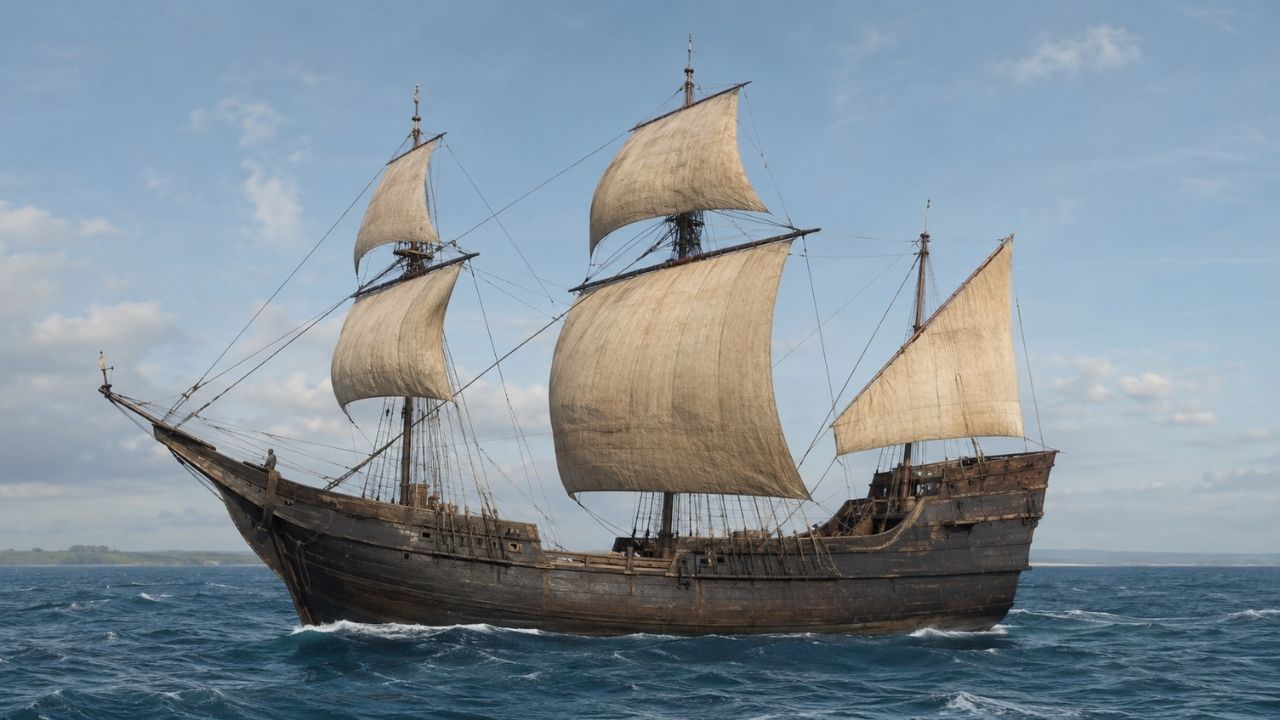
Despite the identification of the Dom van Keulen, some questions remain unanswered. There is no known painting of the vessel, and the dimensions of the Dutch ship can only be estimated from the area left by the shipwreck and the remains preserved at the bottom of the sea.
This limit keeps part of the mystery alive. Researchers managed to link the gold coins to the ship, reconstruct the nature of the cargo, and connect the finding to a larger trade route, but they still do not know all the details of the vessel, the final voyage, and the exact circumstances of the sinking.
Discovery shows how much is still hidden in the seas
Jeremy Hill, head of research at the British Museum, highlighted that the presence of African gold at the bottom of the sea, near the coast of Devon, raised immediate questions about how that material got there. The answer required a team of experts working together, combining archaeology, maritime history, and object analysis.
The case of the gold coins shows that the seas still hold stories capable of changing the way we understand ancient trade routes. A treasure found by divers became evidence of intercontinental trade, revealed the role of a Dutch ship, and proved that even a common bowl can be the decisive clue in a centuries-old mystery.
Did you imagine that more than 400 gold coins at the bottom of the sea could reveal an entire trade route between Morocco, the Netherlands, and England? Share your opinion.


