






 Portuguese
  Spanish


Meet Bioprotect, the Paranaense bioplastic that won second place at FECCI 2025 by combining corn waste and seeds that sprout in the soil.
During the Paraná Science Culture Fair (FECCI 2025), held in the city of Curitiba, a school project developed in the state’s interior won second place overall in the Product Development category. Students from Colégio Estadual Barbosa Ferraz, a full-time public school located in the municipality of Andirá, created Bioprotect.
The invention consists of a bioplastic made with corn leftovers that, when discarded in the soil, decomposes quickly and safely, transforming into new plants to aid urban reforestation.
Students’ evolution through scientific investigation
The visibility gained on scientific stages propelled the maturity of teenagers Laritiely Ribeiro da Silva, Mariana da Silva Romão, and Kauan Vinícius Jurado Azevedo. The work, which has already accumulated presentations at seven scientific fairs across Brazil, served as a tool for personal overcoming for the group of young researchers.
-
Brazilian Public School Students Win $5,000 at World’s Largest Science Fair with Innovative Water Filter Made from Local Charcoal

-
Xiaomi Launches 17T in Brazil with 120x Zoom, 6,500 mAh Battery, and Leica Cameras to Rival iPhone

-
Young Innovator Develops Low-Cost Synthetic Skin Using Buriti Oil to Aid Burn Victims, Gains International Recognition in the U.S.

-
Robot Developed to Navigate Sewers and Prevent Blockages and Flooding in Brazil


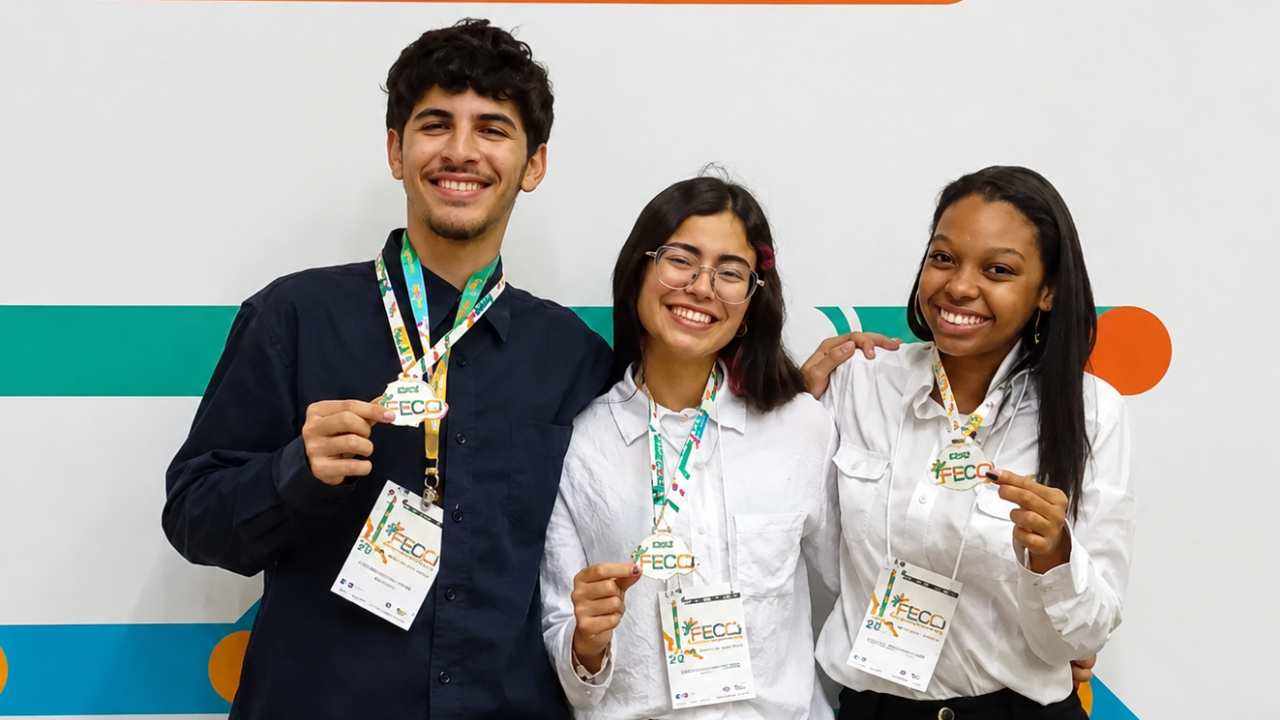
The presentation dynamics transformed the students’ posture before the audience. The young Mariana Romão reported how science helped her overcome communication barriers. “I was very shy to present. Today I can explain the project, record everything, and even make videos,” she celebrated.
Similarly, her colleague Kauan Azevedo highlighted the evolution of his cognitive abilities over the months of dedication. “Over time, you develop oratory, critical thinking, and you come to understand that you can really accomplish big things,” pondered the student.
The ecological cycle of living disposable covers
With the ideal formulation validated in terms of thermal resistance, water behavior, and soil decomposition speed, the students developed a prototype focused on the aesthetics sector: disposable capes for beauty salons and barbershops.
The choice of product was made because this type of protective clothing generates a high volume of daily waste in commerce and has a complex recycling process.
The great ecological differential of the [bioplastic] lies in the introduction of fertile seeds throughout its malleable structure. When the end consumer finishes using the item and deposits it in the soil, the packaging acts as fertilizer and stimulates the sprouting of different species:
- Edible vegetation: Tomato and bean seeds;
- Floral and landscaping varieties: Sunflower and ornamental plant seeds.
The supervising teacher Karoline Rodrigues praised the humanized and transformative message that the initiative conveys to society.
“The person uses the cape, takes it home, and plants it. It’s science returning life to the environment,” highlighted the educator.
The exhaustive journey of 79 attempts in the laboratory
To obtain a flexible, translucent, and resistant material — characteristics very similar to traditional plastic — the team faced a long routine of tests under the guidance of Professor Karoline de Azevedo Ferreira Rodrigues.
At the beginning of the activities of the Inovar Science Club, which is part of an elective school subject, the group tried to use rice starch taken from leftover school meals. However, the presence of condiments and seasonings in the cooked food prevented the film’s flexibility.
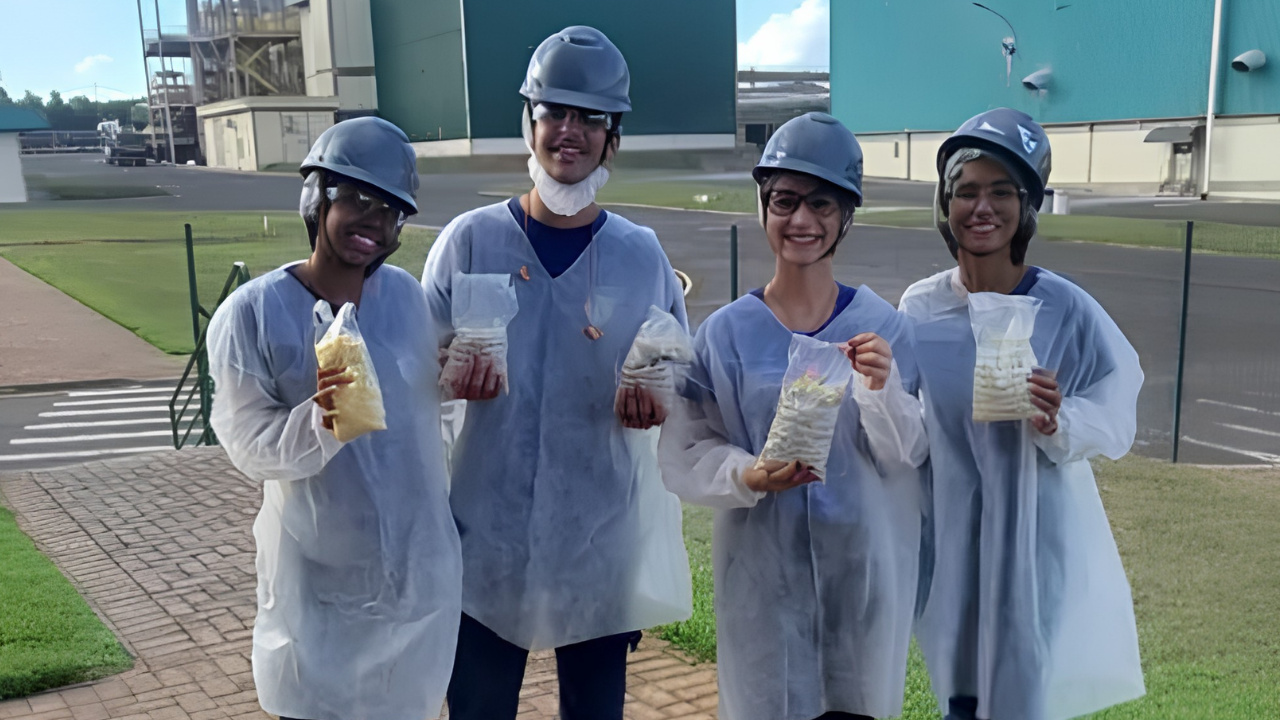
The research path changed when the students discovered that the Cooperativa Integrada generated a discard of pure corn starch during the grain processing in the region. Being a clean, abundant, and very cheap residue, it became the perfect base for laboratory tests.
From this discovery, the trio conducted exactly 79 chemical and physical tests, meticulously adjusting the portions of water, vinegar, glycerin, starch, and agar.
The student Laritiely Ribeiro recalled the emotional strain before achieving the expected result: “When test 78 went wrong, I cried. I was tired. But on 79, we finally got the perfect plate. I didn’t know whether to smile or cry,” she confessed.
With information from Brasil Escola


