






 Portuguese
  Spanish
  4 min of reading
  10 comments


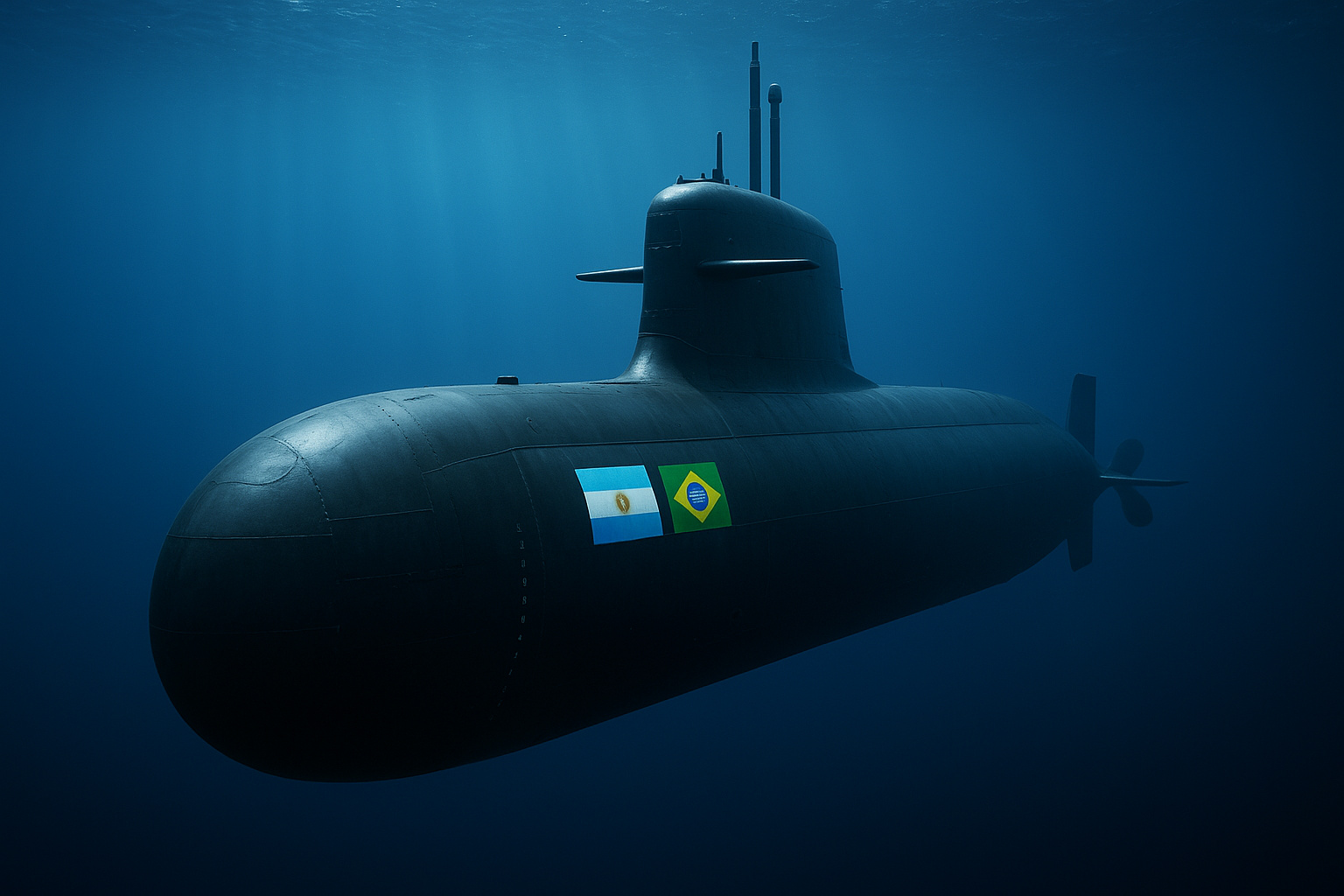


With 70-Day Autonomy and Cutting-Edge French Technology, Argentina Resumes Submarine Power and Strengthens Naval and Strategic Cooperation in the Southern Cone
Argentina has begun one of the largest naval operations in its recent history. The government of Buenos Aires, in a move that reignites its military presence in the South Atlantic, has signed a billion-dollar agreement with France for the purchase of three Scorpène-class submarines, manufactured by Naval Group. The investment, estimated at around US$ 2 billion, marks Argentina’s attempt to rebuild its maritime deterrence capability after eight years without operational vessels.
In addition to the simple acquisition, the project includes technology transfer and the direct participation of the local industry — especially the shipyard Tandanor, responsible for part of the maintenance and technical support of the new vessels. This partnership promises to revitalize strategic sectors of the Argentine naval industry, boosting jobs, innovation, and technological sovereignty.

The information was released by European press sources and echoed by Revista Forum, which highlighted the geopolitical nature of the agreement, especially in light of the growing international interest in the energy and fishing resources of the South Atlantic.
-
Helicopter Drops 180 Tons of Sand and Gravel on Swedish River to Revive Ecosystem Damaged by Decades of Exploitation

-
Brazilian Company Launches Retro Smartphone with 48 MP Camera, T9 Keyboard, and Privacy Features for Social Media-Free Use

-
Self-Taught Chinese Farmer Builds 5-Ton Submarine from Scrap, Launches It in Anhui River
-
Invisible Induction Technology Enables Wireless Power for Blenders, Coffee Makers, and Air Fryers, Reducing Countertop Cables



Scorpène Attack Submarines: 72 Meters, 2,000 Tons, and 70-Day Autonomy
The Scorpène is one of the most modern attack submarines in existence today. Developed by France and Spain, the model is used by navies of countries such as Brazil, India, Chile, and Malaysia, proving its reliability and operational versatility.
Each unit is 72 meters long, has a displacement of between 1,600 and 2,000 tons, and can operate at a depth of more than 300 meters. With 70 days of autonomy and the ability to remain submerged for up to 12 days without surfacing, the Scorpène is equipped with the SUBTICS combat system, one of the most advanced in the world.
In addition, it can launch torpedoes and Exocet SM39 missiles, extending attack range and maritime defense capability. More modern versions also feature a air-independent propulsion (AIP) system, which increases immersion time and drastically reduces noise, making the submarine almost undetectable — an essential characteristic in surveillance and deterrence missions.
For defense specialists, the acquisition represents a qualitative leap for the Argentine Navy, both in terms of technical capability and regional cooperation.
Geopolitical Rebalance and New Era of Cooperation with Brazil
Since the tragedy of the ARA San Juan in 2017, Argentina has been without operational submarines. The loss of the vessel drastically reduced the country’s ability to monitor its Exclusive Economic Zone, which covers around 1.7 million km². This limitation hindered the fight against illegal fishing, complicated scientific operations in deep waters, and weakened control over strategic maritime routes.
With the arrival of the new Scorpène submarines, Buenos Aires is taking a decisive step to restore naval sovereignty and regain prominence in the South Atlantic. Furthermore, the technological compatibility with the Brazilian submarines of the same class opens the door for technical cooperation, joint training, and combined patrols, strengthening military integration in the Southern Cone.
For Brazil, which already operates four units of the same model, Argentina’s entry into the program represents an advance in regional defense exchange and an opportunity to reinforce collective security in one of the most strategically important maritime areas on the planet.
The alliance between the two countries may also stimulate joint maintenance and upgrade projects for these submarines, leveraging the infrastructure already in place at Brazilian and Argentine shipyards.
A Milestone for the Naval Future of the Southern Cone
With the signing of the agreement, Argentina not only modernizes its fleet but also repositions itself as a relevant player in South American maritime security. The billion-dollar purchase, coupled with local industrial involvement and technology transfer, places the country once again among the regional naval powers.
Experts point out that the new phase of Argentine defense will be marked by cooperation and integration, rather than competition. The goal is to transform the South Atlantic into a zone of joint surveillance, environmental protection, and energy security, benefiting the entire region.
Thus, while Brazil maintains its leadership with four Scorpène submarines in operation, Argentina prepares for its return to the depths — now equipped with the most advanced in propulsion technology, stealth, and tactical submarine command.




Atualmente na Marinha do Brasil estão em operação os submarinos Tupi S-30, Tikuna S-34, Riachuelo S-40, e Humaitá S-41. No dia 26 de novembro de 2025 entrará em serviço operacional o submarino Tonelero S-42, e será lançado ao mar o submarino Almirante Karam S-43, devendo entrar no serviço operacional no próximo ano.
Por outro lado, se a MB já se assustou com os custos de operação do Scorpene, imagina a ARA. Vão dar gritos de pânico.
Uma pena o Brasil ter desconsiderado a continuidade de seus IKL
O Brasil não opera ainda 4 unidades. Duas em operação uma em **** e uma quarta em construção.