






 Portuguese
  Spanish
  3 min of reading
  0 comments


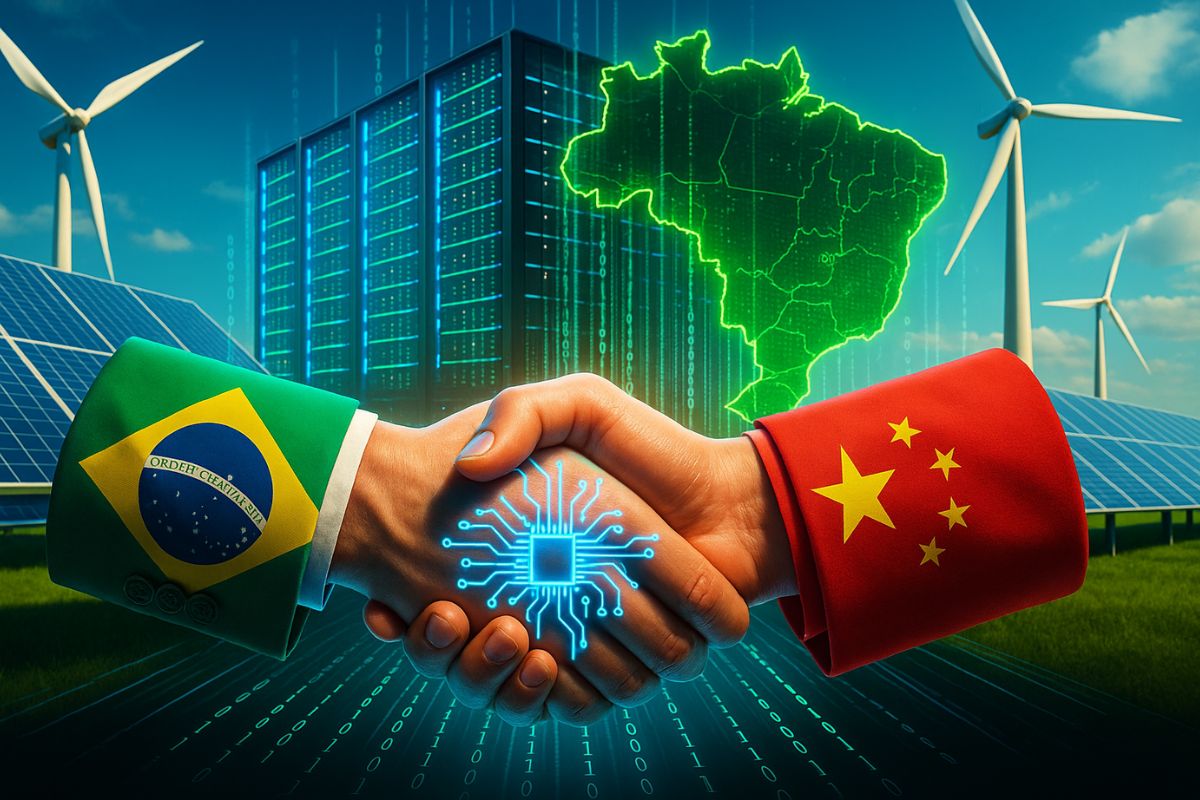
Brazil-China Partnership Could Boost AI and Sustainable Energy. Strategic Cooperation Between the Two Countries Could Accelerate Technological Innovation and Expand Investments in Clean Energy
The technological advance and the transition to clean energy sources are two of the most strategic themes for the global economic future. In this scenario, experts assess that the Brazil-China partnership could boost AI and the development of sustainable projects, combining Chinese leadership in artificial intelligence and infrastructure with Brazil’s clean energy matrix.
Amid the global competition for technological leadership mainly driven by China and the United States, Brazil emerges as a potential beneficiary of alliances that bring capital, knowledge, and infrastructure. The topic was discussed at the FT Climate and Impact Summit Latin America and at Brazil 2030, events that brought together leaders and experts to discuss opportunities and risks of this approach.
The Role of China in the Race for Artificial Intelligence
China already occupies a prominent position in knowledge production and training professionals in AI, producing twice as many engineers and researchers as the United States. Despite dependence on advanced chips manufactured in the West, the Asian country dominates areas such as software development, industrial applications, and applied research.
-
Brazilian Joins Homeownership Consortium, Faces Decade of Dual Payments Totaling $141,000, Surpassing Traditional Mortgage

-
Land Rover to Halt Production in July, Putting 371 Jobs at Risk, as Chinese Automaker Negotiates to Convert Factory to 100,000 Vehicles Annually by 2027

-
Mexican Pest Threatens U.S. Cattle Herds at Historic Lows, Potentially Boosting Brazilian Beef Exports as Burger Prices Soar

-
Brazilian Freight Bill Progresses in Congress with $5,000 Minimum Wage, 70% Advance Payment, and Fines Up to $1 Million, as Agriculture and Industry Warn of Rising Costs and Legal Uncertainty


According to experts, the trend is that China will also advance in semiconductor production, ensuring technological sovereignty and reducing strategic vulnerability. This expertise can be transferred to Brazil through bilateral agreements, especially in projects involving infrastructure and AI applications adapted to local realities.
Clean Energy as a Base for Technological Expansion
The installation and operation of data centers essential for training and operating AI models require high energy consumption. Today, they already account for more than 120 GW globally, with projections to reach 5% of the world’s electricity consumption in the coming years.
Brazil, with the cleanest energy matrix in the world, has a competitive advantage to attract these businesses. Investments in generation and, mainly, in energy transmission are crucial to enable the installation of large technological structures in the country. At this point, China, a major investor in infrastructure, can become a strategic partner.
Opportunities and Risks of the Approach
The strengthening of ties with China brings benefits such as direct investments, technology transfer, and integration into global supply chains. However, it also imposes geopolitical challenges, especially in light of pressures and restrictions that may come from other trade partners, such as the United States.
Furthermore, the partnership needs to consider privacy and data security issues, as international standards for digital governance are becoming increasingly strict. Countries like Germany have already restricted the use of Chinese technologies for security reasons.
Current AI Landscape in Brazil
Brazil is still not recognized as a global producer of AI models or chips, but it stands out in the use of technology in practical applications. National companies have incorporated artificial intelligence into management software, logistics, agribusiness, and scientific research, creating solutions tailored to the internal market.
Although public investment in AI is modest at around R$ 10 million in federal programs, compared to hundreds of billions of dollars invested by global powers, the country can position itself in the global race by working on the development of high-impact applications, leveraging the flexibility and diversity of the local market.
And you, do you believe that the Brazil-China partnership can boost AI and sustainable energy in the country? Which sectors should be prioritized? Share your opinion and join the conversation.





-

1 person reacted to this.