Portuguese
  Spanish


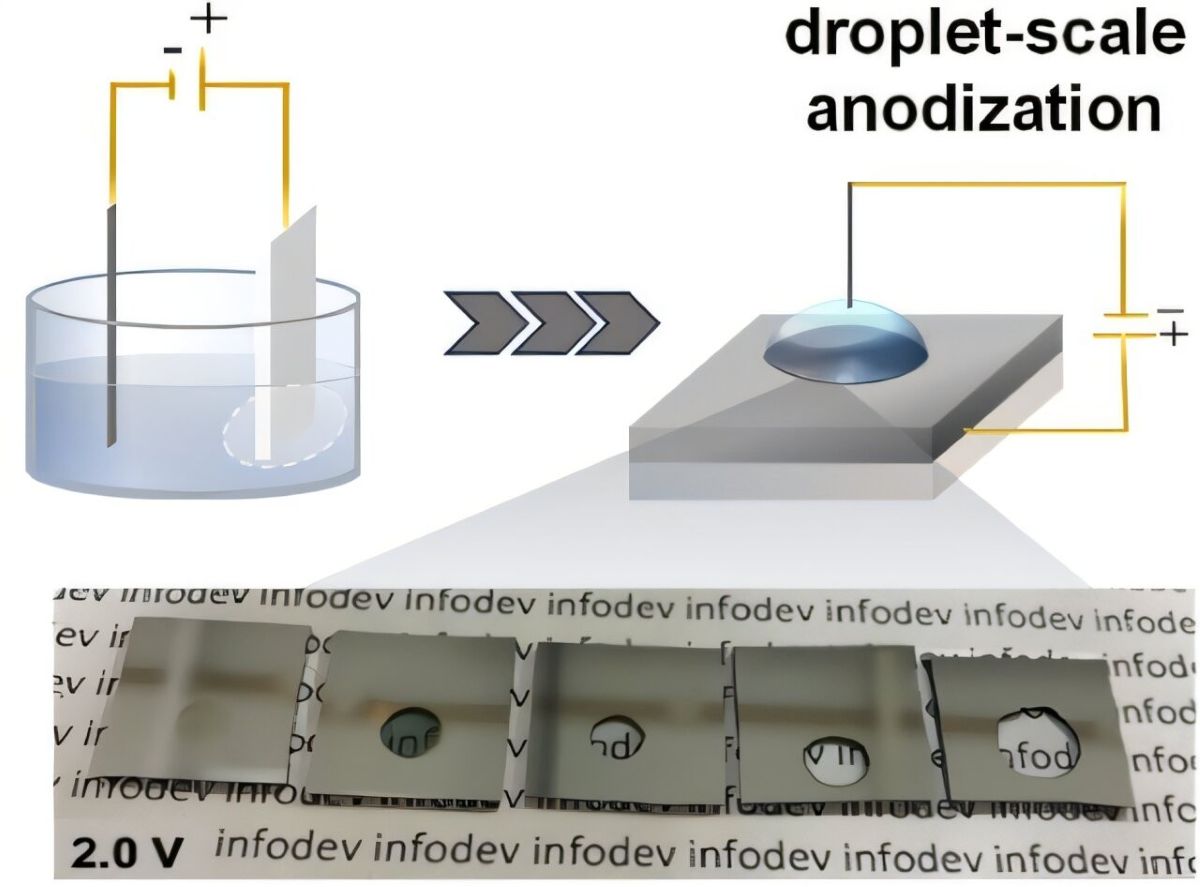


Innovative System Enables The Production Of Transparent Aluminum, Combining The Strength Of Metal With The Aesthetics Of Glass, Ideal For Various Technological And Construction Applications
Researchers from Ateneo de Manila University in the Philippines have developed an innovative system that transforms aluminum into a glass-like material. The technique uses small drops of acid and low electrical current, making the process more economical and sustainable.
Details About Transparent Aluminum
Transparent aluminum, known as Transparent Aluminum Oxide (TAlOx), stands out for its scratch resistance and high durability. These features make it ideal for coatings in electronic devices, optical sensors, and solar panels.
Interestingly, TAlOx is also featured in the science fiction series “Star Trek”, where it comprises spaceship windows.
-
AI Video Generator Automatically Creates Subtitles and Animated Captions

-
São Paulo Unveils Latin America’s Largest Underground Reservoir, Holding 900 Million Liters, in the Greater São Paulo Area

-
Chinese Teen Wins Gold in Germany for Invention Turning Air Moisture into Underground Irrigation in Drought-Stricken Areas

-
Desertification Threatens Brazil’s Caatinga: 85% of Semi-Arid Region Affected, 30 Million at Risk, and Efforts Underway to Restore 10 Million Hectares by 2045




So far, the manufacturing of TAlOx required expensive and complex methods. Traditional processes used powerful lasers, vacuum chambers, and large volumes of hazardous acids. The new Filipino approach promises to change this scenario by simplifying production and reducing costs.
The scientists opted for a technique called “drop-scale anodization.” Unlike conventional methods, they applied microdrops of acidic solution to small aluminum surfaces and then applied an electric current.
The result was surprising: only two volts were sufficient to transform the metal into TAlOx. This is equivalent to the energy of a regular AA battery.
Sustainability Is Another Differential
Another important differential of the process is its sustainability. The technique significantly reduces energy consumption and chemical waste, making the production of TAlOx more environmentally friendly.
Additionally, the method is based on a phenomenon known as “electrowetting,” where an electric field alters the properties of a liquid drop. This precise control facilitates anodization and opens new possibilities for the industry.
The implications of the study are vast. Cheaper access to TAlOx could drive the use of transparent aluminum in touch screens, lenses, and ultra-durable coatings for vehicles and buildings.
Moreover, the discovery could accelerate the miniaturization of electronic devices. It is now possible to transform metallic surfaces into transparent, insulating layers on a microscopic scale.
This innovation represents a significant advancement in the materials industry, offering an efficient, safe, and sustainable method for producing transparent aluminum.
Study published in pubs.acs.org.