






 Portuguese
  Spanish


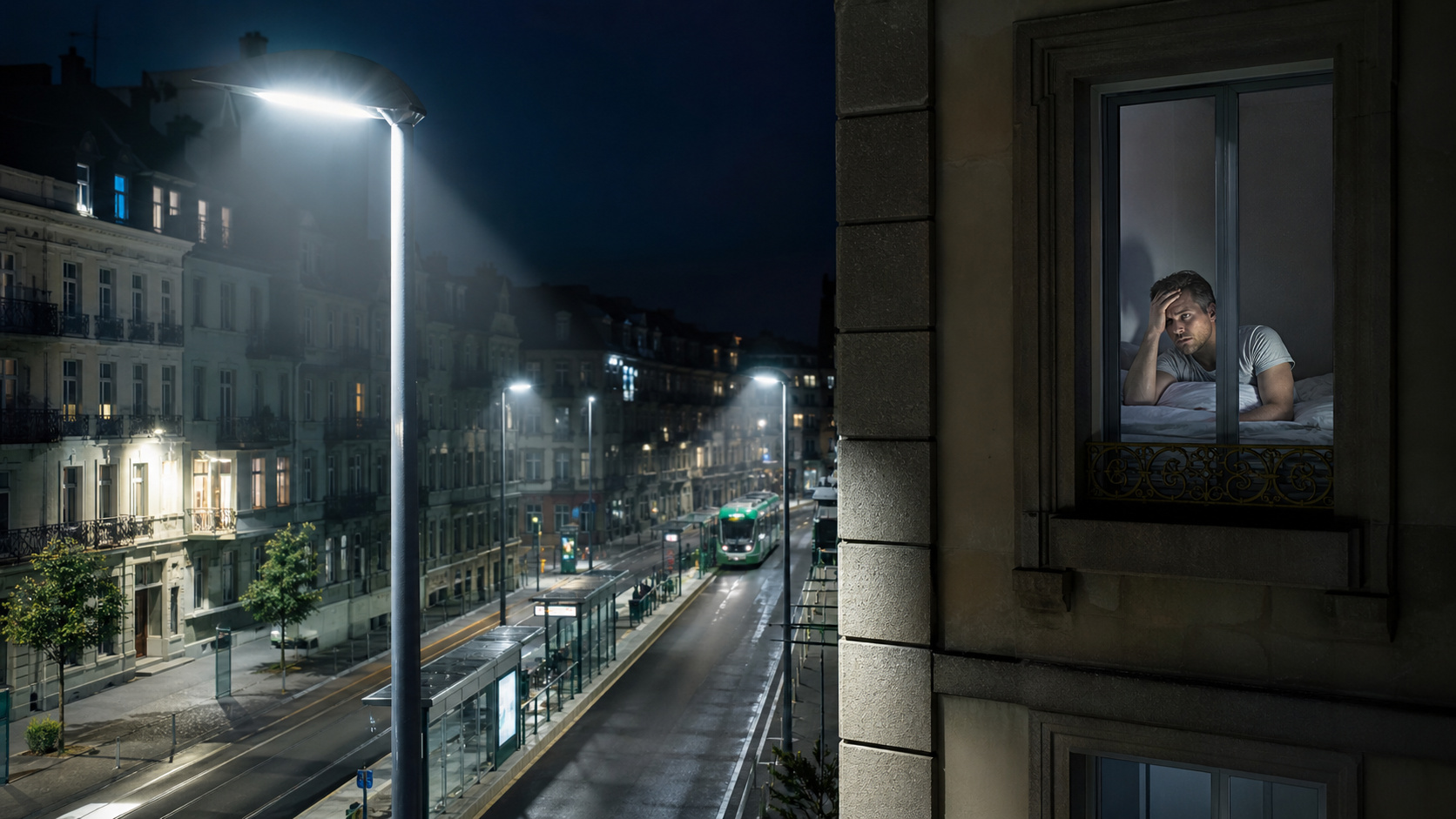
The replacement of public lighting with modern LED lamps in Basel, Switzerland, has become the target of complaints due to strong light, discomfort in homes, and impact on sleep. The case exposes how an energy efficiency measure can change the feel of streets at night, generate petitions, and pressure authorities for warmer LEDs.
Residents of Basel, Switzerland, have started complaining about the modern LED lamps installed in public lighting. The change promised savings and modernization, but the intense light became an annoyance inside homes and bedrooms.
The investigation was published by blue News, a news portal that published the report. The city planned to modernize the network by 2028, but some residents reacted to the brightness of the new lamps and the feeling that the night became too bright.
The case reveals a curious dispute. A technology associated with energy efficiency became the reason for a petition, technical review, and pressure for warmer light. In Basel, the discussion ceased to be just about economy and began to involve sleep, comfort, and the color of the night.
-
Architect Transforms Tiny 4m² Home in São Paulo Favela into 11m² Living Space with Modern Amenities

-
Single mother of four swaps £3,000 London rent for life on a 60-foot solar-powered boat with Starlink and a washing machine, reducing monthly costs by 75%

-
22-Year-Old Transforms Old Farm Trailer into Two-Story Tiny Home Using Recycled Materials

-
Doctor Revives Ancient Crescent-Shaped Dams in Drought-Stricken Indian Region, Restoring Water to Over 1,000 Villages and Reviving Rivers Dormant for 60 Years



The city wanted to save energy, but LED public lighting changed residents’ routines
Replacing public lighting with LED is usually seen as a simple decision. The city reduces consumption, modernizes poles, and improves street lighting. In Basel, however, the change provoked an unexpected reaction.
Residents began to complain that the light became too strong. In some neighborhoods, the new LED public lighting began to be perceived as white, cold, and invasive. The problem was no longer just on the street but entered domestic life.
When a public light reaches the window, bedroom, and living room, it ceases to be just a pole on the sidewalk. For those trying to rest, the brightness can become a direct nuisance to sleep and the feeling of tranquility during the night.
Intense white light became a symbol of discomfort inside the home
The outcry in Basel grew because the light was not just seen as stronger. It also changed the atmosphere of the streets. The whiter lighting gave many residents a feeling of a cold environment, far from the yellowish light that marked the night before the change.
This change in color greatly impacts people’s perception. A street that is too brightly lit might seem safe to some, but it can also seem harsh, artificial, and tiring to others. The conflict arose precisely from this difference between technical efficiency and real comfort.
The phrase war against white light perfectly summarizes the problem. The fight is not against LED technology itself, but against how it was perceived by those living near the poles.
Petitions and pressure for warmer LEDs put modernization until 2028 into debate
The city planned to modernize public lighting by 2028. On paper, the plan followed a common logic in several cities: replace old lamps with LED and reduce energy costs.
The residents’ reaction, however, changed the tone of the discussion. The practical impact appeared in petitions, requests for revision of technical specifications, and pressure for warmer LEDs, with less white and less aggressive light to the eyes.
blue News, the news portal that published the report, detailed the central points of the issue. Modernization began to be questioned not for denying savings, but for affecting people’s experience during the night.
This point is important because it shows a common flaw in urban decisions. A solution can be efficient in numbers, but still generate rejection when it changes the routine of local residents too much.
Similar complaints appeared in other countries and show that the problem is not isolated
Similar cases emerged in other countries. Residents also complained about bluish light, a cold appearance, and a hospital-like feeling. In some situations, LED public lighting was described as strange, almost like a horror movie setting.
These reactions show that public light does not only serve to illuminate the street. It also helps build the feeling of neighborhood, rest, and safety. When the night loses its natural aspect, discomfort can grow rapidly.
The debate still involves urban wildlife. Animals living in the city also depend on the difference between light and dark. Therefore, the choice of light color and intensity can affect more than just the landscape.


The case shows that efficient technology also needs to respect the night
The switch to modern LED lamps reveals a simple point. Energy efficiency is important, but it cannot be treated as the sole criterion. Light needs to illuminate the street without invading people’s homes.
In such situations, technical adjustment makes a difference. Focus direction, intensity, and color temperature are factors that can reduce discomfort. For residents, the expected direct result is: less brightness in the bedroom and more rest during the night.
Basel became an example of how an apparently simple urban change can generate resistance when it interferes with something as basic as sleeping well.
The controversy over modern LED lamps in Basel shows that a more economical city also needs to be pleasant for those who live in it. When modernization alters the night, residents’ reactions can turn lampposts into a topic of public debate.
In the end, the question that remains is bigger than the Swiss city itself. Is it worth lighting up the streets more and more in the name of economy, even when this light enters homes, changes people’s rest, and erases the natural feeling of the night? Share your opinion in the comments.


Be the first to react!