





 Portuguese
  English
  Spanish
  3 min of reading


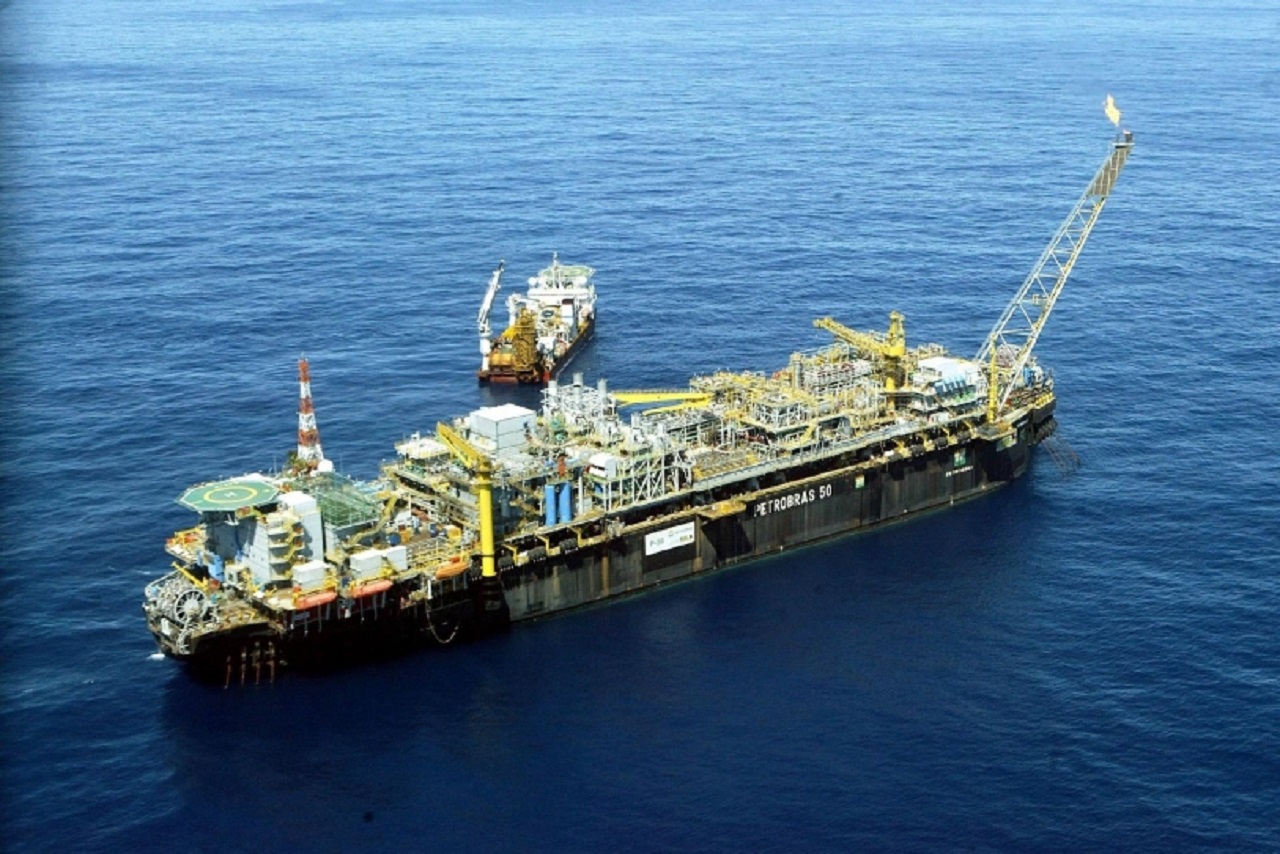
Petrobras Announced Investments Amounting to R$ 93.6 Billion for the Construction of 5 Oil Platforms in the Campos Basin. The Expectation is that 12,000 Jobs Will Be Created to Benefit Residents of the Region.
Petrobras announced this week a new investment of US$ 18 billion, equivalent to R$ 93.6 billion, for the development of 5 oil platforms in the Campos Basin, in southern Espírito Santo. Each platform will have the capacity to develop 2,400 jobs, totaling 12,000 vacancies when fully operational. The Campos Basin, which extends from southern ES to northern RJ, will receive such investments over the next 5 years.
150 New Wells Are Part of Petrobras’ Investments
Five new platforms, known as Floating Production, Storage, and Offloading Units (FPSOs) – the English acronym – will be installed. Also included in the investments are approximately 150 new wells that, in addition to various jobs, will ensure, by 2027, the production of 900,000 barrels of oil per day produced in the Campos Basin.
The focus of the investments is primarily on renewal projects, with the revitalization of several mature fields, according to Eduarda Mangaravite Lacerda. As a result of the investments, each FPSO is expected to generate 400 direct jobs and another 2,000 in the supply chain, according to a business consultant specializing in the oil sector.
-
São Paulo hides beneath the asphalt a project worth R$ 1.1 billion with 44.6 km of underground cables, energy from Itaipu, and a silent mission: to reinforce the ABC region of São Paulo.

-
Refrigeration technicians become a rare commodity in Brazil: the lack of qualified labor is already affecting air conditioning, supermarkets, hospitals, industries, and data centers, while salaries exceed R$ 4,400 in CLT positions, and the billion-dollar sector rushes to train new professionals.

-
After spending more than $4 million on a plot of land that remained vacant for over a decade, Dallas approved a village with 50 micro-homes for homeless veterans, rent-free housing, a community center, and support next to a veterans’ hospital.
-
Brazilian Army had R$ 1.5 billion planned for operations, but a Defense budget freeze halted actions at the borders against drugs, illegal mining, and factions.



According to the consultant, these platforms are expected to be built outside the state and will be installed gradually. There is a strong possibility that one or two will be produced at the Jurong Aracruz Shipyard. If that happens, production could generate up to 6,000 jobs.
The consultant explains that the positions will be in various sectors, ranging from industrial automation to jobs related to the environment and health, noting that municipalities like Itapemirim and Marataízes may also benefit.
Petrobras Opens 3D Printing Laboratory
The Federation of Industries (Findes) stated that the project will mobilize the entire supply chain of the state, including the metalworking industry and maritime support, and that the initiative will expand the presence of Espírito Santo in royalty collection.
Petrobras presented the recently inaugurated 3D Printing Laboratory (LAB i3D), which is located at its headquarters in Vitória. The laboratory conducts studies to develop parts using plastic as raw material to replace components on the platforms.
The laboratory focuses on meeting the demands of the platforms with pieces that are part of components not sold separately, old, or needing improvement. It can also develop jigs and tools to support operation and maintenance.
In the laboratory, it is possible to develop objects directly from the computer, and the environment aims to assist FPSOs in developing 3D models, providing a digital catalog of parts, electronic simulations, and the documentation required for change management in the application of components. Check Petrobras’ strategic business plan at this link.
Sophisticated Parts Can Be Produced in Just 7 Hours
About 15 platforms already have the printers installed, and after successfully developing a certain part in the laboratory, the file becomes available for the FPSOs. With investments in the laboratory, skilled professionals can manufacture parts even offshore and without long wait times.
According to Eduardo Coelho, production engineering manager and one of the people responsible for the laboratory, there are parts that can be produced in approximately one hour, while others, which are a bit more complex, can take around 7 hours. The manager emphasizes that parts that previously had no replacements can now be swapped out in a short time.
Regarding future job opportunities, operators, maintenance mechanics, automation specialists, electricians, crane operators, oceanographers, geographers, safety technicians, among others, will be needed.
The Maria Quitéria platform is set to start operations in 2024, producing from the pre-salt, with a capacity of 100,000 barrels of oil per day. The Anna Nery and Anita Garibaldi platforms will begin operations in 2023, with a total capacity of 250,000 and 310,000 barrels of oil per day, respectively.


Be the first to react!