Portuguese
  Spanish




Petrobras accelerates P-79 entry, expands field production to 1.33 million barrels per day, strengthens pre-salt, and closes the quarter with strong export growth.
Petrobras anticipated the start of oil production from the P-79 platform and opened May with one of the year’s most significant moves for its operation. According to the state-owned company, the unit began operating three months ahead of the date foreseen in the 2026-2030 business plan and five months ahead of the previous year’s planning, increasing the field’s capacity to approximately 1.33 million barrels per day.
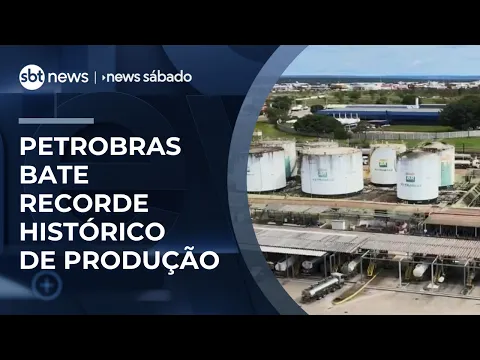
The announcement gained even more weight because it was accompanied by new operational figures from the company. Petrobras reported that it closed the first quarter with an average production exceeding 3.23 million barrels per day, a record, in addition to a 16.4% growth compared to the same period last year. In the same interval, exports reached 888 thousand barrels per day, with a 61% jump in the annual comparison.
What the early entry of P-79 changes for Petrobras
The entry of P-79 represents a direct reinforcement of Petrobras’ production capacity at a time of strong pre-salt expansion. The state-owned company highlights that the platform is the eighth unit and that its operation increases the field’s capacity to approximately 1.33 million barrels per day, expanding the weight of national oil production.
-
21-Year-Old Moves Back to Parents’ Home in Arizona, Finds New Private Apartment in Converted Garage as Families Tackle U.S. Housing Pressures

-
Innovative Container Studio in Brazilian Beach Town Thrives with High Demand and Plans for Expansion
-
Brazil Opens Permanent Tax Office in Beijing to Streamline Trade and Combat Customs Fraud with China, Its Largest Trading Partner

-
Eco-Friendly Brick Mini-Factory Fits in a Garage, Starts with a $1,800 Press, Produces Bricks for $110 per Thousand and Sells for Up to $290





In practice, the anticipation of the platform also shows a gain in execution. Bringing a unit of this size into operation ahead of schedule has a significant impact because it accelerates the incorporation of productive capacity and helps sustain stronger results in production and exports.
The P-79 numbers that explain the project’s dimension
P-79 has an estimated capacity to produce 180,000 barrels of oil per day. For gas, the unit has a compression capacity of 7.2 million cubic meters per day, a volume that helps to dimension the size of the operation.
Furthermore, the platform will allow exporting up to 3 million cubic meters of gas daily to the continent through its interconnection with the Rota 3 gas pipeline. This detail enhances the unit’s importance, as it is not just about more oil production, but also an advance in gas logistics and offloading.
Why the 3-month anticipation draws so much attention
Anticipating a platform of this size by three months relative to the 2026-2030 business plan would already be a significant fact in itself. The impact becomes even greater when Petrobras reports that the advantage reaches five months over the previous year’s planning.
This type of anticipation is usually seen as a sign of operational efficiency and accelerated delivery of strategic projects. In a company the size of Petrobras, bringing a new unit into production ahead of schedule reinforces the perception of progress in execution capacity and a faster response to the market.
Record production in the quarter reinforces the state-owned company’s growth phase
Petrobras also released its first-quarter operational results, showing that the entry of new capacity is not isolated. The company closed the period with an average production of over 3.23 million barrels per day, the highest level ever recorded by the company for a quarter.
On an annual comparison, this represents a 16.4% increase. The data helps to show that the expansion is not restricted to a single asset and is part of a broader operational growth, driven mainly by the increased production capacity of the pre-salt.
Exports rise 61% and increase the weight of results
Another number that drew attention was the increase in exports. According to Petrobras, the exported volume reached 888 thousand barrels per day, representing a 61% increase compared to the same period of the previous year.
This jump is relevant because it shows that production growth is also reflected in offloading and commercialization capacity. When production and exports advance together, the market tends to perceive a more robust operation with greater capacity to generate results.
What drove this advance by Petrobras

Petrobras itself attributes this performance to the increased production capacity of the pre-salt. According to the company, the entry into operation of 10 new oil wells helped sustain the stronger numbers for the quarter.
This point is important because it connects the anticipation of P-79 with a larger expansion movement. The production record does not appear as an isolated fact, but as part of a strategy to reinforce operational capacity, with new structures and new wells increasing the pace of the state-owned company.
What this means in practice for the oil and gas sector
When Petrobras expands its production, anticipates projects, and increases exports, the effect goes beyond the company’s internal results. This reinforces the state-owned company’s weight in the oil and gas sector, increases available supply, and strengthens the company’s position at a time of great attention to energy, domestic production, and competitiveness.
There is also a scale effect. A platform with a capacity of 180,000 barrels per day, combined with quarterly production records and strong export growth, helps consolidate Petrobras as a central piece of Brazil’s energy performance.
Why P-79 becomes a strategic piece at this moment
P-79 gains relevance because it comes into operation at a time when Petrobras seeks to accelerate delivery, increase capacity, and transform expansion into concrete results. The unit reinforces the field, expands oil production, improves gas offloading, and adds to a sequence of positive indicators released by the state-owned company.
With this, the platform ceases to be just another operational entry and comes to symbolize a stronger growth phase for the company. When a new unit arrives ahead of schedule and coincides with production and export records, it assumes a strategic role within Petrobras’ expansion narrative.
Do you think the anticipation of P-79 and Petrobras’ production record can change the pace of the oil and gas sector in Brazil in 2026?