






 Portuguese
  Spanish


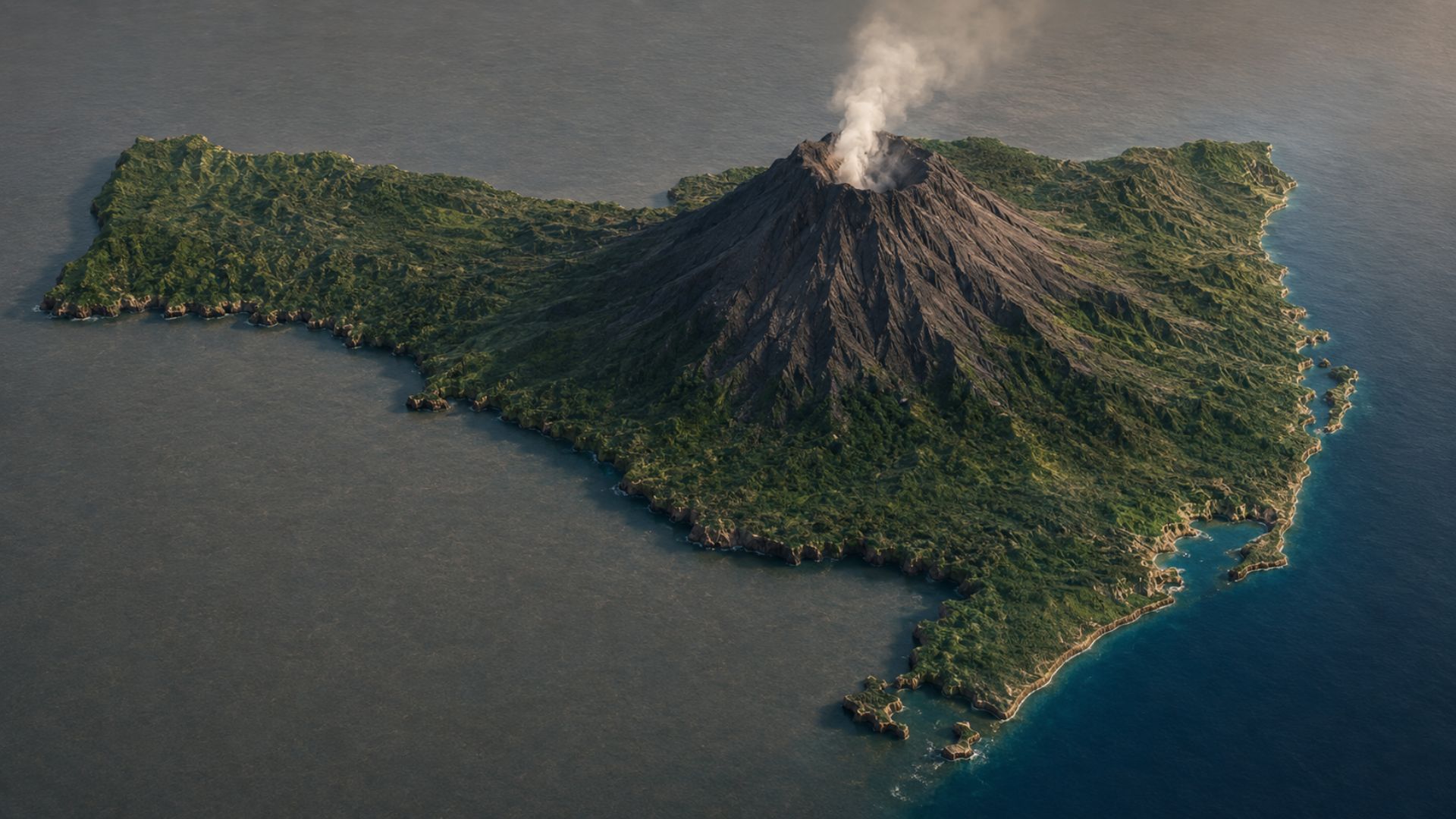

The Morro do Garrafão, in Corupá, in the North of Santa Catarina, holds a volcanic past of approximately 588 million years, confirmed by a report from the Geological Survey of Brazil. The study identified rocks such as ignimbrites, rhyolites, trachytes, volcanoclastic breccias, basalts, and andesites in the region, all typical formations of ancient volcanic environments. With about 600 meters of altitude and popular trails among hiking enthusiasts, the Morro do Garrafão may have been an extinct volcano in the Neoproterozoic period.
The Morro do Garrafão carries a mystery that spans generations in Corupá: residents have always suspected that the 600-meter formation hid an ancient volcano, and now science confirms that the suspicion had a basis. A report from the Geological Survey of Brazil, published within the BANEO Project, identified that the Campo Alegre and Corupá Basins are composed of “sedimentary and volcanic rocks” whose magmatism climax occurred approximately 588 million years ago, still in the Neoproterozoic period. The presence of these rocks indicates that the North of Santa Catarina underwent intense volcanic processes in Earth’s geological past.
With about 600 meters of altitude, the Morro do Garrafão is now a popular destination for hiking and mountain biking enthusiasts in Corupá. The steep climb and panoramic view of the Santa Catarina mountain range have made the location one of the natural postcards of the municipality. But what attracts scientists to the Morro do Garrafão is not the landscape: it’s the rocks that make up its structure, formed by the cooling of magma and by eruptions that occurred when the planet had a completely different continental configuration from the current one.
What the Geological Survey of Brazil found in the Morro do Garrafão

The information connecting Morro do Garrafão to a volcanic past appears in the report “Metalogeny of the Neoproterozoic-Eopaleozoic Basins of Southern Brazil,” prepared by geologists João Angelo Toniolo and Marcus Begossi Gonçalves de Souza and published in 2015 by the Geological Survey of Brazil, linked to the Ministry of Mines and Energy. The study details the presence of formations typical of ancient volcanic environments in the region of Corupá and Campo Alegre, including ignimbrites, rhyolites, trachytes, volcanoclastic breccias, basalts, and andesites.
-
Brazilians in Portugal Face Increased Police Checks as Consulate Advises Carrying Documents; Long-term Resident and Tourist Report Heightened Scrutiny in Porto.

-
Russia Proposes Bold Energy Transition Plan at BRICS, Citing $8 Trillion Annual Cost for 2050 Global Target
-
$142 Million Bridge Funded by Brazil Only Used by Empty Trucks at Night, While 43,000 Vehicles Face 2-Hour Queues and Annual Losses Could Reach $600 Million at the Border.
-
Man Crafts $10,000 Hammer with 24-Karat Gold and Diamonds


Each of these rocks tells a part of the story. Ignimbrites are formed by pyroclastic flows, clouds of gas, and volcanic fragments that move at high speed during explosive eruptions. Rhyolites and trachytes are volcanic rocks of acidic to intermediate composition, produced by viscous lavas. Basalts and andesites indicate lavas of basic to intermediate composition. The diversity of these formations in the Morro do Garrafão region suggests that volcanic activity was not isolated but prolonged and intense.
Could Morro do Garrafão Really Have Been a Volcano
The presence of volcanic rocks in a 600-meter mountainous formation does not automatically mean that Morro do Garrafão was the crater of a volcano. What geology confirms is that the region underwent intense volcanic processes 588 million years ago and that the rocks composing the hill were formed by the cooling of magma and ancient eruptions.
Mountainous structures in regions with a volcanic past can be remnants of ancient volcanic edifices eroded over hundreds of millions of years, or they can be formations created by the accumulation of volcanic material expelled by nearby eruptive centers. In the case of Morro do Garrafão, the absence of a visible crater does not rule out volcanic origin: 588 million years of erosion is enough time to erase any surface traces of a crater.
What Are 588 Million Years in a Geological Context
To gauge the volcanic past of Morro do Garrafão, it is necessary to understand what was happening on the planet 588 million years ago. The Neoproterozoic period precedes the Cambrian explosion, when the diversity of life on Earth multiplied abruptly. At that time, the continents were organized in completely different configurations from today, and what is now Santa Catarina was part of an active geological environment with colliding tectonic plates, rift openings, and intense magmatic activity.
The magmatism that formed the rocks of Morro do Garrafão is associated with the evolution of the Campo Alegre and Corupá Basins, geological structures that recorded both sedimentation and volcanism over millions of years. These basins are the subject of ongoing study by the Geological Survey of Brazil, and the northern region of Santa Catarina is considered one of the most interesting in southern Brazil from a Precambrian geology perspective.
Morro do Garrafão as a Destination for Tourism and Science
For those visiting Morro do Garrafão in search of trails and landscapes, the volcanic past adds a layer of meaning to the experience. The dark rocks that appear along the path, the outcrops on the slopes, and the very shape of the hill take on a different meaning when the visitor knows they were formed by magma and eruptions nearly 600 million years ago.
Corupá, with just over 16,000 inhabitants, is already known in the ecotourism circuit of Northern Santa Catarina. Morro do Garrafão, with its steep climb and panoramic view of the Serra, attracts hiking and mountain biking enthusiasts from other cities and states. The confirmation of the volcanic past by the Geological Service could boost geological tourism in the region, a segment that is growing in Brazil and attracts visitors interested in natural formations with documented history.
Did you know that Morro do Garrafão in Corupá might have been a volcano nearly 600 million years ago? Have you hiked to the top? Tell us in the comments what you thought of the climb and if you had heard about this volcanic past.


