Portuguese
  Spanish



If You Have Always Wanted to Understand the Details of the Importance of Oil for Today’s Society and How It Got Here, This Is Your Chance!
Oil is a viscous natural compound that has been used by humanity for thousands of years. Only now, in the 20th century, has it gained fundamental importance for the fuel industry and other manufactured products from its refining.
Understanding that oil is a non-renewable fossil fuel may seem relatively simple, but many people do not exactly understand the importance of oil and the reasons why it has become so important for the global economy, let alone comprehend the extent of the power that nations controlling oil possess.
To help you understand in more detail the significance of oil in the world and how this has affected our society, we decided to write this article about it, showing how it was chemically originated, what is interesting about countries like the USA in it, what its main challenges are, and why the global economy needs to learn to live without oil before it is too late.
-
Canada Builds 6.2-Hectare Containment Box to Trap 615,000 Cubic Meters of Toxic Sediment in Lake Ontario

-
NASA Plans Telescope That Can Be Repaired by Robots 1.5 Million Kilometers from Earth
-
U.S. City Faces Dilemma as Study Warns of Sinking Land and Rising Seas: Invest in Flood Defenses, Restore Wetlands, or Relocate?
-
4,000-Year-Old Stone Towers Discovered Across Sardinia, Puzzling Archaeologists About This Mysterious Civilization


How Did It Originate and What Is Its Consistency?
Oil is a viscous black oily element, less dense than water, and rich in hydrocarbons and other elements interesting to the industry.
This richness of components has made oil one of the most valuable commodities during the 20th century.
It is important to understand that one of the main reasons why oil became financially attractive is due to its refining and breakdown capacity. In other words, it is only thanks to the processes that oil undergoes that it transforms into the almost infinite variety of raw materials interesting for the most varied industries.
Oil was created, according to current belief, from the encapsulation of animals and plants between two rock layers, subjected to decomposition by anaerobic microorganisms, which combined with pressure generate the oil so desired by the industry.
Because of its specific circumstances, the existence of oil is not exactly common on our planet. It only occurs when geological conditions are favorable, and when it runs out, it will simply cease to occur naturally.
As you will see later in the text, the very finiteness of oil makes it a precious, strategic, and necessary material for the world of the 20th century. However, with the advent of more interesting, renewable, and less aggressive technologies for the environment in these first two decades of the 21st century, we can say that oil still has “a lot of oil to burn,” but it will certainly lose its prominence in the next ten years.
Ancient History of This Commodity.
If you think humanity’s oil exploration is recent, it’s interesting for you to reconsider that information.
The Babylonians, Egyptians, and Chinese probably already used crude oil, each in their own way.
There are even some indications that the Chinese dug wells in search of “rock oil.”
What many experts say is that much of the world’s oil had already been seeping to the surface in some way or had been explored before oil refineries became capable of producing a multitude of raw materials from it.
Before it became a true jack-of-all-trades when it comes to raw materials, oil was used much more simply, such as for heating and waterproofing roofs.
Some say it was also used in the treatment of the dead in ancient Egypt, being part of the mummification process.
There is no doubt, however, that the great revolution truly started in Scotland, with the first oil refineries, which transformed an element that had relatively limited functions into the protagonist of the world economy, the cause of wars and many misunderstandings in this tumultuous century.
Recent History and the Geopolitics of Oil
It is interesting to discover that much of our economy, the way we deal with the world, and even the speed with which technology developed in the 20th century was only possible when the first oil refining system was developed in the late 19th century in Scotland.
After that, the United States of America almost completely dominated the oil market. In association with Henry Ford’s work on internal combustion engines powered by oil derivatives, the USA significantly increased its importance in the global landscape.
Oil generated fortune for names like Rockefeller and, as already mentioned, was the world’s leading oil exporter until other companies, such as the Swedish-British Shell, decided to enter the oil extraction and refining market.
Like many things in the 20th century, the two world wars played a fundamental role in solidifying oil as an invaluable asset, as it also became synonymous with security against external invaders.
With tanks, planes, ships, and submarines all powered by diesel and similar fuels, it is not difficult to imagine how controlling oil reserves and their refining also became a strategic asset for countries.
This is so true that during wartime it was not uncommon to restrict oil consumption among the civilian population and industries, all in an effort to reinforce the stocks on the battlefront.
This fuel rationing demonstrated the importance of oil throughout the 20th century, making countries with large deposits of it and countries with access to technologies for oil extraction and refining realize that they had “the world in their hands.”
With the end of the war bringing about a new era of international communication with the creation of the UN, various associations of countries with common commercial objectives became common, and one of them, OPEC (Organization of the Petroleum Exporting Countries), became an extremely important organization.
Thanks to the cartel created by OPEC and its policies, oil is sold at a nearly pre-determined price, as stocks are coordinated to avoid price fluctuation, especially depreciation.
In other words, in this international game, a country’s oil production can be its main international commercial asset (as is the case in the Middle East), but it is also related to the country’s ability to refine oil into its byproducts, especially diesel and gasoline, as having this control can be considered beneficial.
The rise or fall in fuel prices, in the current economy, ultimately affects the costs across an entire country’s production chain, especially in those with large territorial extent, such as Brazil.
This is because the price of fuels definitively affects transportation costs, and if there are no government investments in alternative cargo transportation methods like trains or waterways, long-distance road transport significantly increases the associated cost of food and similar goods.
Therefore, governments create reserves, exempt taxes, create state-owned companies or at least mixed economies like Petrobras, all with the intention of keeping fuel prices under control.
The Middle East and Oil
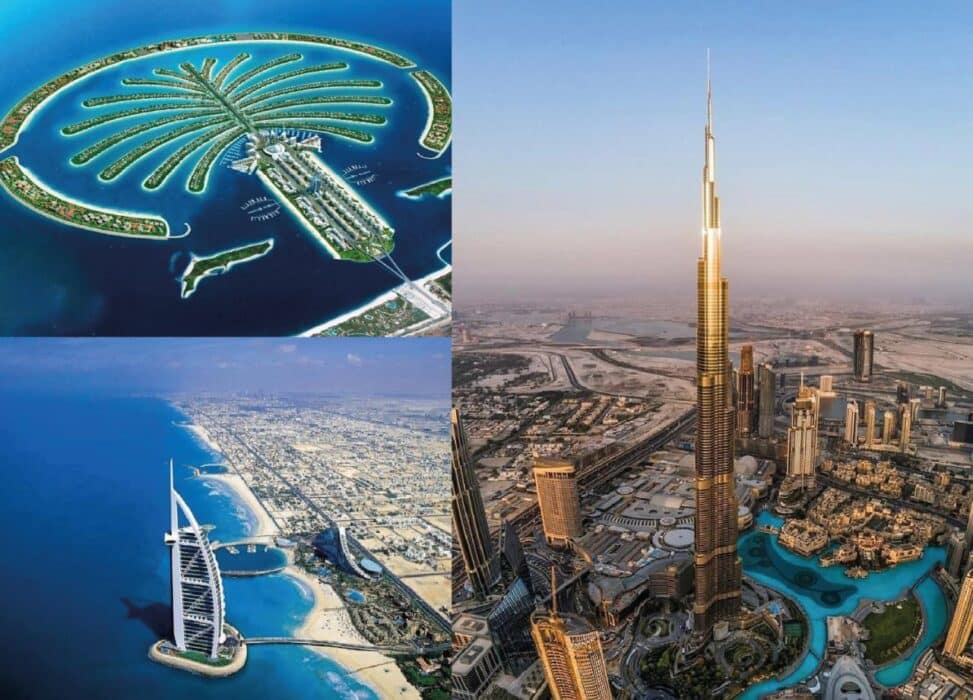
It is important to consider the fact that many countries in the Middle East, such as the United Arab Emirates, Iran, and Iraq, hold a large portion of oil reserves. Precisely for this reason, they have significant influence in OPEC and other similar associations.
Most states in the so-called Middle East were only created after 1945 with the end of World War II, when France and England relinquished control of these areas and allowed them to become independent countries, making this area extremely politically unstable.
The USA and the former USSR, during the Cold War, played a role in worsening the situation in these countries, fueling internal conflicts as part of their indirect aggression campaign and political control over these nations.
Interestingly, the United Arab Emirates, for various reasons, managed to develop, with incredible cities like Dubai emerging in the middle of the desert. Other countries, such as Iran and Iraq, have been engulfed by constant conflicts, including those related to the USA, which continues to be constantly interventionist in this part of the world.
One of the most current reasons for the world’s concern regarding the Middle East involves the extremist group ISIS, which, like the Taliban, is becoming an increasing threat to one of the world’s largest oil reserves.
The Consequences of Excessive Use

Something so positive and lucrative for various industries has transformed into an “economic addiction” for the world’s society, with countries basically focused only on this industry.
Like any addiction, the consequences did not take long to arrive. The excessive use of fossil fuels began with coal in the 18th century and later transitioned to oil derivatives, negatively affecting the planet’s climate.
Additionally, as we cannot overlook, there is still an entire problem with pollution from plastic and microplastics, which is becoming almost as harmful as air pollution, as it adversely affects marine life.
The pollution caused by the burning of fossil fuels releases greenhouse gases into the air, which has been responsible for the climate changes afflicting the world. Alongside this, we also have the issue related to deforestation, which also affects the chemical balance of the atmosphere.
For many years, there was a significant lack of political will involved in controlling carbon emissions, which is now being transformed, as many may perceive from the news, into a new market: the carbon emissions market, where countries with higher carbon emissions pay for the “carbon credit” of countries that do not pollute as much, in an effort to reduce total emissions worldwide.
Alongside this, there is an effort to finally begin more serious studies on energy alternatives to replace oil. Much is said about the fact that these researches would already be much more advanced if OPEC and other associations of this nature had not sabotaged any initiative in this regard.
It is also important to mention, however, that the electric alternative, which so far has been pointed out as the best way to replace oil, is not exactly the simplest of all. Besides having its negative effects on the environment, due to the extraction of minerals for creating circuits and batteries, it still has the problem of generating considerable waste.
The answer for a technology that can pull humanity out of this vicious cycle it has entered must come from recycling, as this would solve both the problem of excessive waste accumulation and the energy problem itself.
The Technology Involved in Oil Extraction.
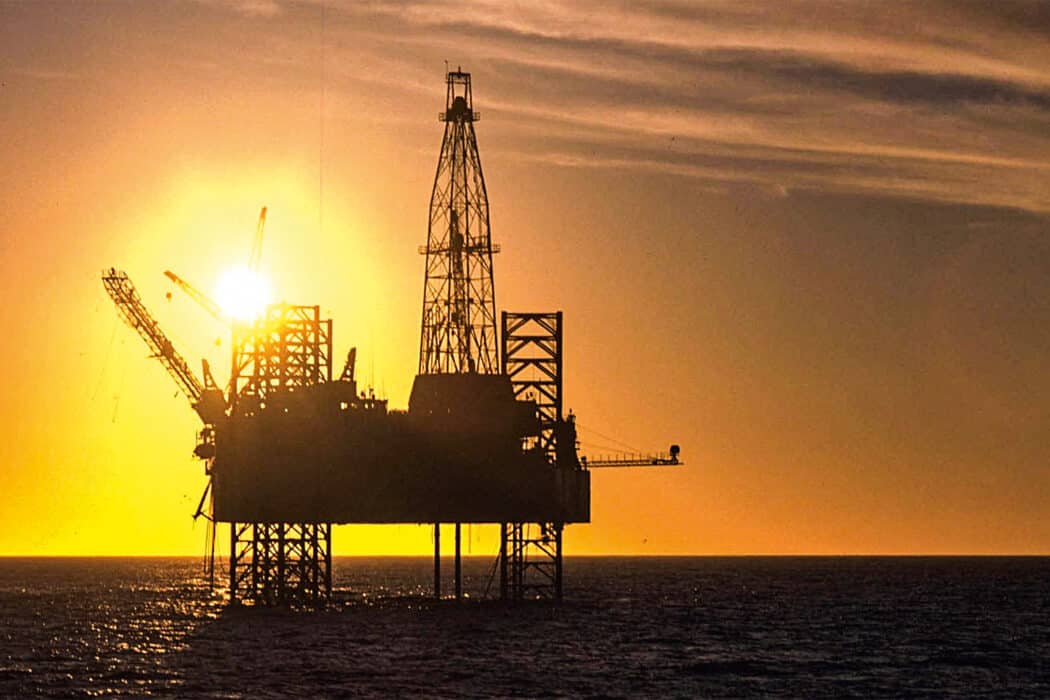
One of the interesting aspects regarding the biology involved in oil refining is that most of the technology developed recently around oil has much more to do with its prospecting and extraction than with the refining itself.
This is because almost all elements, whether gases, liquids, or solids, are used from oil. To perform this separation, it is necessary first to catalog the oil, understand which elements are predominant in the mixture being explored, and then subject it to physical and chemical processes for the separation of these elements.
Now, when we talk about oil extraction, there is a whole series of issues and technologies being developed, with Brazil and Petrobras playing an interesting role in this.
This is because, with the investment in technology for oil extraction in the so-called pre-salt layer, not only do we increase our oil reserves, but we also create important technologies so that other countries with oil reserves in the same situation can extract it by purchasing our machinery.
As can be seen, there is a complex and fascinating network of interests surrounding oil, and since the people involved in this network are very rich and powerful, they do their best to avoid the emergence of other energy alternatives.
What did you think of this content? Did you miss anything? Comment with us and we will be glad to complement the article!