






 Portuguese
  Spanish



50% Tariff Imposed by the United States on Brazilian Beef Drives Prices in US Butcher Shops and Affects Global Export Chain of the Sector
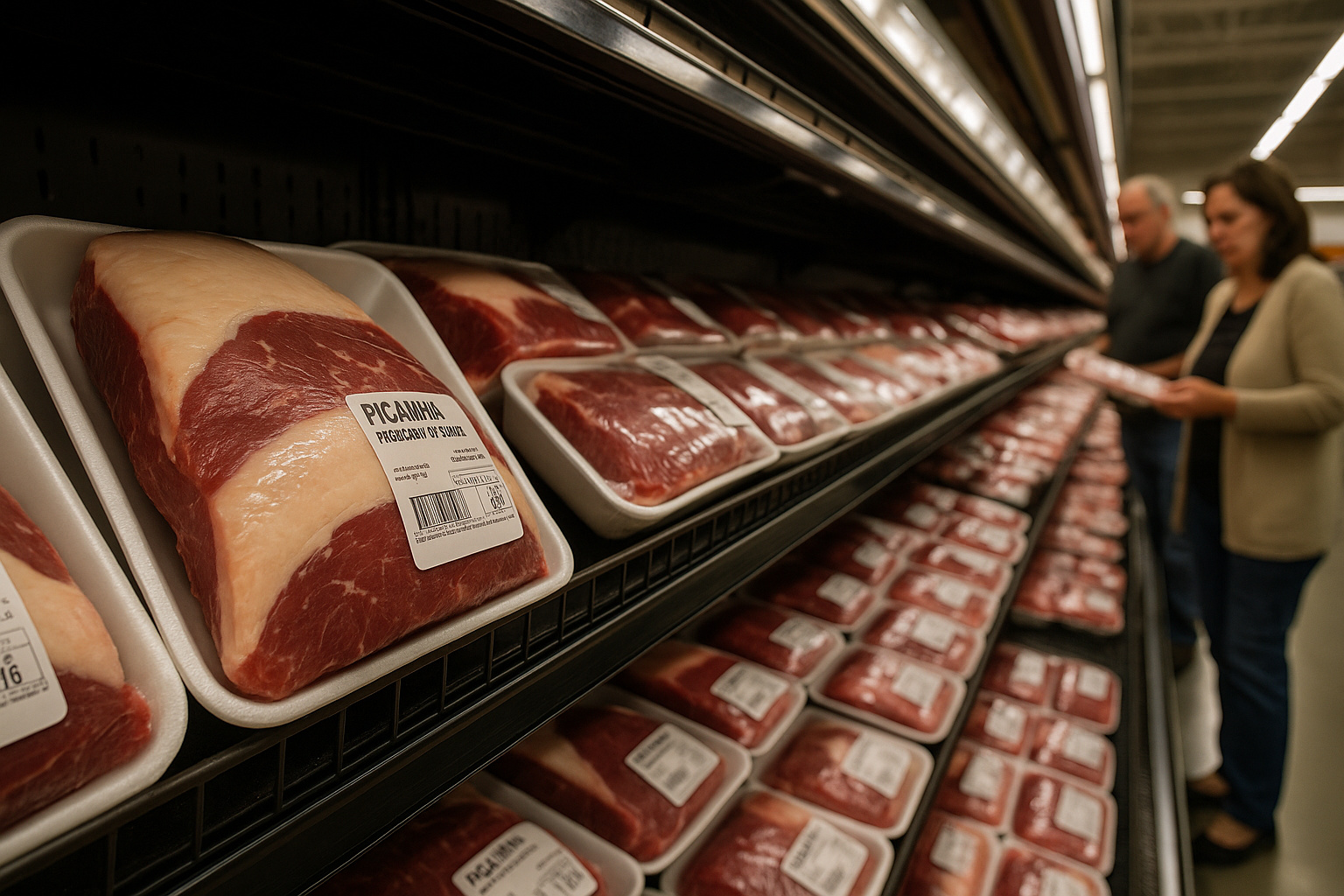
The price of beef reached an all-time high in the United States in July, driven by the 50% tariffs imposed by President Donald Trump on Brazilian products. The measure directly affected imports of picanha, raising the price of the cut to as much as US$ 11.88 per pound, equivalent to R$ 143 per kilogram.
According to data from the US Bureau of Labor Statistics, the beef and veal index rose 2.5% in July, accumulating an increase of 11.3% in the last 12 months. Brazil, which accounts for 27% of total US beef imports, had its product directly impacted by the taxation, which did not include exceptions for beef protein.
The price increase is already being felt by American consumers and Brazilians living in the country, who reported record prices in supermarkets and butcher shops. The rise is primarily due to the American market’s dependence on Brazilian cuts used in the production of hamburgers and premium meats, such as picanha.
-
Brazil’s 2026 Tax Refund: Record 9.58 Million Filers in Largest Payout Ever, But a Key Detail on Priority Recipients Draws Nationwide Attention

-
Itaú Alters Hybrid Work Model, Increasing Office Days from 2028, Prompting Employees to Adjust to New Routine
-
Facing Labor Shortage, Japan Plans to Invest $34 Million to Attract Foreign Workers in Construction, Healthcare, Industry, and Commerce

-
Brazilian City Makes Remarkable Leap, Becomes 4th Wealthiest in the Country with GDP of R$ 134.1 Billion



Change in Export Route and Regional Impact
As recently reported here on the CPG portal, the US decision is already reorganizing the export routes of Brazilian beef. Part of the shipments that lost the US market has started being redirected to Uruguay and Argentina, which prevents excess domestic supply and supports the prices paid to producers in Brazil.
According to Professor Júlio Barcellos from UFRGS, the trend is that more economical cuts produced in Brazil’s Midwest will find new destinations in neighboring countries. This change favors the maintenance of export flows and reduces the risk of saturation in the domestic market.
At the same time, Argentina is increasing its shipments to the United States, filling the space left by Brazil. The country has removed barriers that limited its exports and is now benefiting from the high prices practiced in the international market, even importing cheaper beef from Brazil to meet domestic demand.
Consequences for the Brazilian and South American Market
Experts evaluate that this reconfiguration may consolidate, at least in the short term, a new commercial framework for beef in South America. Brazil tends to reinforce its role as a supplier to regional markets, while Argentine slaughterhouses turn to the premium US market.
In the case of Rio Grande do Sul, the effects of the tariff are indirect, as the state does not have the United States as its main destination for beef. However, the flow of beef between states is constant, and changes in national volumes affect the entire production chain.
The information was originally published by Veja, based on official data from the US government. The analyses on the redirection of Brazilian beef were published by Correio do Povo, highlighting the projections for regional impact.








