






 Portuguese
  Spanish
  4 min of reading
  0 comments


Structure Over the Araguaia River Will Connect Tocantins and Pará Through the Municipalities of Xambioá and São Geraldo, Benefiting Over 1.5 Million People. Construction, Started in 2017, Faced Delays and Is Expected to Be Completed in 2025.
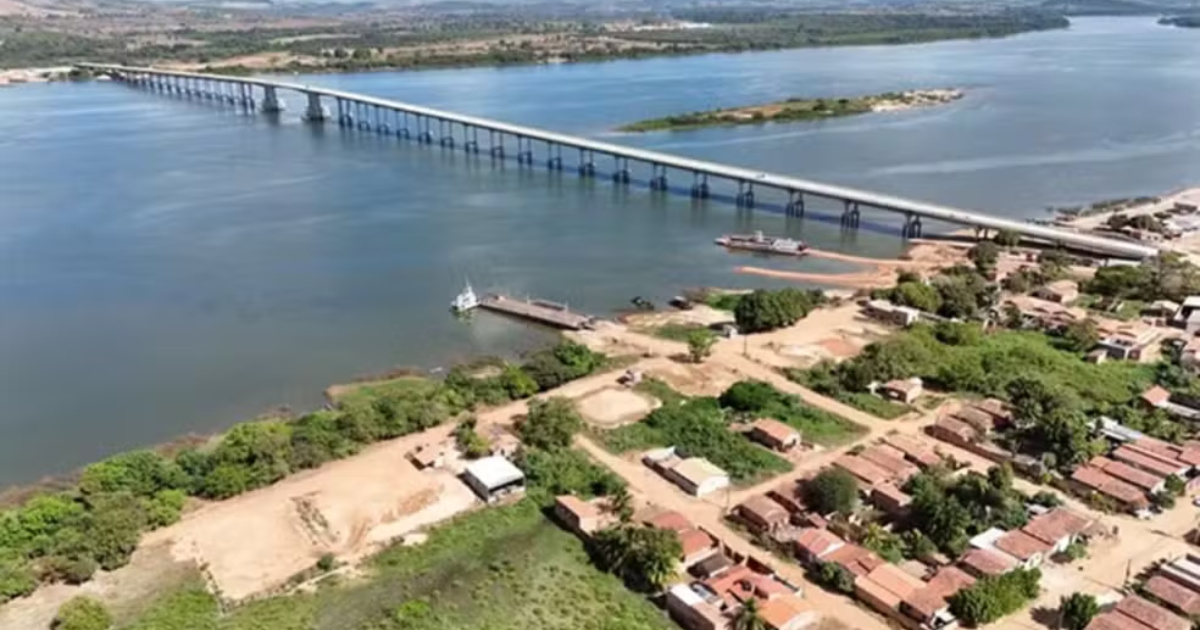
The bridge that will connect the states of Tocantins and Pará, between the municipalities of Xambioá and São Geraldo, is expected to be completed and delivered by the end of 2025, according to the director-general of the National Department of Transport Infrastructure (DNIT), Fabrício de Oliveira Galvão.
The structure, which extends over the Araguaia River, is already in an advanced phase, but depends on the construction of the heads to be opened to traffic.
The confirmation occurred on Wednesday (27), during an event held at the Araguaia Palace Governor José Wilson Siqueira Campos, in Palmas, marked by the signing of the federalization term of the stretch of TO-050, between Palmas and Silvanópolis.
-
Brazilian Joins Homeownership Consortium, Faces Decade of Dual Payments Totaling $141,000, Surpassing Traditional Mortgage

-
Land Rover to Halt Production in July, Putting 371 Jobs at Risk, as Chinese Automaker Negotiates to Convert Factory to 100,000 Vehicles Annually by 2027

-
Mexican Pest Threatens U.S. Cattle Herds at Historic Lows, Potentially Boosting Brazilian Beef Exports as Burger Prices Soar

-
Brazilian Freight Bill Progresses in Congress with $5,000 Minimum Wage, 70% Advance Payment, and Fines Up to $1 Million, as Agriculture and Industry Warn of Rising Costs and Legal Uncertainty


On the occasion, Galvão stated that the headworks will begin in September and emphasized that this stage is crucial to ensure the operation of the bridge.
Headworks and Expropriations
According to DNIT, the execution of the access embankments is expected to begin in the first half of September.
This phase includes the installation of culverts and gabion reinforcements, essential resources for supporting the banks.
The agency emphasizes that this is one of the most sensitive stages of the project, as it will finally allow the integration of the structure with the highways that will provide access to the bridge.
Galvão explained that one of the biggest obstacles to completion was the expropriation of families living near the last pillars of the construction.
According to him, 12 houses had to be removed after judicial negotiations.
“We had the last pillars of the bridge that did not even have expropriation. It was necessary to negotiate judicially with the families, complete the expropriation process, and only then could we advance with the construction,” he stated.
With the resolution of land-related issues, DNIT assures that there are no longer significant impediments to the continuation of the project. The agency estimates that, with the embankments completed, traffic can be opened as early as 2025.
Structure of the Bridge Over the Araguaia River
The project plans for a bridge with 1,724 meters of length, considered strategic for the logistics of the Northern region.
The expectation is that more than 1.5 million people will be directly benefited by the new road connection.
The accesses, according to the Social Communication Secretariat of the Federal Government, will have a total length of 2,010 meters, with 310 meters on the Pará side and 1,700 meters on the Tocantins side.
The lanes will be 12 meters wide, including a traffic lane and a shoulder.
In addition, there will be sidewalks of 1.50 meters on each side, ensuring passage for pedestrians, as well as the implementation of parallel marginal roads.
The construction is part of the BR-153, one of the main highway corridors in the country, connecting the North to the Central-South.
The bridge is considered essential for reducing distances and costs in freight transport and for boosting regional integration.
Costs and History of the Construction
The construction contract was signed in 2017, during Michel Temer’s administration. At that time, the estimated investment was BRL 132 million, with a forecast to start in 2018 and conclude in three years.
However, the project faced legal disputes, and the service order was only issued by DNIT in 2020.
Over the years, the value of the work has undergone successive adjustments. In 2020, it was already estimated at BRL 157 million.
Today, with the accesses included, total investment exceeds BRL 232.8 million. The A. Gaspar/Arteleste/V. Garambone Consortium is responsible for the execution of the construction.
This history of delays and budget revisions has made the bridge one of the most anticipated infrastructure projects in the North of the country.
Still, with work fronts underway and expropriation issues resolved, DNIT remains committed to delivering the project by 2025.
Expected Impact in the Northern Region
The bridge is expected to represent a milestone for economic integration between Tocantins and Pará, facilitating the flow of agricultural production, the circulation of goods, and the mobility of the population.
Currently, crossing the Araguaia River between Xambioá and São Geraldo depends on ferries, a service that often faces interruptions due to weather conditions.
With the completion of the structure, it will be possible to establish a permanent connection between the two states, reducing travel time and expanding transport routes.
The expectation is that the bridge will strengthen regional development, increase the competitiveness of BR-153, and directly benefit the nearby cities.
DNIT emphasizes that, in addition to the economic impact, the project should improve the population’s access to essential services, such as health and education, as it will allow faster travel between municipalities.
As work progresses, the anticipation of residents and entrepreneurs in the region grows, who have been waiting for years for the bridge’s delivery.
If the schedule is met, 2025 will mark the definitive opening of a historic connection between Tocantins and Pará. Will the delivery of this bridge transform the logistics axis of the North of the country in the coming years?





Be the first to react!