Portuguese
  Spanish


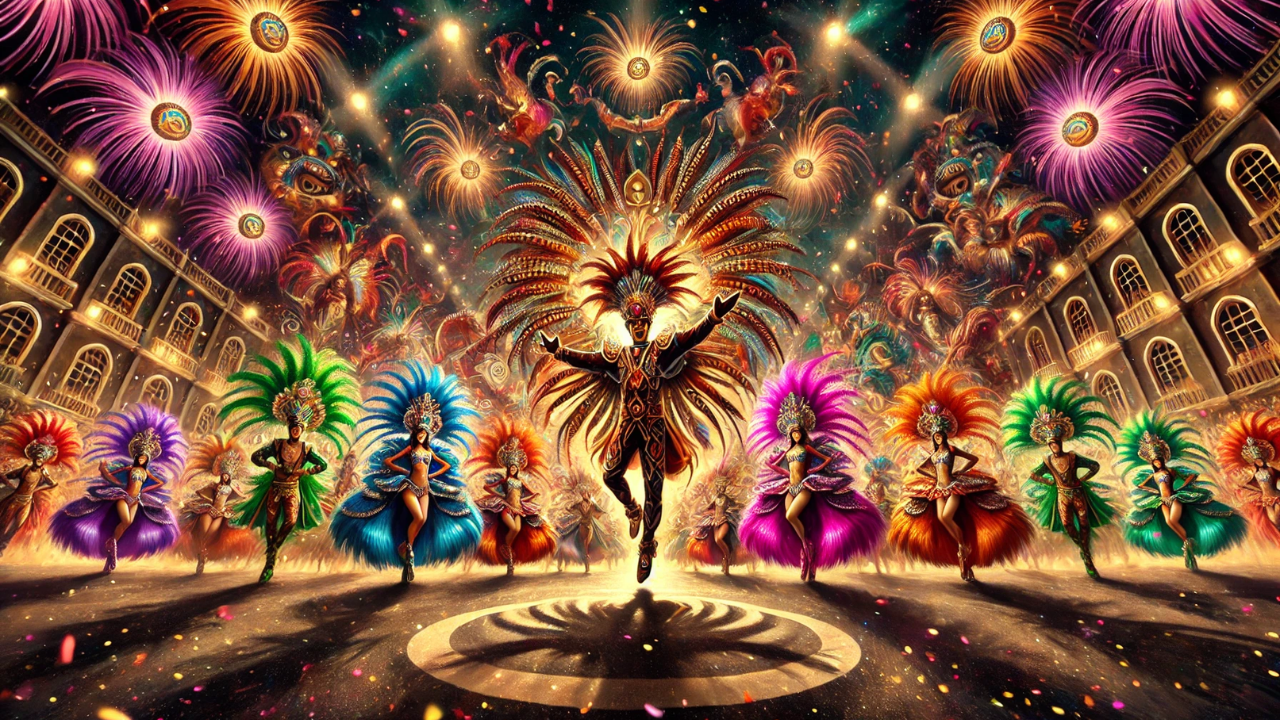

Learn All About Carnival: Its Pagan Origins, the Influence of Christianity, and the Reason Why the Holiday Date Changes Every Year!
Carnival is one of the most anticipated holidays of the year, especially in Brazil, where the celebration spreads from north to south with plenty of music, dancing, and tradition. But did you know that this celebration has its roots in ancient festivities that predate Christianity itself?
And that its date varies each year due to a calculation based on the Christian liturgical calendar?
Understand the history and the reasons behind this very popular festival.
-
How to Prevent Brown Recluse Spider Bites: Common Hiding Spots and Free Tips to Reduce Risks

-
Natto: The Unusual Japanese Superfood Gaining Popularity on Social Media and Driving Record Exports
-
Brazilian Mayor Goes Undercover as Homeless for 24 Hours to Assess Public Services

-
15-Year-Old Entrepreneur Malu Lira Publishes 20 Children’s Books on Financial Education, Earns $500,000, and Expands Her Project to the Amazon Rainforest




The Origin of Carnival: An Ancestral Celebration!
Although many people associate Carnival with Christianity, its roots trace back to pagan festivals of antiquity.
According to the Encyclopedia Britannica, there is evidence that Carnival was influenced by celebrations such as Saturnalia and Lupercalia, which were held in Ancient Rome.
Saturnalia was a celebration in honor of the god Saturn and took place in December, while Lupercalia, held in February, marked a period of purification and rituals in homage to fertility.
There are also theories linking Carnival to Ancient Egypt, suggesting that its origins go far beyond Western tradition.
However, the way the festival has consolidated over the centuries is directly related to Christianity, mainly due to the period of Lent.
The Relation to Christianity
With the expansion of Christianity in Europe, many pagan festivals were incorporated and redefined by the Catholic Church.
In the case of Carnival, it began to be celebrated as a grand feast that precedes Lent, a period of 40 days of penance and fasting in preparation for Easter.
The very name “Carnival” may have originated from the Latin “carnem levare” or “carnelevarium,” which means “to take away the meat.”
This is due to the custom of Catholic faithful to abstain from consuming meat during Lent.
Thus, before the beginning of the period of deprivation, people would take the opportunity to celebrate abundantly.
Currently, Carnival is celebrated in more than 50 countries around the world, taking on different forms.
In Brazil, the celebration stands out for the samba school parades, street block parties, and Carnival balls.
In other places, such as Italy, the celebration has different characteristics, such as the famous Venice Carnival, marked by the use of masks.
Why Does the Date Change Every Year?
Unlike other fixed holidays, Carnival is a movable feast, varying between February and March.
This happens because its definition is linked to the Christian calendar, specifically to the date of Easter.
Easter is celebrated on the first Sunday after the first Full Moon of the spring equinox in the Northern Hemisphere (autumn in the Southern Hemisphere).
Based on this definition, Carnival Tuesday always occurs 47 days before Easter Sunday, serving as a farewell period to excesses before the start of Lent.
Therefore, the date of Carnival can vary from year to year. In 2025, for example, the celebration will take place in March, while in other years it may be celebrated in February.
Carnival: Tradition, Culture, and Religion
Even with its pagan origins, Carnival has become a prominent element within Christian culture and one of the most popular festivals in the world.
In Brazil, in addition to its religious aspect, the event has significant economic relevance, boosting the tourism sector and driving various areas of the economy.
What is certain is that Carnival remains one of the most awaited moments of the year, whether for its historical significance or for the explosion of joy it brings to millions of people.
With its colors, music, and traditions, the festival continues to transcend generations and reinvent itself, without losing its festive and cultural essence.