Portuguese
  Spanish




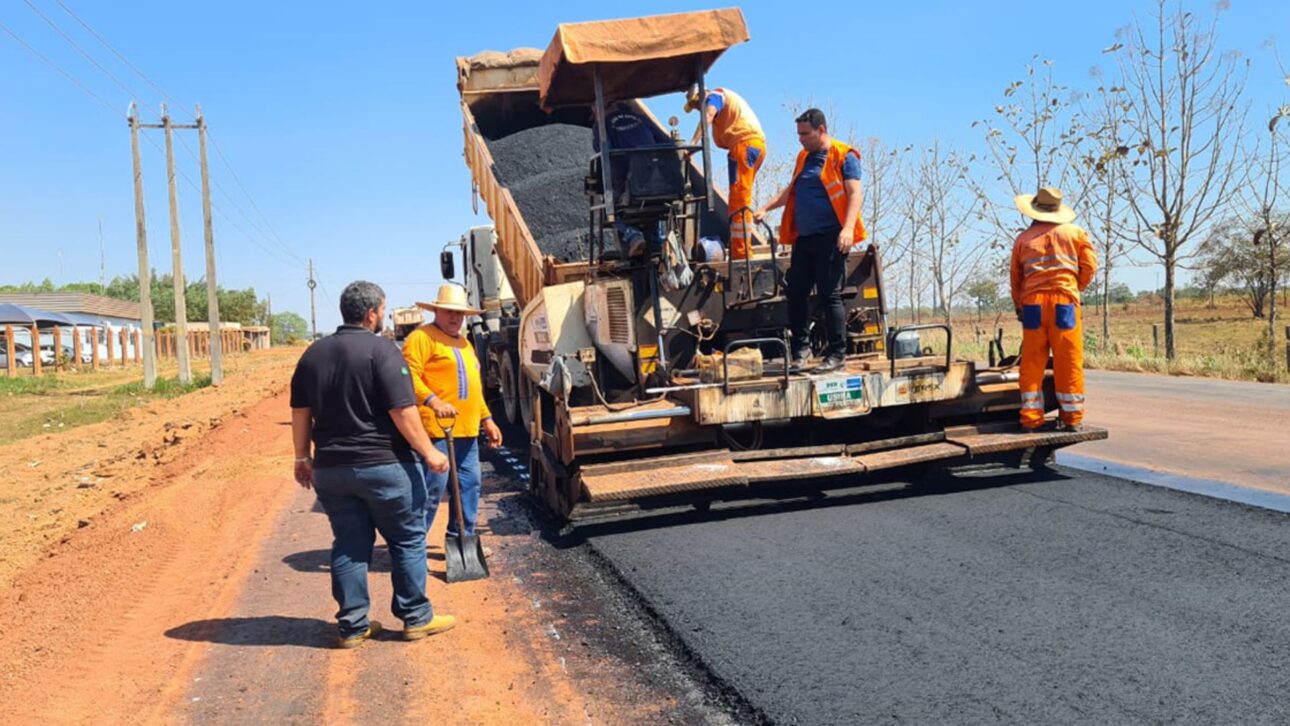
Brazil Keeps 99% of Its Highways Paved with Asphalt, a Material That Requires Frequent Maintenance and Has a Limited Lifespan, Even in the Face of National and International Examples That Prove the Durability of Concrete, Able to Resist for Decades Without Major Repairs.
The choice for asphalt is historically associated with lower initial costs and faster execution. However, experts point out that, on high-traffic highways, wear appears within a few months, creating a constant cycle of work and spending. In contrast, concrete, widely adopted in the United States since the 1950s, can last between 30 and 60 years with minimal maintenance.
In the U.S., the decision to use concrete arose from a strategic plan initiated under President Dwight D. Eisenhower, inspired by the efficiency of German highways during World War II. The goal was to ensure lasting infrastructure for defense, economy, and national logistics.
In Brazil, factors such as short political cycles, tight budgets, and the consolidation of the asphalt industry maintain the current model, even though, in the long run, it represents higher costs for the state and losses for users.
-
Rare fox feared “extinct” found alive on Caribbean island after over two decades without official sightings

-
21-Year-Old Brazilian Student Turns Homemade Popsicle Hobby into $100,000-a-Month Business

-
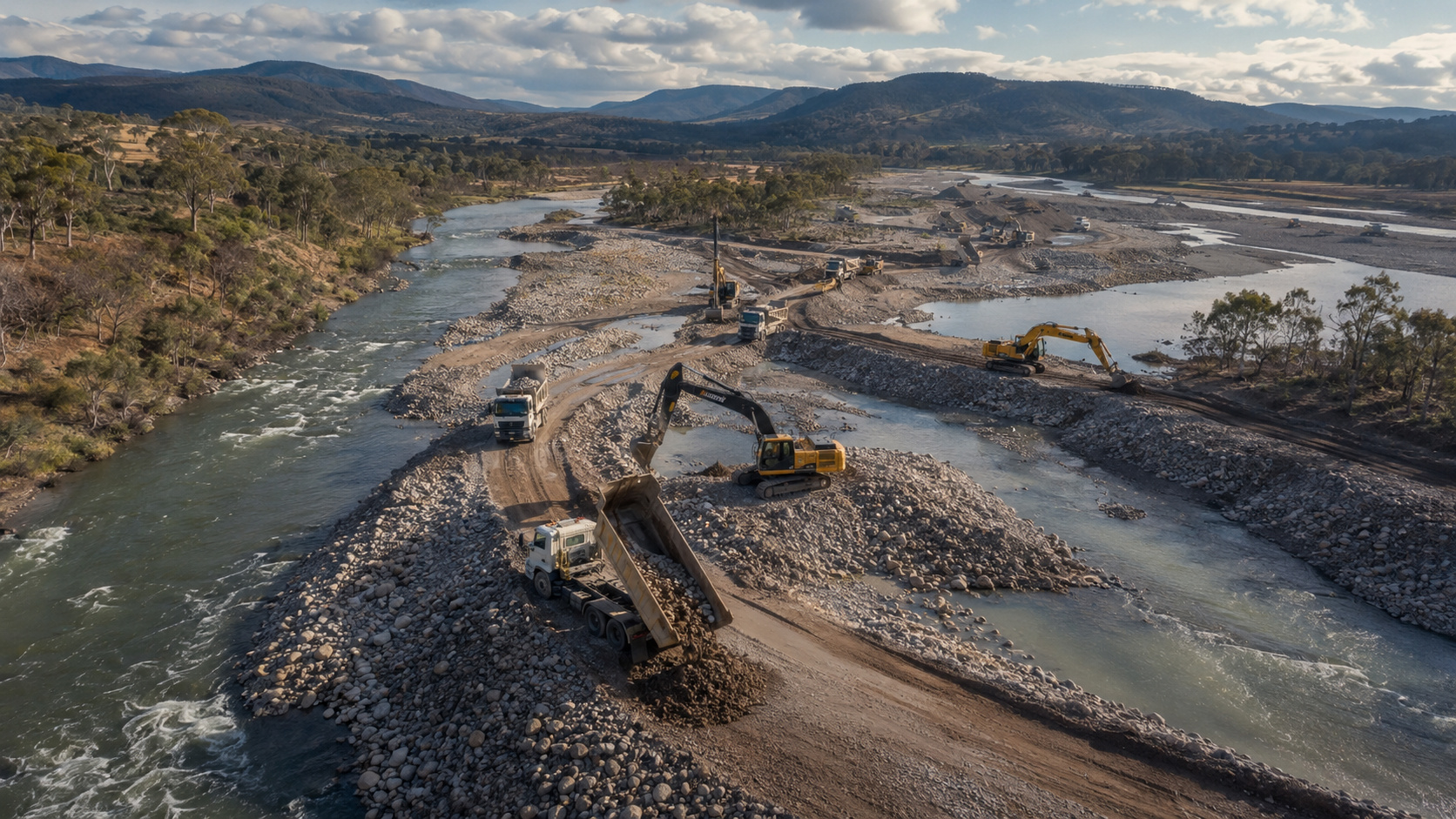
Australia Dumps Hundreds of Thousands of Tons of Gravel into Rivers to Restore Natural Barriers and Reverse 150 Years of Erosion

-
Bird-Inspired Robot Glides on Air Currents up to 10 m/s, Balances Itself, and Aims to Save Energy in Industrial Inspections and Meteorological Balloons



Impacts on Traffic and Fuel Consumption
The rigid pavement of concrete better distributes the weight of vehicles, preventing sinking and cracking. This keeps the road stable and reduces rolling resistance, saving fuel, especially in trucks and buses.
Moreover, concrete reflects light better, allowing savings of up to 30% in public lighting on roads and decreasing heat radiated into the environment, which reduces the formation of heat islands in cities. These characteristics directly impact the comfort and safety of drivers.
Asphalt, on the other hand, when deformed, requires more effort from vehicles, increasing fuel consumption and accelerating the wear of parts, harming logistical predictability in transport corridors.
Successful Brazilian Examples
Despite the predominance of asphalt, Brazil has historic highways made of concrete still in good condition, such as the Serra de Petrópolis road, inaugurated in 1928, and Avenida Farrapos in Porto Alegre, which has maintained its structure since 1940.
In recent years, states like Paraná have led concrete paving programs, covering 500 km of highways of this type and investing over R$ 3 billion. Techniques such as whitetopping, which applies concrete over existing asphalt, have accelerated construction and reduced costs.
In Campinas (SP), 92% of the BRT system uses concrete pavement, ensuring greater durability and fewer interruptions for maintenance, serving as an example for other municipalities.


Technical Criteria and Strategic Use
According to international organizations, such as the Federal Highway Administration, concrete is recommended for highways with traffic above 8,000 heavy vehicles per day, areas of difficult maintenance, unstable soils, and extreme climates.
The adoption of concrete is also considered more sustainable, allowing the use of recycled materials and lower CO₂ emissions throughout its lifespan. Highways in Germany, France, and Belgium demonstrate the efficacy of the material, with decades of usage in perfect condition.
This information was released by the channel Elementar, which also highlighted that Brazil already has professionals and technology to expand the use of concrete, needing only to prioritize strategic routes such as BR-163, BR-101, and BR-116.
Challenges for Change
To advance in this model, experts argue that the transition should begin with highways granted to the private initiative, where there is greater quality control and long-term vision.
The challenge is to break with the logic of “cheap that ends up being expensive”, replacing frequent maintenance works with planned investments for decades.
The debate remains open: if Brazil already has the data, examples, and solutions, why does it still maintain a model that does not work in the long run?