






 Portuguese
  Spanish
  4 min of reading
  1 comment


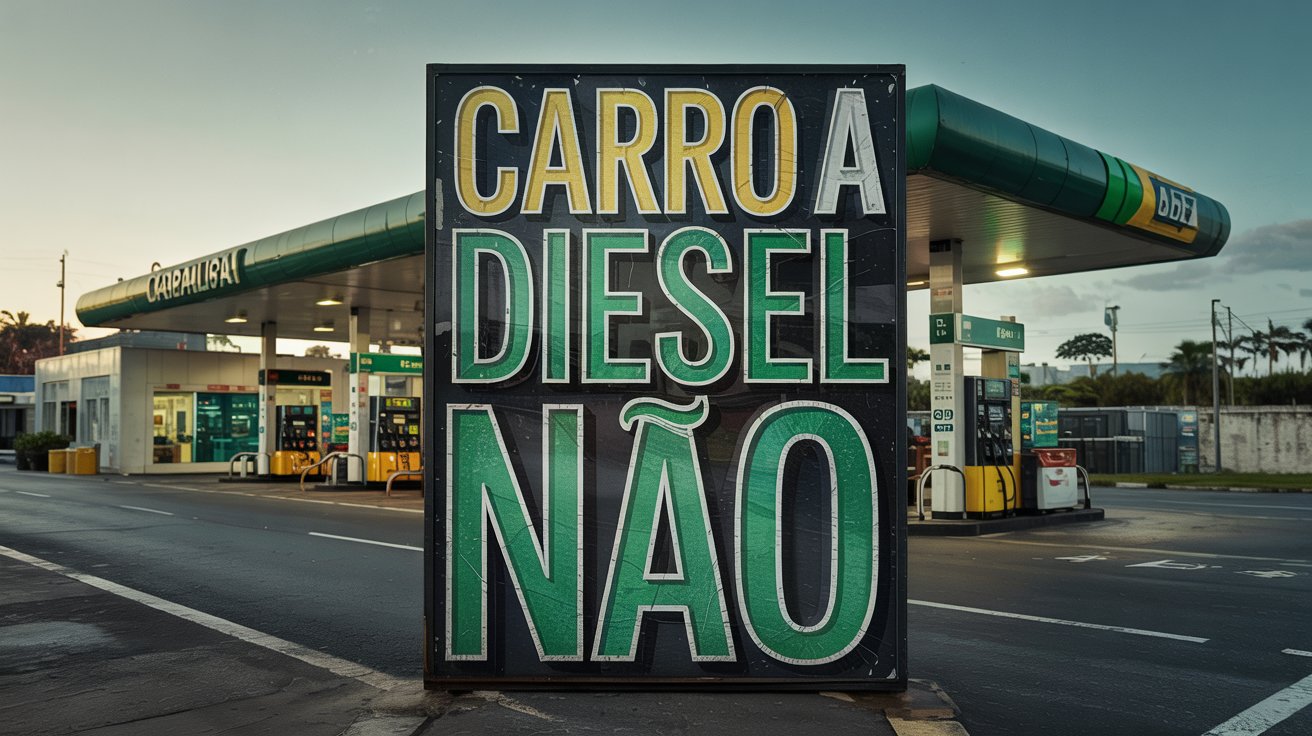

The Complex Journey of Diesel in Brazil Reveals Hidden Reasons, Technical and Environmental Challenges That Shaped the National Automotive Industry and Influenced Public Policies, Provoking Deep Changes in the Passenger Car Market and Fuel Consumption.
Brazil officially banned the manufacture and sale of diesel-powered passenger cars in 2012, a decision that still raises doubts and curiosity among the public.
But did you know that this ban was not just an isolated environmental or technical issue, but the result of a complex set of historical, economic, and social factors that few are aware of?
The origin of this measure is deeply linked to the quality of diesel available in the country and the economic landscape of the national automotive industry.
-
Survivor of 1966 SS Daniel J. Morrell Shipwreck in Lake Huron Recounts 38-Hour Ordeal in Extreme Cold

-
The Greatest Hoax in World Cup History? The Film That Denied Brazil’s 1958 Victory and Exposed How Fake Evidence Can Seem Convincing on TV
-
Fake South Korean Online Stores Offer Shopping Thrill Without Spending Money or Receiving Products
-
The War of Jenkins’ Ear: How a Severed Ear Sparked One of the 18th Century’s Most Unusual Conflicts


According to the National Association of Automotive Vehicle Manufacturers (Anfavea), Brazilian diesel historically had a high sulfur content—about 2,000 parts per million (ppm)—while in Europe, the standard for diesel fuels was already much lower, around 10 ppm.
This high level of sulfur compromised the durability of lightweight car engines, which require fuels with very strict specifications.
For decades, the national vehicle industry prioritized flex engines (ethanol and gasoline) and pure gasoline, which adapted better to local conditions, while diesel was restricted to trucks and buses, whose structure and pollutant treatment systems are more robust.
The Relationship Between Diesel and the Environment
But what few know is that this limitation on the use of diesel in passenger cars is also related to serious environmental problems, especially in large cities.
Traditional diesel releases fine particles (particulate matter) and nitrogen oxides (NOx), pollutants that contribute to the rise in respiratory diseases, such as asthma and bronchitis, as well as exacerbating the climate crisis.
According to studies by the Institute of Energy and Environment (IEMA), Brazilian cities like São Paulo face high levels of air pollution, and controlling the use of more polluting fuels is part of policies to improve air quality.
With the signing of the Kyoto Protocol and, subsequently, the Paris Agreement, Brazil made international commitments to reduce greenhouse gas emissions, pushing for the adoption of cleaner fuels.
In response to these challenges, the government began producing S-10 diesel, with a sulfur content reduced to 10 ppm, much cleaner and compatible with advanced engine technologies.
This S-10 diesel, which began to be distributed in the country in 2012, enabled heavy and commercial vehicles to adopt emission reduction systems, such as particulate filters and catalysts, without compromising efficiency.
The Technical and Economic Challenges of Diesel for Lightweight Cars
However, the cost of adapting lightweight engines for these technologies is high.
Light diesel cars require sophisticated systems to reduce emissions, which increases the final price of the vehicles.
For Brazilian consumers, who traditionally seek more affordable and economical cars, the cost-benefit of diesel in passenger cars was not very attractive.
Another curious point is that Brazil, despite being one of the largest producers of ethanol in the world, has never managed to establish diesel as a popular fuel for passenger cars.
Unlike Europe, where diesel stood out for its fuel economy and high torque, in Brazil, ethanol and flex fuel dominated the market, driven by the Proálcool program since the 1970s.
The Influence of Automakers and Limited Infrastructure
The automakers’ lobby also played an important role in this scenario.
Manufacturers that heavily invested in flex and gasoline cars influenced regulatory decisions to limit the competition from diesel, as diesel engines tend to be more durable and consume less fuel in some situations.
Additionally, the maintenance and initial cost of these vehicles are traditionally higher.
To complicate matters, the infrastructure for diesel refueling for lightweight cars was never developed on a commercial scale.
Fuel stations primarily focus on gasoline, ethanol, and diesel for heavy vehicles, making mass commercialization of diesel for passenger cars unviable.
A Little-Known Story in the Brazilian Market
But this story holds a curiosity that few know: Brazil once allowed diesel cars for passenger use, but with severe restrictions.
In the 1980s and 1990s, models like the Chevrolet Monza Diesel hit the market but faced low acceptance and several technical problems caused by poor fuel quality and a lack of technological adaptations in the engines.
This led many consumers to avoid these vehicles, reinforcing the idea that diesel was not suitable for lightweight cars in Brazil.
Another interesting aspect is the difference between Brazilian diesel and that used in Europe and the United States, which are much more refined.
This occurs because Brazil, as a major producer of heavy oil, initially favored the use of higher sulfur diesel for commercial vehicles, while developed countries invested in more advanced refining to cater to lightweight vehicles.
The Future of Diesel in Brazil in Light of New Technologies
In recent years, the global automotive industry has been changing rapidly with the popularization of electric and hybrid vehicles.
With the pressure to reduce emissions, many countries have begun to further restrict the use of diesel engines, especially after the “Dieselgate” scandal in 2015, which exposed fraud in emissions testing in renowned manufacturers.
In Brazil, the future of diesel for lightweight cars remains uncertain, but trends point towards a decrease in the use of fossil fuels in general, with the advancement of electrification in transportation.
Nevertheless, the ban in place since 2012 remains a measure that unites environmental, economic, and technical aspects, shaping the local automotive market.
And you, did you already know that Brazil had such a complex story behind the ban on diesel cars? Do you think that with technological and environmental advancements, the country should reconsider this measure?






Ganância, tudo pelo dinheiro e corrupção, imagina quantos ganharam com isto! É BRASIL,