





 Portuguese
  English
  Spanish
  4 min of reading
  0 comments


While Denmark Buries Nearly All Power Cables for Safety and Aesthetics, Brazil Keeps Aerial Networks for Cost and Lack of Planning. Understand the Reasons.
A country’s urban infrastructure is not defined solely by what is visible. In places like Denmark, the decision to bury power cables has become a consolidated public policy. In Brazil, however, overhead wiring remains the most common model, even in large urban centers. The difference between the two systems is not just visual — it involves safety, reliability, planning, and cost.
The choice for buried wires transforms the urban environment, reduces risks of interruptions due to weather phenomena, and preserves the landscape. However, this choice requires significant investment, complex excavations, and long-term planning.
Buried Cables Have Been National Policy in Denmark Since 2008
In Denmark, the directive to bury high-voltage power cables was formalized in 2008. The country established that all new 400 kV lines should be installed underground. The measure was adopted to preserve natural landscapes, increase the reliability of the system, and reduce the risks of failures during storms or accidents.
-
Basalt-based cement can cut up to 80% of CO2 emissions in global construction, according to a study by UC Santa Barbara.

-
China built a 300-meter horizontal skyscraper that connects four towers at a height of 250 meters, with a steel structure weighing 12,000 tons, equivalent to the Eiffel Tower, and it was assembled on the ground before being lifted with hydraulic systems.

-
A R$ 25 million bridge in Santa Catarina will replace a ferry at a tourist spot, cross the Araranguá River, gain two lanes, LED lighting, and create a new road connection with construction authorized in 2026.
-
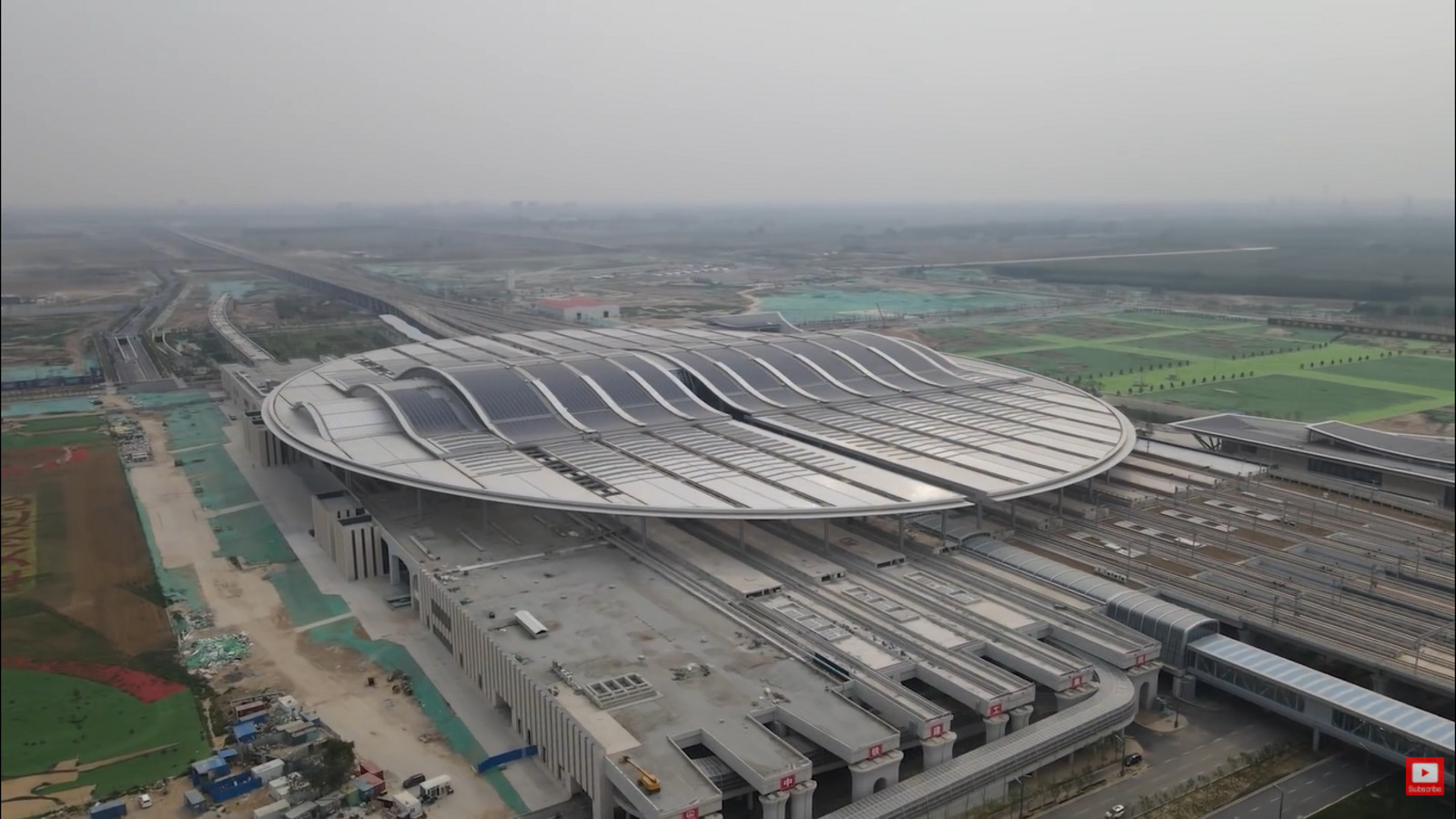
China built the largest railway station in Asia in just two years, with 475,200 m², solar energy, welding robots, and smart technology.



Today, the Danish electrical system is considered one of the most reliable in Europe, with availability above 99.99%. This level is possible, in part, because the wires are protected from external factors, such as falling trees, strong winds, or vandalism.
In addition to safety, the aesthetic reason is also valued. Coastal areas, rural zones, and historical sites are prioritized in the transition to underground cables, in order to preserve the visual heritage of the country.
Brazil Keeps Aerial Wires for Cost and Operational Difficulties
Unlike Denmark, Brazil still predominantly adopts the overhead wiring system, visible in poles that cut through entire cities. The main reason is the high cost of underground installation. Experts estimate that burying power cables can cost up to 10 times more than maintaining overhead networks.
The process requires deep excavations, changes in urban traffic, removal of sidewalks, and relocation of other underground infrastructure, such as water, sewage, and telecommunications. In densely populated cities, these interventions cause disruptions that make the underground model less viable in the short term.
The lack of a comprehensive national policy is also a factor. In Brazil, the implementation of buried cables occurs in an isolated manner, usually in central areas of capitals or in neighborhoods with a high standard of urbanization. There are isolated experiences in São Paulo, Brasília, Curitiba, and Belo Horizonte, but with no large-scale expansion.
Safety and Maintenance Also Differentiate the Models
Underground networks offer more safety against falling trees, flooding, and short-circuits caused by storms. The power supply is more stable, and the need for emergency maintenance is lower.
However, when failures occur, maintaining buried cables is more complex. It requires technical surveys, access to the underground, and more repair time since defects are not visible. In overhead systems, technicians can quickly identify failures and make repairs with mobile equipment, which reduces response time in emergencies.
Urban Aesthetics: The Wire That Cuts Across the Landscape
Visually, the differences between the models are evident. Cities with overhead wires face visual pollution, with poles overloaded by networks of electricity, telecommunications, and public lighting. The presence of these cables also interferes with greening projects, reducing tree heights and affecting shade on sidewalks.
In Denmark, on the contrary, the absence of wires contributes to the appreciation of urban and tourist areas. Clean streets, without visual interference, make the environment more pleasant and organized. This factor, although less measurable economically, weighs on the quality of life and the population’s perception of urban space.
Cost-Benefit in the Long Term Is Still Debated in Brazil
Although the initial cost of burying wires is high, studies show that the durability of buried cables compensates for this investment over time. On average, these cables last more than 40 years and require fewer interventions.
On the other hand, adapting the Danish model to Brazil faces challenges due to the lack of integrated urban planning, difficulties in coordination between public and private entities, and the urgency to resolve immediate problems in basic infrastructure.
Comparison Between the Two Countries
| Criterion | Denmark | Brazil |
|---|---|---|
| Predominant Network Type | Buried Cables | Aerial Wires |
| National Public Policy | Yes, since 2008 | Does not exist |
| Initial Cost | High, but planned | Low, preferred in urban areas |
| Urban Aesthetics | No visual pollution | Visual pollution present |
| Maintenance | Rare, but complex | Frequent, but quick |
| Safety and Reliability | Very High | Variable, affected by weather |
Denmark’s decision to bury its power cables reflects a model of planned urbanism, focused on safety, aesthetics, and long-term efficiency. Brazil, on the other hand, opts to keep the wires visible due to cost, operational complexity, and the lack of national policies for underground infrastructure.








-

1 person reacted to this.