






 Portuguese
  Spanish


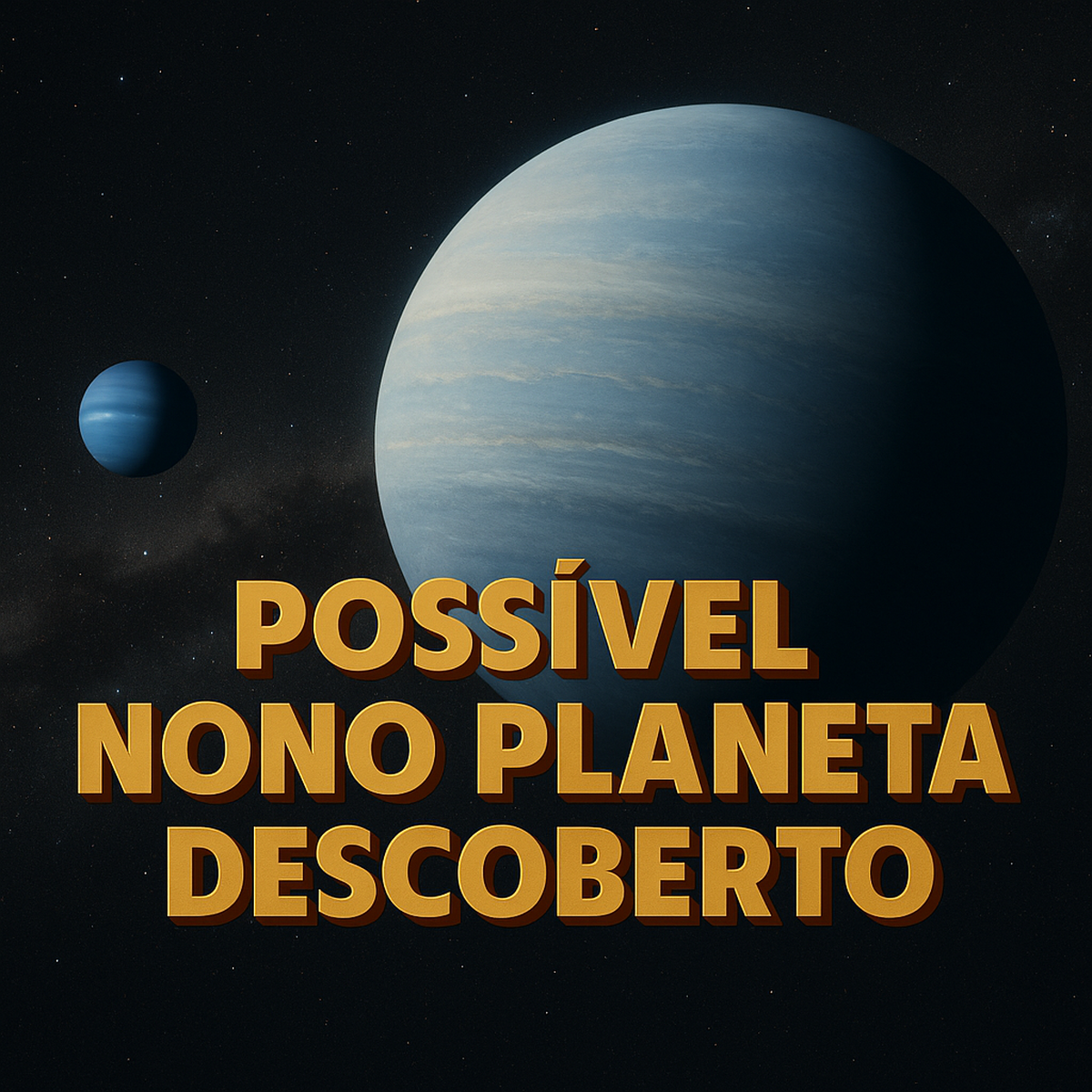

More Than 13 Orbital Signals Identified By Space Telescopes Point To The Existence Of A Hidden Planet, With Up To 17 Times The Mass Of Earth
A meticulous astronomical investigation has reignited the theory of a new planet in the Solar System. Scientists assert that, if confirmed, this celestial body could represent a milestone for modern space science.
The analysis was conducted by astronomers from National Tsing Hua University in Taiwan, and the data was officially released in May 2025. The focus is on orbital evidence recorded in 1983 and 2006.
This supposed Planet Nine would have characteristics similar to Uranus or Neptune, with an extremely long and distant orbit. This would justify its late detection. Although a direct image is still lacking, observational data indicates a displacement consistent with a massive, icy planet beyond the orbit of Neptune.
-
Meta to Launch Arena, a New Prediction App Targeting 3.56 Billion Users, Competing with Polymarket and Kalshi

-
Scientist Challenges Famous Human Evolution Theory, Argues Homo Sapiens Evolved Gradually Over Thousands of Years
-
15-Year-Old American Builds Ocean Generator with PVC Pipe and 3D-Printed Propeller for $12, Wins National Prize, Presents at White House, and Makes Forbes 30 Under 30 List

-
$12 Billion Invested in AI Data Centers in Semi-Desert Mexican State, But 17 of 18 Municipalities Now Face Water Shortages, Residents Receive Water Only 3 Days a Week




Technical Study Reveals Anomalous Movement In Deep Sky
The research began with a comparison of data from two major space telescopes: IRAS, which mapped the sky in 1983, and AKARI, which conducted a new survey between 2006 and 2011.
With a 23-year gap between observations, scientists were able to search for subtle displacements. These displacements would indicate the presence of distant celestial bodies in motion.
In total, the researchers identified 13 pairs of observations potentially linked to the same moving object. One of them, however, proved extremely promising.
This candidate was detected by IRAS but was absent in the same position in the AKARI images. This strongly suggests a long, eccentric orbital trajectory, consistent with that of a massive, icy planet.
Possible Characteristics Of The Identified Object
According to observational data, the object in question would be located about 500 to 700 astronomical units from the Sun. This translates to something between 75 and 105 billion kilometers.
In other words, this location is far beyond Neptune, the last officially recognized planet.
The estimated mass ranges from 7 to 17 times that of Earth. This would place it in the same category as Uranus or Neptune, known as ice giants.
For this reason, astronomers suggest that this new body could have a composition dominated by ice and gas. It would orbit over a period that could last between 10,000 and 20,000 years.

Scientific And Astronomical Implications
The confirmation of the existence of Planet Nine would not only fill gaps in models of the formation of the Solar System. It would also help explain unusual groupings of objects in the Kuiper Belt.
This region is a vast area populated by icy bodies, and its gravitational anomalies were noted in 2016 by astronomers from the California Institute of Technology.
Since then, various researchers have been investigating the possibility of an additional planet. The new study, therefore, emerges as significant support for the hypothesis, utilizing concrete data and comparative analyses.
According to the Taiwanese scientists, the precision of the IRAS and AKARI telescopes, along with the applied statistical methodology, lends credibility to the finding. However, they emphasize that direct identification of the body is still essential.
Technical Challenges For Visual Confirmation
Despite promising indirect evidence, the visual confirmation of Planet Nine remains an astronomical challenge. This is because, due to its immense distance, the object would reflect very little sunlight.
This low reflectance makes its detection by conventional telescopes difficult. However, with advances in optical technologies and the use of state-of-the-art instruments — such as the James Webb and Roman space telescopes — the expectation of the scientific community is that a direct detection may occur within this decade.
In the meantime, astronomers continue refining orbital models and cross-referencing old data with new observations. They seek to reduce the margin of error and narrow down the regions of the sky that need to be monitored.
A Discovery That Could Change Everything
If confirmed, Planet Nine would become the ninth official planet of the Solar System. This is a title that was lost by Pluto in 2006, following its reclassification as a dwarf planet.
The reintroduction of a new planet into the solar pantheon would have profound repercussions for science. This would affect everything from school curricula to theories about the birth of the Solar System.
Moreover, this discovery aligns with a global trend of astronomical advancements and expansions of our cosmic horizons.
An example of this was the discovery, in 2023, of one of the largest combined reserves of precious minerals underground in Mongolia. Researchers made this discovery after decades of meticulous research.
What May The Future Reveal?
The possibility of a ninth planet highlights how little we still know about space beyond Neptune.
With the constant development of new observational tools, the study of the universe is moving towards a new era. This new phase will allow previously unreachable distances to become concrete scientific targets.
However, the success of this journey depends on collaboration between international institutions. Additionally, it requires technical rigor, responsible analysis, and commitment to scientific truth.
After all, science does not advance with absolute certainties, but with well-founded and rigorously tested hypotheses — as is the case here.
Do you believe we are close to confirming the existence of Planet Nine or do you think it will remain just a theory?





