Portuguese
  Spanish




City Hall Announces Changes Focused on Organization and Reduction of Noise Pollution
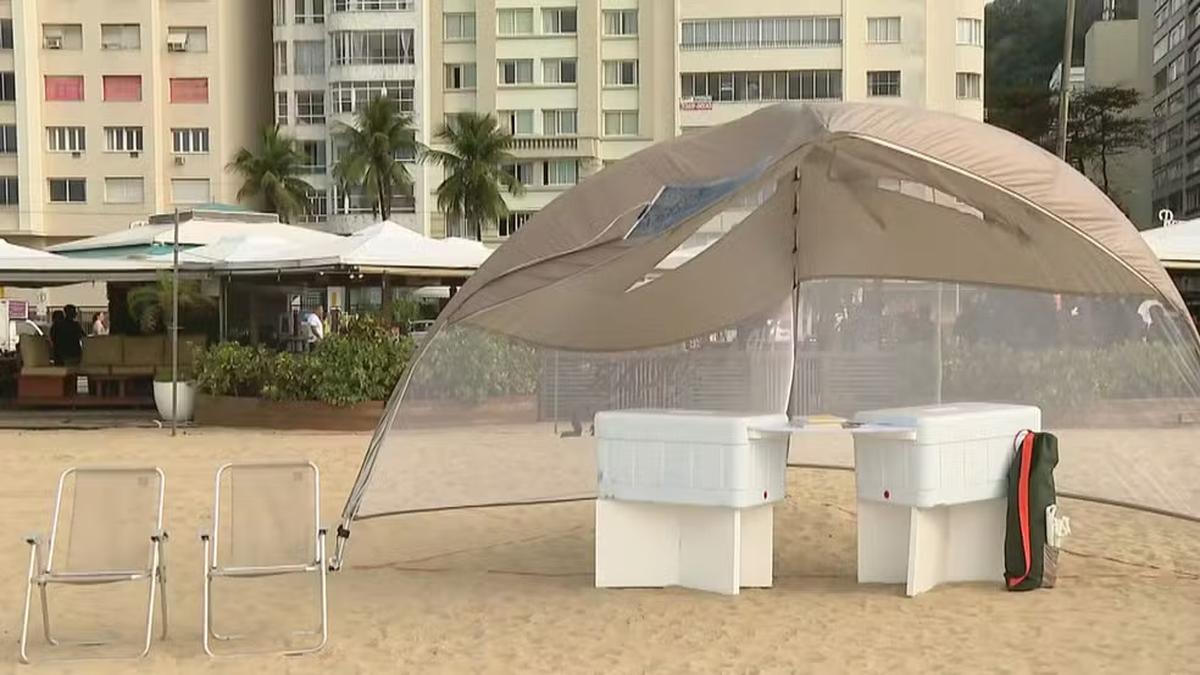
The City Hall of Rio de Janeiro presented new measures for the regulation of the city’s coastline on Saturday, September 6, 2025, in Copacabana. Among the actions are the delivery of a prototype of standardized beach tents for authorized vendors and the implementation of a noise monitoring system in the kiosks.
Standardized Tents for Coastline Vendors
The new tents were developed by the concessionaire Orla Rio and follow updated criteria that will take effect with the coastline regulation decree. Moreover, it is expected that the monitoring will include regular inspections and continuous response to reports sent through the city’s official channels.
According to Mayor Eduardo Paes, the model was designed to combine practicality for the vendors and preserve the characteristic aesthetic of the Rio beaches. Therefore, he emphasized that the prototype will be tested for one month, with direct consultation to the vendors. “In the summer, we will have an organized beach, with the collaboration of the locals,” Paes stated during the launch.
-
Tokyo Scientists Create First 18cm Biohybrid Hand Using Human Muscle, Capable of Scissor Gesture and Holding a Pipette

-
Brazil Faces Norway in World Cup at Stadium Linked to Jimmy Hoffa’s Mysterious Disappearance

-
Retired Woman Leaves French Public Housing Due to Fear, Lives in Van for Weeks, Prompting Response from Local Authorities and a Priest
-
9-Year-Old Fabio Isaac Wins Gold at Copernicus Math Olympiad in Singapore, Representing Peru Against Global Young Talents




Noise Monitoring System in Kiosks
In parallel to the standardization of the tents, the city hall and the concessionaire announced a sound measurement system that is already in the calibration phase. In this way, the equipment has been installed to collect data on sound emissions in the kiosks, aiming to reduce noise pollution on the coastline.
According to Paes, the initiative reflects a self-monitoring effort by the concessionaire. Thus, the measure establishes a balance between leisure and social coexistence. “It’s essential to have music and social interaction, but with time rules and volume limits. This control ensures a democratic and balanced space for everyone,” emphasized the mayor.
Reinforced Oversight by Seop and Municipal Guard
However, even with the new measures, direct oversight remains the responsibility of the Municipal Public Order Secretariat (Seop) and the Municipal Guard. Therefore, these agencies remain authorized to impose fines and, in cases of recurrence, revoke the licenses of establishments that violate the regulations.
So far, the monitoring system has already been installed in 117 of the 309 kiosks managed by Orla Rio. Additionally, the first phase of the project covers the kiosks of Copacabana, Leme, Ipanema, Leblon, Barra da Tijuca, and Recreio. The goal, therefore, is to gradually expand the system to the entire Rio coastline.
Timeline and Implementation of the Measures
- September 6, 2025: official announcement of the measures by the City Hall of Rio and Orla Rio in Copacabana.
- September 2025: start of a one-month testing period for the new tents with consultation to the vendors.
- Summer 2025/2026: expected definitive implementation of the new models and full operation of the sound monitoring system throughout the coastline.
Thus, with this initiative, the city hall seeks to balance the preservation of public space, the comfort of users, and the organization of local commerce. In this way, the new standards benefit both the coastline workers and the residents and tourists.
Therefore, the city reinforces its image as a sustainable and democratic tourist destination, in tune with what locals and visitors expect from the beaches of Rio de Janeiro.