Portuguese
  Spanish


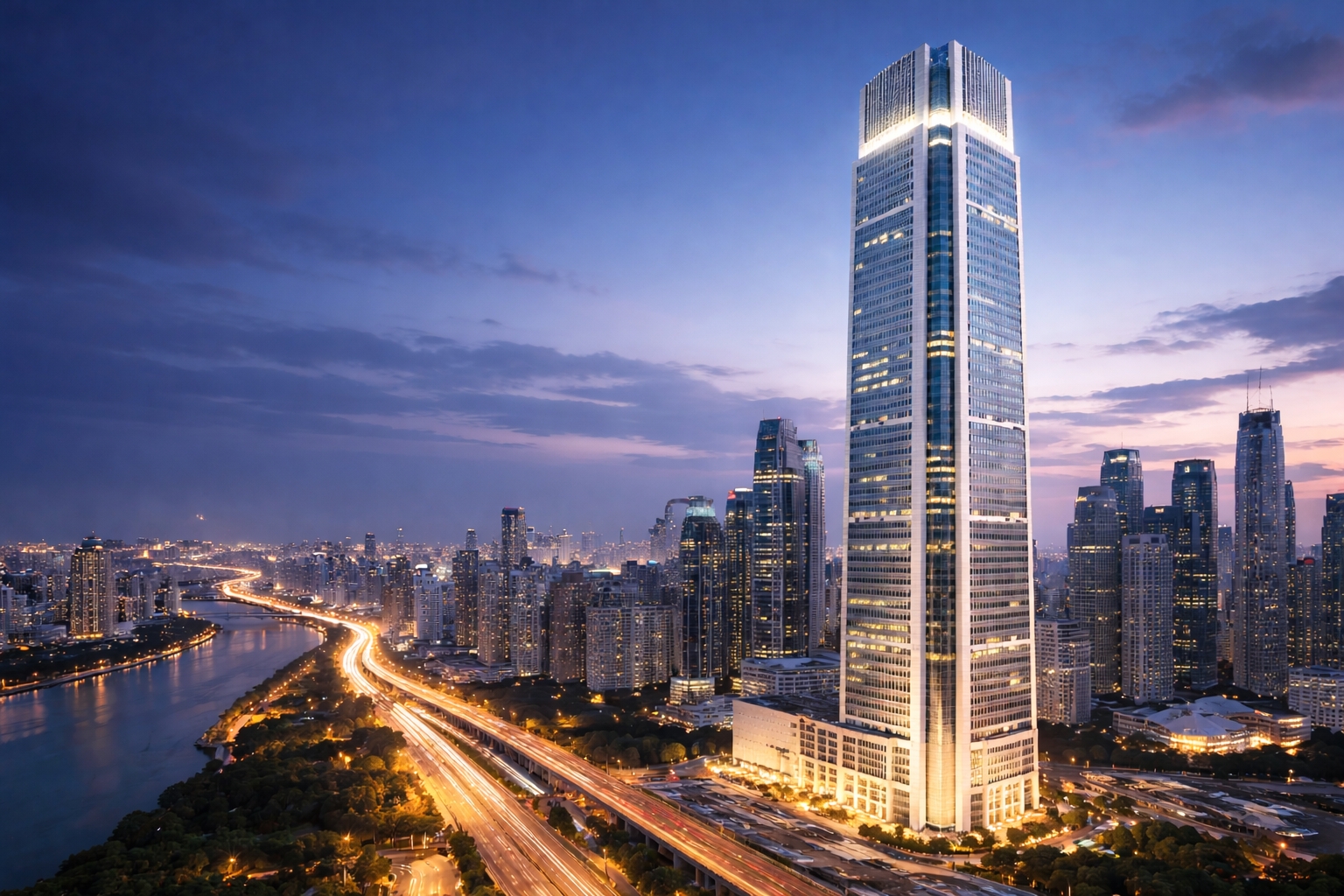


In China, Hitachi built a 274-meter tower with 15 test pits to develop high-performance elevators, triggering technological advancement in the high-rise building sector and catching the attention of the global industry.
A luxury-looking building dominates the skyline of Guangzhou, China. At 274 meters tall, it stands out among the city’s skyscrapers and almost reaches the height of the Eiffel Tower, which is 330 meters tall.
The imposing façade makes anyone imagine sophisticated offices or high-end apartments.
But there is an unexpected detail: no one lives there. The result surprised even construction industry experts.
-
Man Transforms Childhood Building in Detroit into Community Bookstore, Draws 400 to Opening

-
Two Brothers Leave City Life to Build Mud House in the Himalayas with Help from Over 100 Volunteers from 18 Countries, Including Brazil

-
At 9, Hailey Builds Mini Shelters for the Homeless Using Recycled Materials in Her Backyard
-
Seven-Year-Old Nicknamed Hulk Wins Gold in Brazilian Jiu-Jitsu After Defeating South American Competitors



274-Meter Structure Became a Global Reference Without Sheltering a Single Resident
The so-called H1 Tower is among the tallest buildings in the Chinese city.
Even with the visual standard of a luxury corporate building, the tower was never intended for residential living or traditional commercial activities.
From the beginning, the goal was different.
The tower was designed exclusively to test elevators and technologies aimed at large skyscrapers.
This concept changed the logic of developing vertical systems in tall buildings.
Hitachi Transformed the Tower Into a Vertical Laboratory With 15 Test Pits
The construction was carried out by Hitachi, a Japanese conglomerate that chose Guangzhou as its global testing base.
Inside the tower, there are 15 pits dedicated to experiments and technical validations.
In total, these pits measure about 2.25 kilometers in length.
The largest one exceeds 250 meters in length, allowing real simulations for elevators installed in extremely tall buildings.
The change occurred over the past few years, keeping pace with the rapid growth of large cities and the demand for more efficient vertical transportation.
2.25 Kilometers of Testing Inside a Single Building Impress Engineering
Before this structure, many tests were conducted in smaller environments or adapted facilities.
With 274 meters available, the H1 Tower allows assessment of performance, speed, and safety on a full scale.
This detail was decisive in positioning the tower as the tallest in the world dedicated exclusively to elevator testing.
The impact was immediate on the building engineering sector, as the ability to test technologies at maximum height accelerates the development of new systems.
Germany Enters the Race With a 246-Meter Tower and a System That Moves Vertically and Horizontally
Innovation was not limited to China.
In Germany, TK Elevator constructed the Testturm, a tower approximately 246 meters high.
The building houses 12 test pits for high-speed elevators and the MULTI system, which can move both vertically and horizontally.
This model represents a significant change in the internal mobility of buildings, especially large ones.
The existence of these two giant towers highlights a new technological race in the sector.
Comparison Between China and Germany Reveals a New Stage in Skyscraper Mobility
While the H1 Tower stands at 274 meters with 15 test pits, the German tower is about 246 meters tall with 12 pits.
The numbers reveal that vertical mobility has become strategic for the future of cities.
The taller the buildings, the greater the need for fast, safe, and efficient systems.
What seemed impossible a few decades ago is now part of global urban planning.
A luxury building without residents may seem wasteful at first glance, but in this case, it represents a technological leap. The 274-meter structure in Guangzhou has consolidated a new phase in elevator engineering and demonstrated that the future of skyscrapers depends directly on innovation in vertical transportation.
Would you live in a building with technology tested in a tower like this? Share your opinion in the comments and join the conversation.