





 Portuguese
  English
  Spanish
 5 min of reading
  0 comments


IBCR-SC Index, Used as a Preview of GDP, Indicates That the GDP of Santa Catarina and the State’s Economy Experienced Economic Growth Above the National Average in 2025.
The Central Bank’s GDP preview indicates that Santa Catarina ended November 2025 with an activity pace well above the national average. According to the IBCR-SC, the state’s economy grew 4.9% from January to November 2025, while Brazil advanced 2.4% in the same period. The index is calculated by the Central Bank and serves as a preview of GDP, anticipating the official behavior of regional accounts.
This performance of the Santa Catarina economy reflects economic growth concentrated in services, industry, and agribusiness, with the IBCR-SC capturing the strength of specific sectors. Even with high interest rates and a loss of momentum in some areas, the GDP preview indicates that the GDP of Santa Catarina continues to outpace Brazil in the cumulative year.
GDP Preview Places Santa Catarina on a Path Above the Brazilian Average
The IBCR-SC, used as a regional GDP preview, showed a cumulative growth of 4.9% between January and November 2025. In the same interval, the national average was 2.4%.
-
USA to Pay New Residents: Town with Fewer than 900 Inhabitants Offers Up to $50,000 for Purchase of New Homes, Properties up to 119 m², and Ambitious Plan to Attract Families and Prevent Rural Depopulation in Nebraska

-
Reduction of working hours to 40 hours could cost R$ 77 billion to the GDP, raise food prices, and put up to 2.7 million jobs at risk, data indicates.

-
Supermarket giant buys 12 stores, Distribution Center, and two chains and accelerates expansion
-
There are only four days left until the Income Tax deadline, and the Federal Revenue Service is still awaiting over 13 million returns. Those who miss the 11:59 PM deadline on May 29 will incur a minimum fine of R$ 165.74 with no discount.


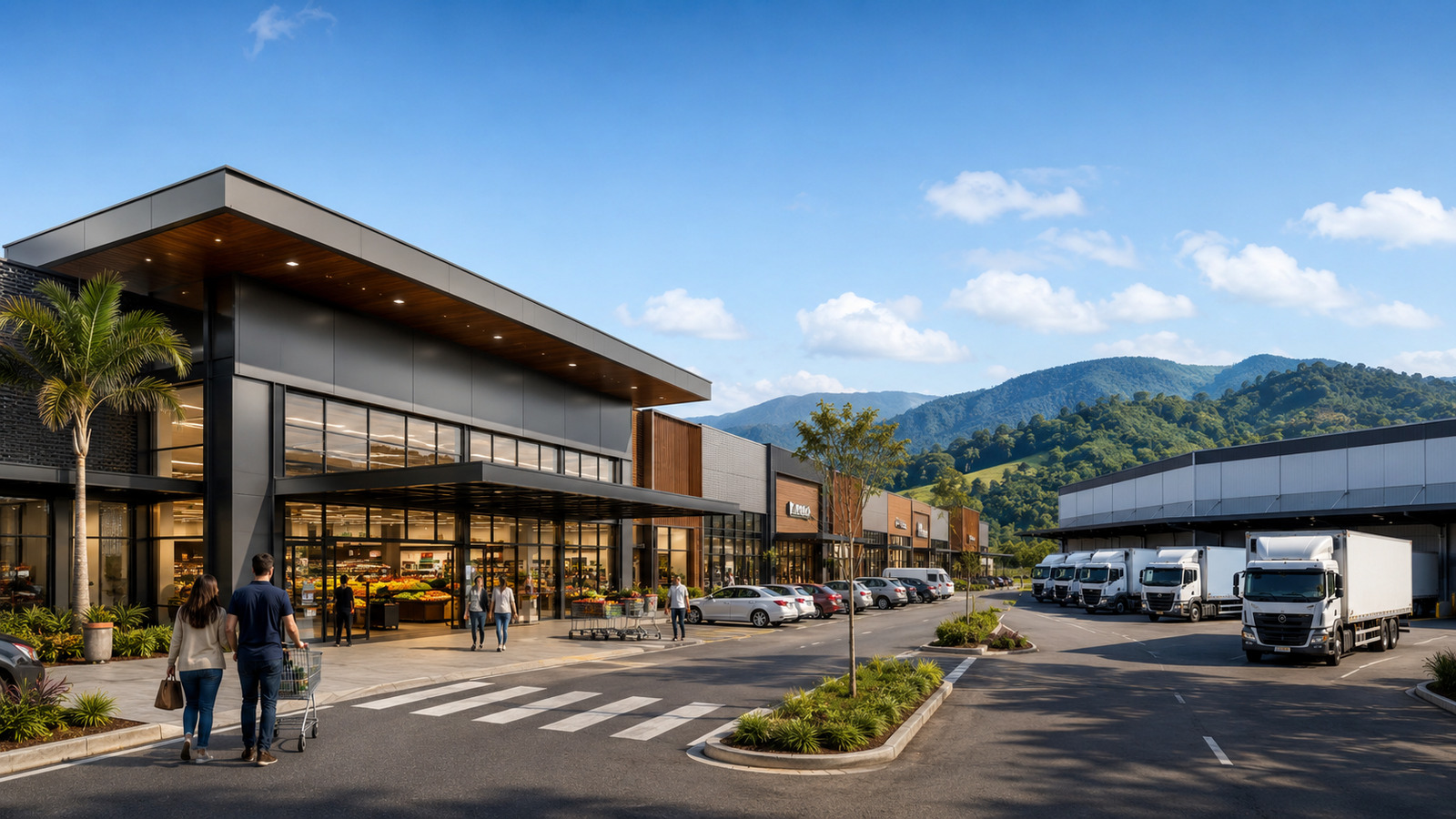

In relative terms, Santa Catarina grew more than double the country, reinforcing the historical pattern of performance above the Brazilian average.
According to an analysis by the Fiesc Observatory, this result does not mean homogeneous growth, but rather a dynamic driven by specific segments.
Services, industry, and commerce remained on the rise, albeit at distinct paces, while agriculture played a decisive role in compensating for specific weaknesses in the Santa Catarina economy.
Services Lead Growth and Gain Ground in the Santa Catarina Economy
Among major sectors, services were the standout between January and November 2025, with a rise of 3.7% compared to the same period the previous year. Within the segment, the largest expansion came from professional, administrative, and complementary services, which grew by 7%.
This group encompasses activities such as consulting, outsourced services, and corporate support, demonstrating that the state’s economy has been refining its service base.
Other important branches also showed good performance. Information and communication services advanced 5.1%, while services provided to households grew 4.3%, signaling a recovery in demand linked to consumption and leisure.
These numbers help explain why the regional GDP preview was so far above the national average: services not only grew but did so in areas of higher added value.
Agribusiness Boosts Exports and Sustains the State’s Aggregate Result
Even with services leading the percentage growth, the Fiesc Observatory highlights the role of agribusiness in sustaining the result.
Agricultural activity, heavily focused on exports, has influenced economic activity and compensated for weaker results in industry and services at certain times.
Products such as soy, corn, and tobacco had significant growth in 2025 and helped bolster Santa Catarina’s export balance, alleviating pressure on other sectors more sensitive to domestic demand and interest rates.
In practice, agribusiness acts as a buffer, ensuring foreign exchange income and maintaining activity levels even when the domestic market loses momentum.
Industry Grows 3.4%, but Feels the Pressure of High Interest Rates
The industrial production of Santa Catarina grew 3.4% until November 2025, but is already showing signs of slowdown. The Fiesc analysis indicates that the increase in the interest rate, adopted to curb consumption and reduce demand, had the expected effect, slowing down the industry.
Within the sector, some segments still had quite positive results. The largest increase was in the production of metal products, except machinery and equipment, with a rise of 12.3%.
Next were machines, electrical appliances, and equipment, which grew 7.8%, and the production of machinery and equipment, with an increase of 5.9%, supported by the record grain harvest in 2025.
Nonetheless, the overall reading is of a loss of dynamism, reinforcing the alert about the industry’s sensitivity to monetary policy.
The GDP preview shows that, without the support of agribusiness and some specific branches, the industrial result could have been much weaker.
Commerce Maintains Moderate Growth, Driven by Households
Commerce, as measured by expanded retail, grew 2.6% until November 2025. It is not the sector that drives the economy the most, but it confirms that household consumption continues to recover, albeit at a more restrained pace.
Within expanded retail, the group of other personal and household items saw the largest jump, with a rise of 10.2%. Supermarkets and hypermarkets grew 7.3%, indicating greater circulation of essential goods and recurring consumption.
Building materials advanced 7.2%, suggesting there is movement in renovations, maintenance, and small investments in construction, even without a generalized boom.
This behavior in commerce reinforces the picture of positive, yet not explosive growth, more compatible with an economy feeling the pressure of interest rates but still finding room for consumption, especially in segments tied to households’ daily lives.
Concentrated Growth and Challenges for the Next Cycle
For the Fiesc Observatory, the result of 4.9% in the Santa Catarina GDP preview does not mean an expansion spread throughout the economy.
Growth is concentrated in specific segments, such as certain industrial branches, high-value-added services, and the export agribusiness.
This brings two important messages. First, it confirms Santa Catarina’s ability to perform above the national average, combining strong agriculture, dynamic services, and a diversified industry.
Second, it raises an alert about the dependence on a few engines of growth in a high-interest-rate environment and predicted slowdown. If these segments lose strength, the impact could be swift on the aggregate result.
In the short term, the challenge is to preserve the competitiveness of the industry, maintain the momentum of services, and take advantage of the favorable moment in agribusiness without neglecting investments in innovation and productivity.
In the medium term, the discussion revolves around how to transform this point-in-time performance into a sustainable trajectory, less vulnerable to interest rates, harvests, and external cycles.
Looking at this data, in your opinion, what should be a priority in Santa Catarina in the coming years: strengthening the industry, further supporting the export agribusiness, or accelerating investments in higher value-added services to keep the GDP preview above the national average?




Be the first to react!