Portuguese
  Spanish


Aircela Unveils Prototype in New York and Claims Compact Equipment Produces Gasoline from CO₂ in the Air, Without Fossil Fuels
Last week, a machine that promises to transform air into gasoline was presented for the first time in operation in the United States.
The announcement took place in New York, on the terrace of the Garment District, where the startup Aircela demonstrated the equipment in front of authorities, investors, and guests.
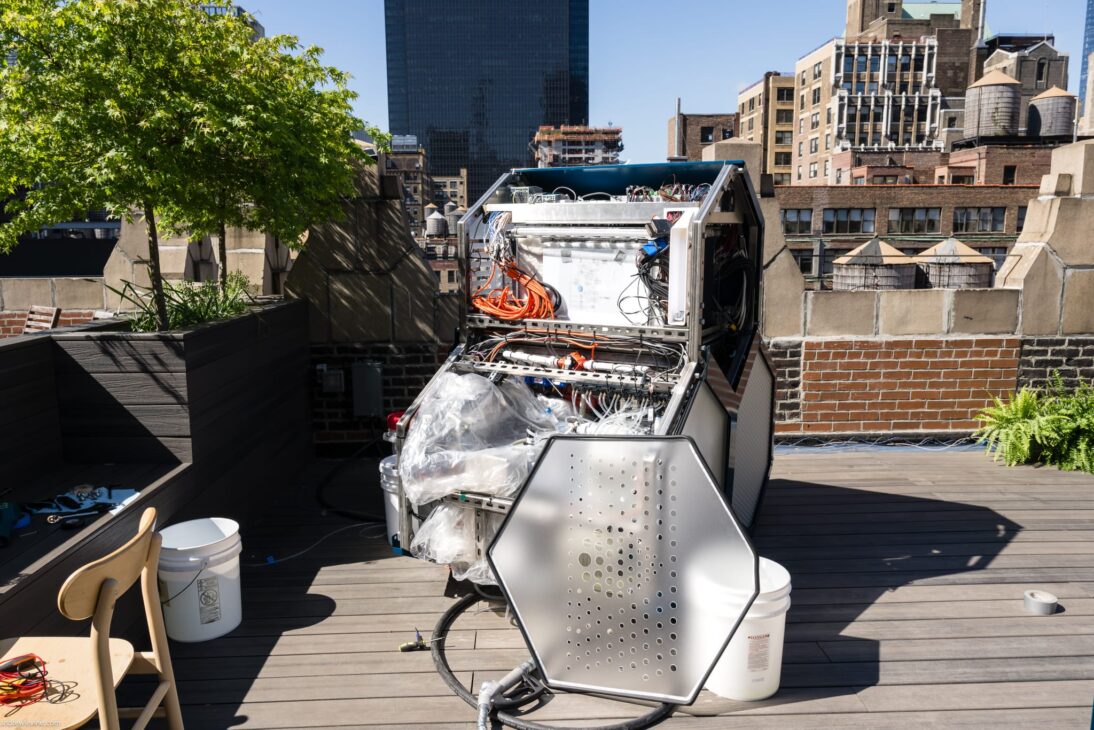
The Machine Is Small, But Effective
The size of a refrigerator, the Aircela machine would be capable of producing gasoline without the use of fossil fuels.
-
Brazilian Researcher Unveils Innovative Intraocular Lens for Cataract Treatment with High-Precision Optics, Enhancing Vision at Multiple Distances and Reducing Unwanted Visual Effects

-
World’s Largest Particle Accelerator Begins Four-Year Hiatus for Magnet Overhaul, Aiming to Hunt Dark Matter by 2030
-
“Sahara Dust Turns Rain Red, Startling Residents Across Europe”
-
Stanford Scientists Develop 20-Cent Paper Centrifuge Inspired by Ancient Toy, Spins at 125,000 RPM Without Electricity, Separates Plasma in 1.5 Minutes, Aiding Diagnostics in Remote Areas




According to the company, the system captures carbon dioxide directly from the air and converts the gas into fuel ready for immediate use in common engines, without any modifications.
During the event, company representatives stated that production occurs continuously and practically instantaneously.
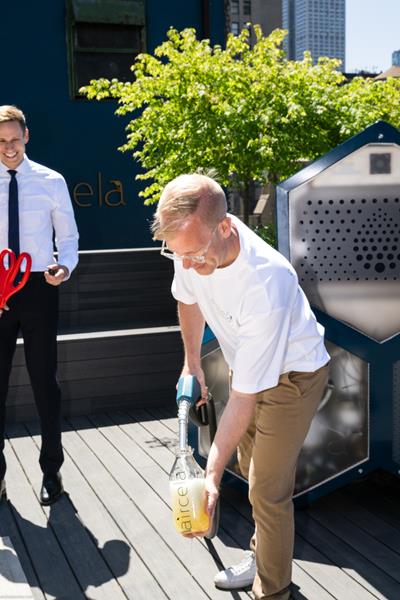
One of the co-founders, Eric Dahlgren, even filled a bottle with gasoline on-site, demonstrating the machine in action.
What Would Be the Differential
According to Aircela, the differential of the equipment is to combine two processes into one: direct carbon capture and fuel synthesis, all in a compact, modular system powered by renewable electricity.
Despite the excitement, technical data on efficiency, cost, and production scale have not yet been disclosed.
Aircela itself acknowledges that it is in the early testing phase and that the first commercial deployments are yet to come.
All we know about this project is what the company presented, therefore, it is necessary to proceed with caution. It is still early to confirm the viability of the technology on a large scale.
The company itself recognizes the challenges ahead but bets on a distributed production model, with mobile and independent machines.
Information from interestingengineering