






 Portuguese
  Spanish


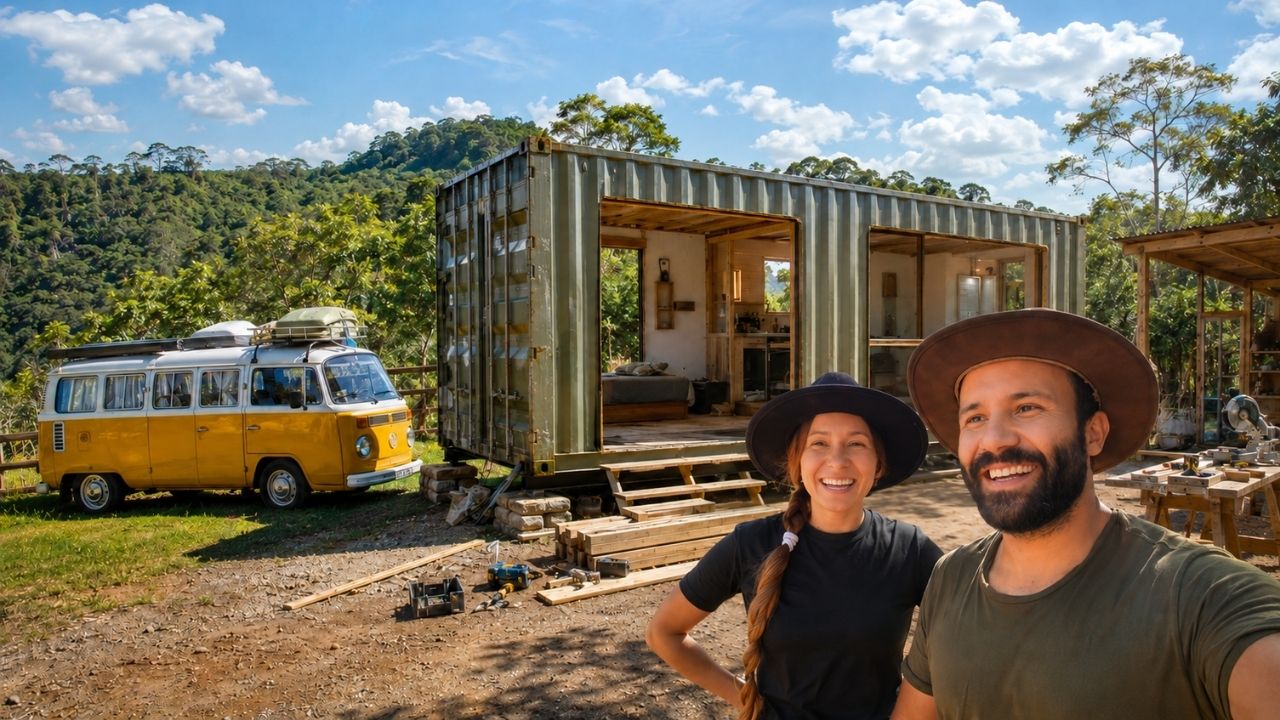

Couple who lived four years on the road with a 1986 Kombi installed a used container costing R$ 7,800 in southern Santa Catarina and plans to divide the structure into a workshop, two bedrooms, kitchen, and bathroom, while organizing a temporary base to manage the family refuge on the new rural land.
The couple who spent four years traveling through the Americas in a 1986 Kombi has started a new phase in southern Santa Catarina. After driving thousands of kilometers, crossing countries, and living in a house on wheels, they decided to establish a base on rural land and transform a used container into temporary housing.
The structure was purchased for R$ 7,800, a price well below other quotes they received, which could reach R$ 15,000, R$ 20,000, or even R$ 30,000. Even with external rust and signs of use, the container was chosen because it was sturdy, without holes inside, and with a structure considered good for turning into a house, workshop, and construction support.
Couple left life on the road to build a refuge in Santa Catarina
The project began after a four-year journey across the American continent. The couple traveled with the Kombi Manezinha, from 1986, on a route that passed through different countries and reached extreme regions, from the south of the continent to Alaska and the Arctic.
-
Egypt Partners with China to Build 2 GW Wind Turbine Factory and 2,000 MW Wind Farm in Gulf of Suez, Aiming to Export Across Africa

-
Family of Six Leaves Georgia to Live in a $300,000 Cold War-Era Underground Bunker Since 2020: Unlikely 557 m² Home with 60 cm Concrete Walls
-
Self-taught Brazilian Mechanic Builds 10-Ton Aluminum Sailboat in Backyard, Now Navigates the Brazilian Coast at 50
-
Santa Catarina Launches $1.4 Billion, 145-Kilometer Highway Project with Six Lanes and Speeds Up to 120 km/h



After the trip, they began working on a plot in southern Santa Catarina. The goal now is to create a refuge in the middle of the woods, with a base where they can return, host family members, store tools, and continue with the next stages of construction.
Before the container, the land had already undergone various works. They leveled areas, organized access, drew water, installed a water tank, took care of the slope with hydroseeding, and began fencing the property.

The change marks a lifestyle shift. Instead of living solely on the road, the couple now tries to transform a rural space into a fixed base, without abandoning the logic of reuse, planned improvisation, and phased construction.
Used container became a cheaper option than building with wood


The initial idea was to make a wooden structure, but the costs and the necessary work made the couple rethink the plan. When comparing alternatives, they concluded that buying a used container could be cheaper, faster, and more useful in the long run.
The chosen container cost R$ 7,800. According to them, the price was below other values found in the market, where similar structures could cost much more depending on the condition, size, and preservation.
The piece did not arrive perfect. There was external rust, dents, and clear signs of use. Even so, the interior was considered good, without holes and with a firm structure.
For the couple, the logic was similar to the renovation of Kombis: start with an old, worn-out, and cheap base, then sand, paint, insulate, adapt, and transform it into something functional.
Concrete base was prepared before the arrival of the structure

Before receiving the container, the couple needed to prepare the base on the land. The family helped with measurements, markings, and leveling, using concrete tubes to support the structure.
The plan was to keep the container off the ground, avoiding direct contact with moisture. This decision is important in rural terrain, especially in areas with clay, rain, and soil still in the organization phase.
The team made square measurements, dug holes, positioned tubes, and concreted the supports. The arrival of the truck with the container also had its challenges, as the vehicle faced mud and needed support to reach the right spot.
The installation showed that a container house does not start just with the purchase of the structure. Before living in or renovating, it is necessary to think about the base, level, access, position on the land, and protection against moisture.
Container house will have a workshop, two bedrooms, kitchen, and bathroom
Inside, the couple began planning the layout of the future container house. The idea is to reserve an area of about 3 meters for the tool workshop, keeping the container’s original doors in this area.
After the workshop, the space will be divided into two bedrooms of approximately 2.5 meters each. The proposal is to create a simple area for sleeping, hosting family members, and supporting people who help with the land work.
The kitchen should occupy about 2.70 meters, while the bathroom will be approximately 1.30 meters wide. They also plan to open windows, create an access corridor, and install thermal insulation and internal lining.
The container will not be the final house, but an essential base for the refuge. It should function as temporary housing, a warehouse, a secure storage, and support for future constructions.
Structure solves the problem of tools and accommodation on the land

One of the main reasons for transforming the container into a house is to solve the lack of structure on the land. Until then, the couple needed to bring and take tools, protect equipment from the rain, and improvise support spaces.
With a workshop inside the container, tools and equipment can be stored in a closed area, with a padlock and more protection. This facilitates the construction routine and avoids unnecessary trips.
The residential part should also improve the stay on the site. With bedrooms, bathroom, and kitchen, the couple and family members can spend more time on the land, without relying solely on the Kombi or temporary structures.
In practice, the container functions as the first useful construction of the refuge. Before thinking about the main house, it creates minimal conditions for working, cooking, sleeping, storing items, and facing rainy days.
Routine on the land still depends on temporary solutions

While the container house is not ready, the couple continues using temporary solutions. They set up a covered outdoor area, organized plastic boxes for the kitchen, improvised a stove, used a barbecue, and adapted the Kombi as support.
The energy also does not yet come from the public grid. To handle some tasks, they use a portable power station, capable of powering equipment, satellite internet, lighting, and even tools like a circular saw.
The water was drawn from a spring on the land to a thousand-liter tank. This structure helps in the irrigation of the grass planted by hydroseeding and in the basic use of the refuge during workdays.

The project progresses in layers: first access, water, soil containment, grass, fence, base, container, and only then the internal renovation. Nothing appears ready all at once.
Refuge began with family work and a lot of adaptation

The construction of the refuge has strong family involvement. Parents, relatives, and friends help with tasks like fencing the land, preparing the base, carrying materials, cooking, and overseeing the arrival of the container.
This support is important because many stages require physical strength, practical experience, and several hands at the same time. Measuring, leveling, concreting, cutting wood, and organizing the land are time-consuming tasks when done without a fixed professional team.
The couple also made it clear that many things are being done for the first time. This requires trial, error, adaptation, and learning during the process.
The construction does not have the appearance of a finished magazine project. It shows the real beginning of a rural construction: mud, rust, rain, improvisations, tools, family gathered, and decisions made as the land reveals its challenges.
Used container opens a new phase for those who lived years in a Kombi
After living in a 1986 Kombi and crossing long distances across the Americas, the couple is now trying to transform a used container into a symbol of a new stage. The mobile life has given way to a fixed base, but the spirit of adaptation remains the same.
The choice of the container has practical logic. It is reusable, durable, can be securely closed, and allows for partial renovations. Additionally, it remains a useful structure even after a permanent house is built.
There will still be a lot of work: treating rust, painting, insulating, opening windows, dividing rooms, installing a bathroom, setting up a kitchen, and organizing the workshop. But the arrival of the structure already solves an important part of the problem.
In the end, the couple who crossed the continent in a Kombi begins to trade the road for a retreat in the woods, using a container costing R$ 7,800 as their first home, workshop, and construction base.
Do you think a container house is a smart solution to start a rural property, or could the cost of adaptation end up being surprising? Share your opinion.


